Episode 147
An Ocean Obsession, Great White Encounter and Spearfishing with Laura Kuggeleijn

Episode 147
An Ocean Obsession, Great White Encounter and Spearfishing with Laura Kuggeleijn
Spotify Apple Podcasts Everywhere else Download
I didn't grow up in the ocean. So I'm always trying to understand what it is about the water that has people hooked, coming back again and again and again. And Laura is about as hooked as it gets.
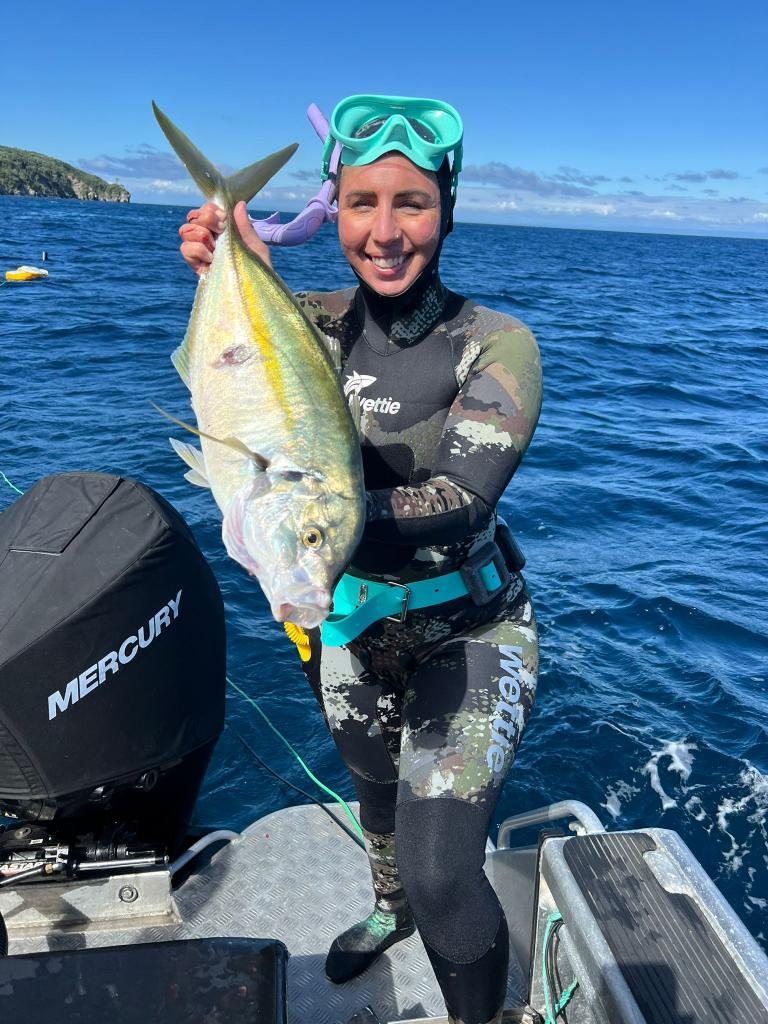
Laura calls herself a nature lover obsessed with the moana, who likes to live her life with constant adventures to look forward to. Her current obsession is spearfishing and freediving, which she fell into after moving to Auckland (of all places), and now she makes a podcast about it.
So we talk about her very first spearfish (a leatherjacket, which she ate), why the water does so much for people's heads, a three-night liveaboard trip to Great Barrier Island, and how she's worked through her fear of sharks. Then the big one: the day a great white swam past her at the spearfishing nationals on Stewart Island. I was on the edge of my seat for this one. Plus her number one tip for getting started.
In this episode
- How Laura got into the ocean
- Finding freediving and spearfishing in Auckland
- Laura's first spearfish
- Freediving, scuba and why the water helps
- A liveaboard spearfishing trip to Great Barrier Island
- Learning to dive with sharks
- A great white at the Stewart Island nationals
- Getting back in the water
- How to get into freediving and spearfishing
How Laura got into the ocean
Laura can't remember a time when the outdoors wasn't part of her life. She was raised around people who love the outdoors, so it's never been something she's had to ponder, and when she drifts away from it, she can feel something's a bit off.
She's gone full headfirst into a couple of things over the years, including surf lifesaving and surf boats, and these days it's spearfishing and freediving. She's lived in Christchurch, Wellington and Napier, and when we recorded, she'd been living in Pāpāmoa and Mount Maunganui for a few months.
Finding freediving and spearfishing in Auckland
When Laura started spearfishing, she was living right in the middle of Auckland City. Coming out of lockdown, she was looking for ways to bring adventure back into her life. She planned to get back into hiking and surfing, then got talking to a friend and stumbled into a freediving and spearfishing group.
It's strange, she says, that moving to a city as busy as Auckland is when she got amongst all the adventure stuff. But once you look around Auckland, there are so many places to go and things to see for a weekend. Her attitude: wherever you live, it's what you make it. Look it up, figure it out and go on a bit of a mission.
I was surprised Auckland is where she started, because we don't think of it as that kind of place. But since I've been kayaking more, I've discovered so many islands and such a beautiful coastline around Auckland.
The people who spearfish
Laura's way in was a pool group run by Spearfishing Fundamentals in Auckland, a mixed group of male and female divers who were just really fun people. What she noticed first was their energy. They were busy, successful people, with families and jobs, and this is what they chose to spend their time on: getting out to the islands near Auckland on the weekend and getting kai for their families.
People outside the sport comment on her going off on boats with a lot of men, but there's a massive, growing women's freediving and spearfishing community too. Renee grew Salt Aotearoa, which is huge on the wāhine side.
Laura's first spearfish
In the pool group, Laura made fast friends with another diver, who she now makes a podcast with. Her friend offered to take her on her first spearfish if she got all her gear.
So Laura bought the beginner starter kit, a wetsuit and all the bits and bobs, for her birthday in her first year in Auckland. She doesn't buy stuff she won't use, so investing in the gear meant this was happening.
She was an okay swimmer and loved the ocean, but she hadn't grown up snorkelling or on boats and had hardly been fishing. Apart from a few pool sessions on holding her breath and wearing a mask, everything was new at once.
A leatherjacket on the first dive
Her friend took her to a well-known shore spot near Auckland that spearos can get to without a boat. You don't drive far out of the city, then you're walking through the bush and climbing over rocks to get in.
They shared one speargun, which is smart when one of you is a beginner, because a gun is a dangerous object. There were hardly any fish around (she knows that now), but when you've never put your head under like that, you get excited seeing anything.
She saw a leatherjacket, a weird-looking little fish with a boggly eye, and no prize table fish. She took a shot, came up and told her friend she'd shot something. Her friend didn't believe her. They still have the video.
Collecting your own food
That feeling was it for Laura. The adventure is all part of it, but using a tool to get some food for yourself, then taking that meal home, mixes a sense of adventure with a sense of pride. She knows it isn't right for everyone, but for her, being respectful of nature while seeking your own food feels pretty normal, and it feels pretty good.
And yes, she ate the leatherjacket. Someone early on told her that as long as you're not shooting anything illegal and you're happy to eat it, just don't waste it. That stuck:
"I don't like the idea of ever taking a fish that I'm not going to eat."
She barely knew how to cook fish back then, and had to message people to learn how to scale and fillet one. That's all been part of the learning.
Freediving, scuba and why the water helps
The adventure, the adrenaline and the shared trips are all part of it for Laura. But a huge part is how it affects her mind and body: the stillness and calm of being immersed in the underwater world, and how good it is for your mental health. She's really interested in why we're all so drawn to water, and how it affects us physiologically and mentally. For spearos, she says, it's about so much more than ego and the biggest kingfish.
Bubble divers
Some spearos call scuba divers bubble divers, because if you tell people you're a diver, they assume you use tanks.
My first scuba dive was in Thailand a couple of years ago, and it was such a big, scary thing for me, being surrounded by all these animals in their habitat. What surprised me most was how loud it is, because you're breathing the whole time. I thought it would be quiet. It sounds like Darth Vader. That's what appeals to me about freediving: being one with the ocean without all the extra kit.
Laura started a scuba course at 18 in Hawke's Bay, where the visibility around Napier is pretty much mud most of the time and it's pretty cold. She gets viciously seasick, and the gear felt really heavy and restrictive. But she still remembers the feeling of freedom once she was down there, like that's where she was meant to be, and that little bit of the experience stayed with her until her first spearfish.
Freediving is more her style. She wants to be relaxed and free, with as little gear as possible. Everything is mildly dangerous, she says, and people have lost their lives freediving and spearfishing, more so as more people get into it without doing courses or following safety rules, and because accidents happen at sea.
A liveaboard spearfishing trip to Great Barrier Island
Laura's first kingfish, a significant moment in a spearo's journey, came on a beautiful day at the Mokohinau Islands. But one of her most memorable trips was her first liveaboard: three nights on a chartered boat around Great Barrier Island, filling spots with friends of friends.
You can hike and surf on Great Barrier, but she says the outside of the island has some of the best diving she's seen in New Zealand, and she can't wait to go back.
The boat was full of other frothers of spearfishing, and she's become really good friends with almost all of them. They now call themselves the long shots, and they've had heaps more adventures and gone to comps together since.
They went night diving, slept on the boat and ate together, with people coming to and fro with stories of what they'd seen. Looking back, some of the current and conditions were pretty full on for a new spearo, and she's never been so physically wrecked from three days of diving. There were hundreds and hundreds of blue maomao, a couple of her first species and some of her first shark interactions.
Sleeping on the boat meant early morning dives in water nobody had disturbed yet. Staying on a boat for a few days, she says, lets you truly experience a place, and share the connection and the meals with other people.
Learning to dive with sharks
As a surfer and surf lifesaver, Laura always knew about sharks, and she was probably in the pocket of people with a bit more fear of them than most. She loves sea creatures, and she's obsessed with dolphins. Sharks were just her normal fear.
For a long time she kept a dive log, writing down who she went with, where she went, what she saw and what she learned. In her first lot of dives, she saw sharks every time. Sometimes they'd circle under her: you see one, then a second, then a third. She sounds a bit woo-woo saying it, she says, but if you're putting out fearful energy, maybe it makes it worse.
So she decided that if she loved doing this and was this afraid of sharks, she needed to work through it.
A mako, then a juvenile great white
At Te Arai, out of Auckland, a spot well known for sharks even among surfers, she saw a mako shark really up close. Her friend was excited to see it, and Laura remembers thinking it was so beautiful, moving really gracefully. That was her first experience of a shark being graceful, and she started to relax around them and appreciate them as part of the environment.
The year before Stewart Island, she was swimming three abreast with two friends at the Cavalli Islands in the Bay of Islands when the boys on the boat yelled at them. It was a juvenile great white, and it was small enough that she didn't click what it was until they got closer. They scrambled out of the water and talked afterwards about whether they'd done the right thing. Most spearos never see a mako or a great white, and Laura wondered if she was a shark magnet.
A great white at the Stewart Island nationals
Stewart Island is known for great whites, with a lot of research, tracking and footage showing they're there. Some people weren't keen to go to the nationals because of it. But it's a completely different place to dive, with bull kelp and different species of fish, and Laura didn't know if she'd get another chance to go with a whole group of good mates for an organised event. For her, the best part of competing is the adventure.
The women's and juniors' competition ran on its own day, and you compete by yourself. Laura's safety diver, called a sweeper, was someone she'd dived with in the days before. A sweeper isn't allowed to load your gun, dive down for you or make decisions for you. They're basically your babysitter, there for safety.
Hiding in the kelp for blue cod
Blue cod were on the list, and there weren't many of them. Some skilled divers had encouraged her to try a new style: lie down in the thick brown kelp, get right in there and hide her face. Your mask takes up so much volume, and hers were often white or pink, so the spearfishing advice is to hide your eyes from fish. The other advice is the opposite: if you want to keep a shark away, look at it.
Shortly before, she'd shot a blue moki that wriggled a lot, and with her back to the open ocean she got the heebie-jeebies, so she put it in her float quickly. Then she took a really big breathe up and lay flat in the weed, gun stretched out in front, face right down, body limp, relaxed and really working on her breath hold.
The wall
Even with her eyes closed, she noticed the light from above get blocked. She'd been slowly turning to face the open ocean, where there were big balls of weed. As she lifted her head, looking for fish in the weed just in front of her, she realised everything behind that wasn't the colour of weed. Just past the end of her gun, there was a wall.
She remembers blinking a couple of times, wondering what she was looking at. It was the side and tail end of a great white, moving so slowly it blocked her whole view. There was no doubting it. The colours on its body looked like watercolours, with the light from the surface on its skin, and an intense change from top to bottom that no other shark has.
She'd never felt that kind of physical presence. Her first thought was that it had already seen her. All she could think was: do not panic. She was nearly out of breath by then, and she tried really hard not to wriggle, kick or drift up. As it angled away, she watched its tail end go off into the murk, around to her left, towards the other competitors.
She came up slowly, without a sound, keeping her face in the water, and made a little fin with her hand on her head. Her sweeper had seen a big shape and her body stiffen. He was amazing, she says, really calm. He grabbed her arm and they swam back to the rocks without talking, and she was shaking.
How big was it?
The plan, agreed before the comp, was that anyone who saw a great white would signal the boats, get on the rocks and spread the word. The comp was called off for the rest of the day and moved to a different location, which Laura calls a smart thing to do. Some of the juniors' parents told her she'd absolutely done the right thing.
People asked how big it was. She couldn't say: she never saw the front of its face, and the side and tail end were longer than her field of vision. It was the biggest thing she's ever been in the water with. Laura reckons it was a her. What changed her was this:
"I was expecting it to be aggressive. And it was just this massive, beautiful creature"
If it had wanted to hurt her, she says, it would have, and it was probably watching her for far longer than she knew. It gave her a whole new level of respect for how small she is in the food chain, as someone who goes into the water to shoot things to eat.
Getting back in the water
Laura didn't really get scared until that night, when she knew she had to get back in the water the next day for the opens.
The day before the opens was probably the highest anxiety she's ever had. Every little thing that moved and every bit of shadow had her thinking it might be another one. On the day she saw it, she'd been calm, focused and zen. This sent her into a bit of a spin.
She worked through it with her best friend's support, and she's so glad she got back in. On the second day of the opens, they had massive sea lion encounters, she found the biggest pāua she's ever seen, and the terrain was beautiful. She wouldn't have missed it for the world, and if she hadn't got back in the water there, she doesn't know how easily she'd have got back in anywhere.
How to get into freediving and spearfishing
Laura's number one tip: find a group. A club, a Facebook group, Instagram, groups like Salt Aotearoa or the one she joined in Auckland. There are so many instructors now, freshly trained ones in most areas of the North Island at least, who can teach you the safety side of freediving.
A listener asked what makes spearfishing and diving so appealing. Yes, fish, Laura says, and the adventure. But time and time again, people tell her how it makes them feel better and helps them manage their lives:
"Basically, they just need it for their soul."
Earlier this year I was in Korea, and on an island off the southern coast it's traditionally the women who go out freediving, foraging for shellfish and seaweed. We visited the museum, and it was so cool.
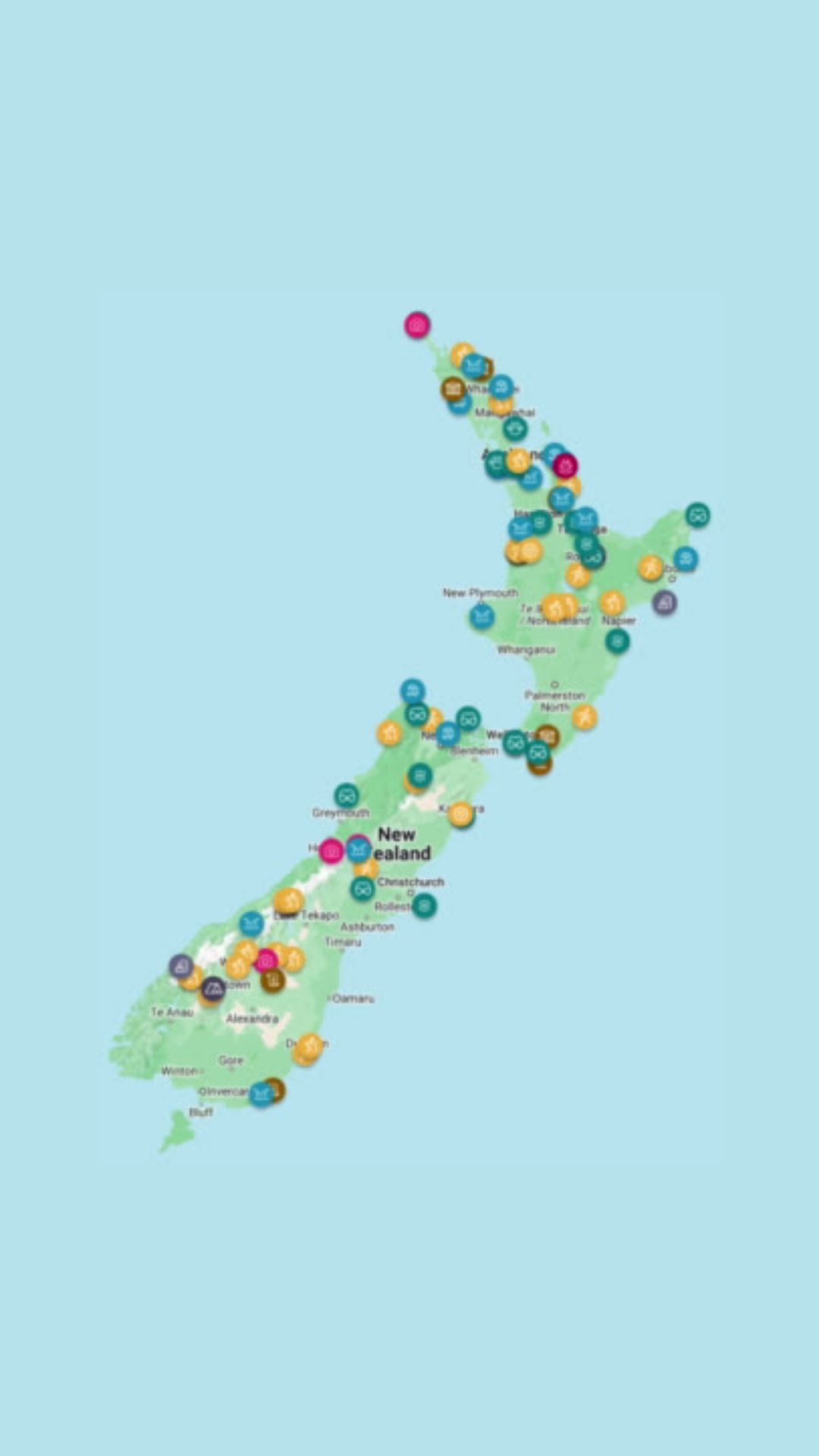
Places from this episode
- Auckland
- Mokohinau Islands
- Great Barrier Island
- Te Arai
- Cavalli Islands
- Bay of Islands
- Stewart Island
- Pāpāmoa
- Mount Maunganui
- Napier
- Hawke's Bay
Follow Laura
Laura and her co-host share their adventures, comps and podcast episodes on Instagram as Spearo Diaries, and the Spearo Diaries podcast is on Spotify.
Links from this episode
- Follow Laura on Instagram: instagram.com/spearotual_mermaid/
- Listen to Spearo Diaries
- Freediving Community: Salt Aotearoa
- Follow Abigail on Instagram: instagram.com/abigailhannnah
- Follow Aotearoa Adventures on Instagram: instagram.com/aotearoa_adventures_
More like this
- Scuba Diving in Wellington and Motorbikes with Tyla Bow
- Empowering Kiwi Women in Hunting & Fishing with Wild Chix Isabell Zitzelsberger
- Ultra-Swimming and 11 Hours to Swim Across the Cook Strait with Ivan Polyntcev
- From Fly Fishing Guiding in New Zealand to Starting an Outdoor Gear Brand with Matt Butler
Until then, keep adventuring :)
The ultimate
NZ road trip adventure guide
Packed with insider tips and stunning photography, this is the only resource you need to plan your journey.