Episode 086
From Fly Fishing Guiding in New Zealand to Starting an Outdoor Gear Brand with Matt Butler

Episode 086
From Fly Fishing Guiding in New Zealand to Starting an Outdoor Gear Brand with Matt Butler
Spotify Apple Podcasts Everywhere else Download
I know next to nothing about fly fishing. I went fishing on a boat once and thought it was awfully boring (sorry). So I was really really keen to have Matt explain why so many people are obsessed with it.
Matt lives in Wānaka. He's a former fly fishing guide, and for the three years before we recorded he'd been running his own outdoor gear brand, Kea Outdoors. He taught himself to fly fish as a kid, guided all over the region, spent his off-seasons fishing around the world, and then turned the problems he had as a guide into his first products.
So this one covers his journey from a kid who took three years to catch his first fish, what a day of fly fishing in New Zealand looks like, a trophy trout trip, why mice make trout huge, how to get started, and how his gear brand began.
In this episode
- How Matt got into fly fishing
- From Wānaka local to fly fishing guide
- A day of fly fishing in New Zealand
- A trophy trout trip near Lewis Pass
- Trout season and getting started in fly fishing
- Starting Kea Outdoors
How Matt got into fly fishing
Matt grew up mostly in the Waikato and spent a couple of years living down south when he started high school, which is where fly fishing kicked off. He says he was born with an innate desire to fish, but he had no one to take him, and everyone else went sea fishing on boats. Fly fishing meant he could walk up a river by himself.
It took him three years to catch his first fish. Back in the Waikato, he'd fish the rivers around Te Awamutu and Cambridge after school with a mate, and they only started catching fish at dusk, when the fish rose to feed and couldn't see his badly set-up line. Back then he killed them all. He never realised as a kid that killing fish in rivers was a pretty bad idea, because there aren't many of them.
He joined a fishing club, where he was the youngest by about 50 years, then taught himself from books.
From Wānaka local to fly fishing guide
Moving south to fish
Matt moved to Auckland to start his first business. With no rivers up there, the hunger grew, so when he sold the business, he sold everything he owned, bought a truck and drove to Wānaka.
He spent the next year or so fishing alone. The water down there is so clear that you have to hunt fish individually, and filming himself showed him a lot of the problems that were costing him fish.
A day in a helicopter with two billionaires
People warn you about turning your passion into your job, but Matt got sick of fishing alone and wanted to share it. So he started contracting with one of the lodges, heli-fishing for his first season.
His first guiding day was spent in a helicopter with two billionaires from America. He asked the one who wasn't fishing what he'd do if he could start again, and the man said he'd have taken more time in his twenties to live. By then he could barely cross the river, so the helicopter flew him across.
That changed Matt's life. A keen businessman, he decided that day to spend the rest of his twenties guiding and fishing. He guided around a hundred days a year, then spent three to four months overseas fishing in America, Norway, Ireland and Mexico. COVID ended it: he went from about 120 days of guiding in 2019 to one in 2020.
A day of fly fishing in New Zealand
Matt rates New Zealand as the pinnacle of trout fly fishing, ahead of places where the sport began, like Montana, Norway and Ireland, because of the clear water, big fish, amazing scenery and lack of people.
Hunting trout one by one
In the South Island especially, fly fishing is hunting. Clean water means less food and fewer fish per mile. On a typical day, you park at a river and walk 10 to 15 kilometres upstream, so you come from behind the fish. When you spot one, you step back, plan your approach, then target that fish. In the North Island, where the water is less clear, you more often fish the spots trout like without seeing them, which is called blind fishing.
Matt says that's why there's so much crossover between hunters and fly fishers. Sitting on a boat hoping for the best is his idea of the worst, and even saltwater fly fishing in Mexico and Florida, he's still spotting fish.
Flies and fussy trout
Flies are imitations, bugs for trout and baitfish in salt water, with no smell, so it's all on sight. Trout are very particular feeders. If they don't like your fly, they'll swim over, look at it and turn away, so you change sizes and colours. One fish in a day is a good day, and even with none:
"the beauty about fly fishing down South Island is walking the river all day hunting fish in the mountains. It's the nicest place to be"
A trophy trout trip near Lewis Pass
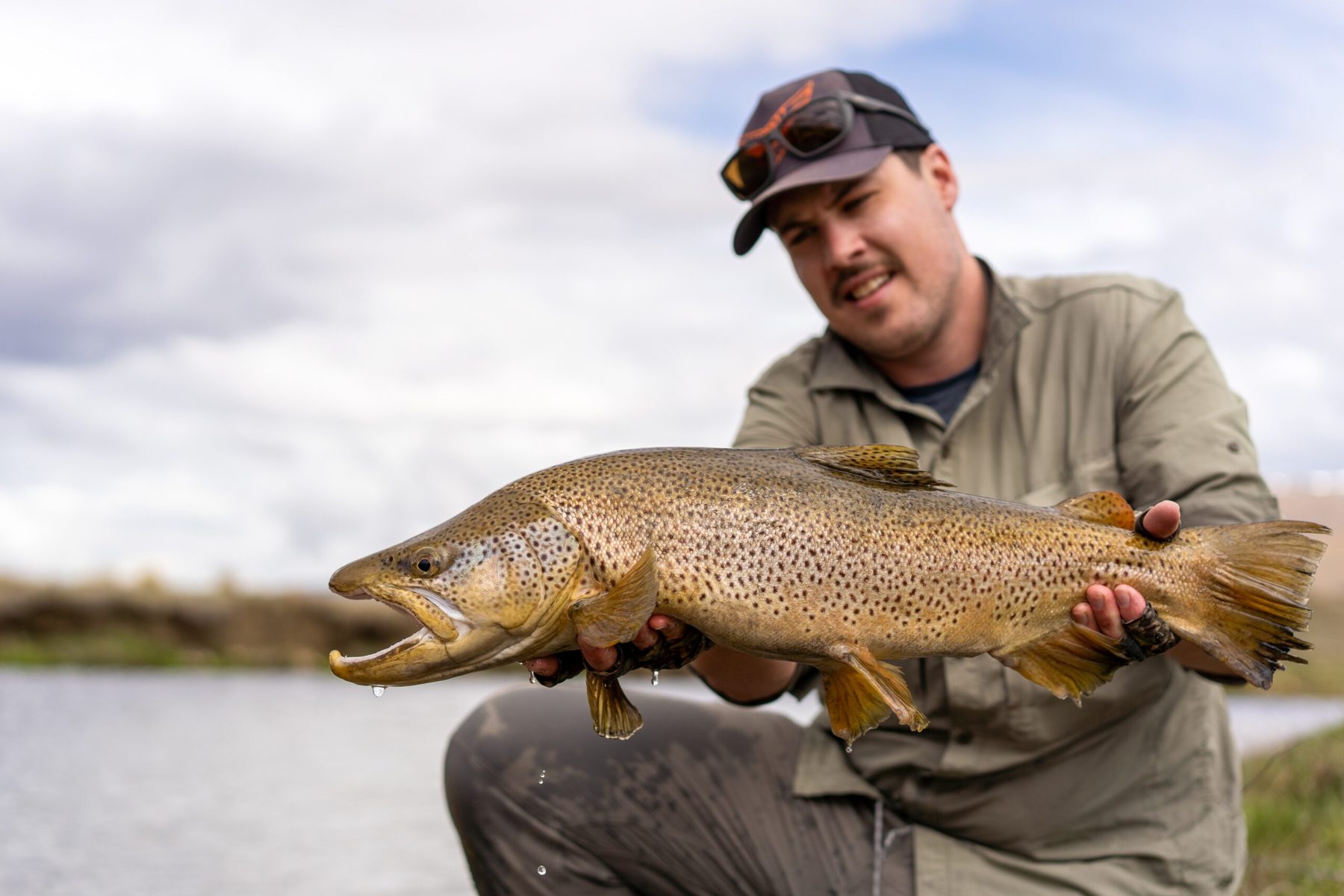
A trophy trout is over ten pounds, and they're pretty rare. Matt caught his first soon after moving to Wānaka.
On opening day, the first of October, his group drove up from Hanmer Springs to Lewis Pass for five days, walking about 80 kilometres. They saw lots of fish on the walk to the first hut, but the season wasn't open yet.
Overnight it poured, and by lunchtime the river had turned to mud. Fish don't like floods, so they moved to the edges, tails out of the water, and the group caught some of the biggest fish Matt had ever seen. The river cleared fast, and on the second day he landed one of ten and a half pounds. That trip showed him how good fly fishing can be. He doesn't name the river, and he explains why below.
Mice, beech masts and big trout
Matt has had lots of eights and nines and very few over ten. A lot depends on the beech mast: beech trees drop a crazy amount of seed, mice breed like mad, then run out of food and take to the water, where trout eat them. Trout can double their size in a couple of months, and people have caught them with 15 mice in their bellies. Matt says masts are getting more frequent with warming, and they coincide with kākāpō breeding years.
Trout season and getting started in fly fishing
The fishing season
Trout season changes around the country, and in most places it runs from October to April. Wānaka's rivers open from November to May, because rainbows spawn a bit later. Rivers close over winter so the fish can breed, and in Southland, pools fill with dozens or even hundreds of fish getting ready to spawn. Taupō stays open in winter, because there are so many rainbows that catch and kill keeps the numbers healthy.
In the backcountry, killing a fish is a big no-no. Many have spent their whole life in one pool, and once one's gone, it won't be replaced any time soon.
Finding your own water
There's been a resurgence among young people, Matt says, with lots of YouTube content and trout bums who live out of a van in New Zealand and fish every day.
But fly fishers are protective. Ask which fly someone is using or which river to go to, and they generally won't tell you, which is why Matt never named the river in his trophy story. You can learn skills from books, people and courses, but:
"that learning how and learning where is a whole part of the journey. That's the exploration that makes it. … Then finding new water is the best thing you can ever do"
Matt found every river he's fished by looking at Google Maps and going to check it out. Some were amazing and some had no fish. His advice: buy a rod, practise casting and start exploring.
Hikers have a head start, because almost every trail follows a river. Most people walk past without knowing they can fish it, and some carry a rod and fish as they go.
I love that. We're in an information age, and I think we've almost forgotten how to explore without researching everything first.
Starting Kea Outdoors
COVID was the catalyst. Matt's earlier businesses were service businesses in industries he didn't enjoy, and this time he wanted to build one in an industry he loved. So he looked at the problems he'd had as a guide.
The first was his first aid and survival gear, which guides must carry. He kept it in a Sistema lunchbox, and if a client ever needed it, they'd have no idea what was where. So he designed the Kea Kit, a survival kit organised into cases for fire, shelter, tools, first aid and water. He launched it on Kickstarter about three years before we recorded, and it raised $300,000 in its first 30 days.
The second came from the trophy trout trip, where their rubbish bag banged and leaked on the outside of his pack all the way out. The Kea Stash is like a dry bag with a zip-lock liner: you roll it up to crush the rubbish to about the size of a drink bottle, and it won't leak or smell. It's taken off with Great Walkers who carry their rubbish for days.
It's never been a fly fishing brand. Matt's gear is used by beginner hikers, backcountry skiers, hunters and even bush pilots in Canada, whether they're out for five days or walking up Roys Peak for the day.
Places from this episode
- Wānaka
- Lewis Pass
- Hanmer Springs
- Waikato
- Te Awamutu
- Cambridge
- Southland
- Taupō
- Roys Peak
Follow Matt
- Kea Outdoors: keaoutdoors.com, and @keaoutdoors on socials
- Instagram (Matt): @traveltruly
Links from this episode
- Follow Matt on Instagram: instagram.com/traveltruly/
- Follow KEA Outdoors on Instagram: instagram.com/keaoutdoors/
- keaoutdoors.com
- Follow Abigail on Instagram: instagram.com/abigailhannnah
- Follow Aotearoa Adventures on Instagram: instagram.com/aotearoa_adventures_
More like this
- Hunting Wapiti in Fiordland with Jarrod McLachlan
- From Corporate Hustle to Outdoor Social Enterprise with Robert Bruce
- Safety in the Outdoors and the Importance of Carrying a PLB with Katie Johnstone
- Learning to Freedive, Spearfish and Building Community with Renee Taylor
Until then, keep adventuring :)
The ultimate
NZ road trip adventure guide
Packed with insider tips and stunning photography, this is the only resource you need to plan your journey.