Episode 145
Solo Tramping the Mangamate Loop in Whirinaki Forest Park with Sharon Evans

Episode 145
Solo Tramping the Mangamate Loop in Whirinaki Forest Park with Sharon Evans
Spotify Apple Podcasts Everywhere else Download
People have so much to say about the South Island. So I always love it when a guest wants to talk about a little spot of North Island bush, and Sharon brought one of my favourite kinds of stories: a solo trip that was cold, wet and a bit daunting, and so so worth it.
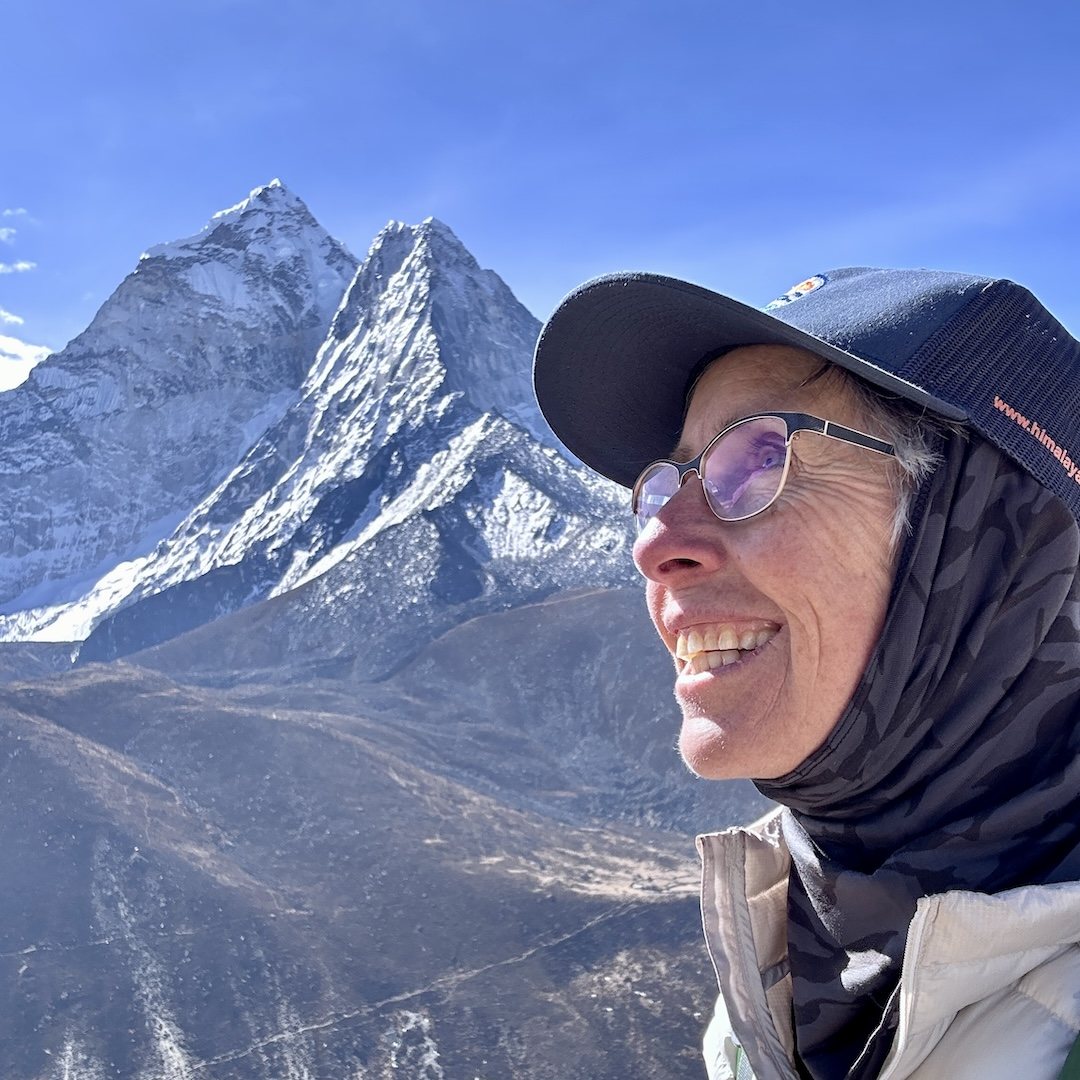
Sharon is the Freewheeling Kiwi, an adventure content creator in her 50s who's been outdoors since she was a baby. When she walked the Mangamate Loop in Whirinaki Forest Park, she hadn't been on a solo overnight tramp in a very long time.
So we follow her loop through the forest: the stream you cross again and again, the night she couldn't get warm (I felt that one in my bones), the kiwi that made it all worthwhile, and the whio at the second hut. Plus her gear must-haves, a few thoughts on Te Araroa, and her advice for anyone starting out, at any age.
In this episode
- Growing up outdoors, from Borneo to the Coromandel
- Going solo and making time for it
- The Mangamate Loop in Whirinaki Forest Park
- A freezing night and two kiwi
- Central Whirinaki Hut, caves and whio
- Navigation, gear and a hot cup of tea
- Te Araroa and the people along the way
- Advice for new trampers, at any age
Growing up outdoors, from Borneo to the Coromandel
Sharon can't pinpoint when her love of the outdoors began, because it's always been there. Her family were campers, and she was going to the beach to camp in a couple of ancient caravans as a babe in arms. It's weird for her not to do outdoor stuff.
When she was very young, the family moved to the Malaysian part of Borneo. Home was on a hill just outside Kota Kinabalu, surrounded by jungle, and the jungle was their playground. In true Generation X style, it was go out and don't come back till dinner time. They ran with the Hash House Harriers there too, always way out in the middle of nowhere.
They moved back to Rotorua, where Sharon was born, in her early primary years. From the time she was eight, summers meant a month at the same beach in the northern Coromandel Peninsula, at what's now a DOC campsite and was then a farm park. Later the summers moved onto a yacht, exploring around the Coromandel, Great Barrier Island and the Hauraki Gulf. She's since taken her own family camping at that same beach.
Going solo and making time for it
Fitting the outdoors around work is still a challenge for Sharon, even as an adventure content creator who should, in her words, be out there every day. Her fix: make an appointment. Put it in your calendar, even if you've no idea yet how you'll do it, whether it's a weekend mission or daily training to build strength for one.
Going solo started early. In her late teens she left New Zealand to go backpacking with a friend, and the friend pulled out. Sharon went anyway, and spent about six years wandering back and forth. She noticed a pattern: people have very good intentions, then for whatever reason can't follow through. As Sharon puts it:
"And I found if I had waited for those people, for you know for the stars to align for those people, I would never do anything. And that's why it's really important for me just to go out and go solo."
So she makes the plans, and either way, she goes. Sometimes the others catch up later, and that's all cool.
I loved that, and I don't think I've heard it on here before. I've been trying to line up a camping trip with friends for ages, so I'm going to plan trips and go whether or not everyone else shows up.
The Mangamate Loop in Whirinaki Forest Park
A friend who hunts had recommended Whirinaki Forest Park. Sharon isn't a hunter, but she headed that way. It was a big deal to be heading into the unknown on her own, and it was October, so still cold and damp. There's a reason the forest is so green, mossy and ferny: it's very, very wet.
I'd walked Waikaremoana over Easter, and boy, it was soggy.
To find Whirinaki, Sharon says, head east from Rotorua towards Te Urewera, but don't go as far. She'd put several tracks together into a three day loop, with a hut planned for each night and one of her tiny tents as backup. Work was so busy that she rarely had time off, so she stopped in Rotorua for supplies and gas on the way, and didn't reach the trailhead until after lunch. Daylight saving hadn't started yet, so she was conscious of the time. It didn't worry her, though. With the tent, she could always pitch it on the track if she ran out of light. The forest is so dense that sometimes the track is the only clear ground.
The forecast was for a lot of rain. One day of the loop is spent walking up a stream, crossing it nearly 200 times, so Sharon walked it anticlockwise and did the stream on day one, before the water came up and got more dangerous. The deep bits were knee deep. A young girl coming out with her family told Sharon she'd counted 165 crossings so far. It was fine on the day, but it meant wet boots right from the start.
A freezing night and two kiwi
Heading up to the first hut, with dark coming, Sharon had a little voice in the back of her mind: who'll be there, and will they be welcoming? She stepped into the clearing before dark to see two families on the deck of the tiny eight bunk hut. First relief, then dismay. A quick head count said it was going to be full.
Everyone was very welcoming, but one of the men pointed out a good spot for a tent in the bush out the back. She got the hint. So she pitched her tent, had dinner, chatted with the kids and went to bed.
Sharon really feels the cold. That night it got down to just over zero degrees, and in her ancient sleeping bag, on an insulated mat, in all her thermals, she couldn't sleep. In the end she put on her hiking pants, shirt, jumper and rain jacket, everything she had, and was still absolutely freezing. She lay there wondering whether to get up and do star jumps, and thinking how funny it was: a middle-aged woman with a warm bed and a fire at home, freezing in a tent in the bush. She had no regrets, though.
I'm a cold person too, and it's one of my worries in the backcountry. These days I have a really good sleeping bag, and my other hack is a Nalgene bottle filled with boiling water.
Then, from one side, Sharon heard a kiwi calling. Its mate answered from the other side, and the two had a bit of a discussion, with Sharon's tent probably right in the middle of their track.
"if I hadn't got myself out here and … pushed myself and made myself uncomfortable, I would never experience that moment. And that moment was absolutely magic."
In the morning, the families told her they'd been really hot in the hut. None of them had heard the kiwi. Sharon carried that high through the next couple of days.
It reminded me of Helen describing the Hump Ridge Track as the best and worst of times: the best things and the worst things so often come together. I love New Zealand birds, and that love has grown in the last couple of years. My first kea was in Milford Sound, and one sunrise at Sealy Tarns a whole bunch flew in, hopping around and moving so fast I couldn't count them. There were a lot of stairs to get up there, but it was worth it.
For Sharon, moments like that are the magic of nature: suddenly the rain and the blisters are forgotten, and you're completely present. She strongly believes nature heals us. However tough it gets, you never regret it.
Central Whirinaki Hut, caves and whio
From there, Sharon headed to Central Whirinaki Hut, a great big hut, with other tracks criss-crossing the forest.
The forest is beautiful, with enormous podocarp trees dripping in moss and lichen. Sharon describes it as one of New Zealand's first conservation stories. You look up in awe at the huge trees, then down at the little ferns.
On the way, she took a side track out and back to some caves, leaving her pack on the side of the track. If anyone wanted to carry it, they could go for it. The caves were fun, and she'd go back with a better torch.
That night she slept inside, sharing the hut with another family and one other tramper, in a hut with two bunk rooms and a main room. And she saw whio, the blue duck, which love the fast-flowing river there. It was really special. Sharon feels that protection for the whio in that area isn't what it was, and she's hopeful that will change, for the whio and the other birds that need protecting from introduced predators.
Walking out on a high
On the last day, she met a shuttle, which meant keeping a certain pace. The last five kilometres is a good, wide, flat track, and she walked through the forest on her own, very present, admiring the trees, ferns and moss. You walk out through a little shelter with maps on either side, and coming through it, Sharon felt an enormous sense of achievement. She'd been apprehensive about going, and she'd managed all of it: the planning, the time off work, being on her own, the camping and the cold. It drew a new line in the sand after years of raising a family and working. She got there before the shuttle, on an absolute high, and decided she was going to do more.
For me it's usually more like thank goodness, there's the car. Where's the closest restaurant?
Navigation, gear and a hot cup of tea
Day one on the Mangamate was the hardest going. In and out of the stream, you had to stop and look for the next orange marker on the trees. The track was muddy and rooty, and once out of the stream there was some scrambling under and over fallen trees. Sharon notes it could be completely different now, depending on maintenance. The track out from Central Whirinaki Hut to the main trailhead, past the canyon, was very well maintained and pretty much level.
Sharon always uses the NZ Topo app, so she knows where she is, and she takes screenshots of each day's route, so if she can't get the maps, she still has her photos. If she's ever unsure, she can stop and wait till the next day.
Her must-haves:
- Trekking poles, for everything they give you. She feels naked without them now, and it feels odd walking through a town without the click, click, click.
- Three ways to call for help: a Garmin, a PLB and the SOS on her iPhone. If one fails, she has another.
On my first solo hike, five days on the Old Ghost Road, I used my poles for every single step, and I've always had them since.
Sharon's luxury is a hot cup of tea, so she always carries a stove (that was the gas she stopped for in Rotorua). It rehydrates you, and it's an emotional boost and a reason to stop and rest. She's no cold soaker: she rehydrates her food with hot water, and eating a hot meal as late as you can before bed helps keep you warm. And if all else fails, star jumps at 2am.
Te Araroa and the people along the way
A couple of years after Whirinaki, Sharon walked Te Araroa with her partner. They took 133 days.
The best part for her was the people: the kindness of people in the towns and villages they passed through, and the Te Araroa community on the trail. A lot of the focus goes on the mountains and valleys, but you also walk through towns and cities. It took them five days to get through Auckland, and the people they bumped into there added so much. People who skip those bits by bus miss out on meeting the locals, she says. Everyone on the trail already has something in common.
I had a friend walk Te Araroa this season, after he came on the podcast to talk about his prep for Te Araroa. I walked the Auckland stretch from Ambury Farm to Britomart with him, which was so fun.
On knowing when it's the right time, Sharon puts most of it down to your mental state. You'll be out there for months, with good days and bad days, getting sick of the people around you or struggling with the physical side. The physical part and the logistics are a small share of it. When she started, she was going to finish, barring a severe accident or an emergency at home.
"If you feel like you are almost ready, go for it because you'll gain that strength."
Advice for new trampers, at any age
Sharon is 58. She's no professional tramper or super athlete, though she's always lived a fairly active lifestyle. For anyone starting out, at whatever age:
- Join a tramping club or some kind of community. You pick up so much from being around other people.
- Start with popular walks, like the Great Walks. You'll be with people at a similar level, there's always someone around, you know you've got a bed at the hut, and you'll make new mates.
- Don't scrimp on safety. There's no excuse not to have a PLB, and you can hire them all over New Zealand.
- Choose a track within your ability and work on your fitness. DOC's track ratings help, though how hard a track feels can come down to your own fatigue.
And give yourself some grace. If the weather turns, you get hurt or you have to come out early, don't beat yourself up. That's a learning experience. Put it back in the calendar and have another shot.
That's also why Sharon shows the hard bits on social media. If she's scared and teary on top of a mountain, or falling over, she'll film it, so someone out on a tough, wet or lonely tramp can remember that Sharon went through it too, and got to the end. Besides, she jokes, she breaks droughts wherever she tramps. It's always pouring at the top, so she shares what she's got.
Places from this episode
- Whirinaki Forest Park
- Mangamate Loop
- Central Whirinaki Hut
- Rotorua
- Te Urewera
- Coromandel
- Great Barrier Island
- Hauraki Gulf
- Waikaremoana
- Milford Sound
- Sealy Tarns
- Old Ghost Road
- Auckland
- Ambury Farm
- Britomart
Follow Sharon
- Instagram, YouTube, Facebook, Threads and TikTok: @freewheelingkiwi
- Website: freewheelingkiwi.com
Links from this episode
- Follow Sharon on Instagram: instagram.com/freewheelingkiwi/
- Subscribe on YouTube: youtube.com/c/FreewheelingKiwi
- www.freewheelingkiwi.com
- Follow Abigail on Instagram: instagram.com/abigailhannnah
- Follow Aotearoa Adventures on Instagram: instagram.com/aotearoa_adventures_
More like this
- Solo Female Travel in New Zealand in Your 50s with Larissa Hubbard
- Waterfalls, Beaches, Geothermal Wonders and Other Hidden Gems in the North Island with Barbie Sharma
- Eight Days in the Kaimai Mamaku Ranges with Jenifer Silva
- Accidents and Beauty Found in Solo Hiking Whirinaki Conservation Park with Kurt Fenton
Until then, keep adventuring :)
The ultimate
NZ road trip adventure guide
Packed with insider tips and stunning photography, this is the only resource you need to plan your journey.