Episode 194
Summer as a DOC Ranger on Stewart Island and Women in Trades with Brooke Thompson
Episode 194
Summer as a DOC Ranger on Stewart Island and Women in Trades with Brooke Thompson
Spotify Apple Podcasts Everywhere else Download
I've been following Brooke's journey online for a while, so I was so so excited to finally get her on the show.
Brooke Thompson is an electrician, known online as Sparky Girl NZ, and she uses her platform to encourage more women into the trades and to help build a more supportive industry. She's also guided the Milford Track, worked for DOC on Stewart Island, spent her OE exploring her own country and lived in Chile. And instead of taking the path everyone assumed she'd take, she built one that fits her.
So we start in the deep south, where she grew up. Then her apprenticeship and how the trades are changing, the pounamu she let go of in Lake Marion, two summers guiding the Milford Track (including a flood), and a summer on Rakiura as a sparky and hut ranger. Plus what's next for her, from the North Island to apprenticeship reform.
In this episode
- Growing up in Otatara, facing Stewart Island
- A local OE in her own backyard
- Becoming an electrician and changing the trades
- Letting go of a pounamu at Lake Marion
- Guiding the Milford Track
- A summer with DOC on Stewart Island
- Hut ranger on the Rakiura Track
- What's next for Brooke
Growing up in Otatara, facing Stewart Island
Brooke grew up in Otatara, right at the southern end of the country, facing Stewart Island. Apart from Bluff, you can't get much further south.
Her primary school backed onto native bush. They built bivvies and went surfing with school, and lived an outdoorsy dream, so a connection with nature was instilled young. When she went to the cities or travelled, there was always a feeling that there's no place like home. To this day, the only place she feels truly at peace is in the native bush of New Zealand.
A local OE in her own backyard
As a teenager, Brooke got to travel a lot, mostly through scholarships and sports opportunities. She went to Europe for a World War II commemoration, travelling with the Australian government, which was a huge honour, on a shoestring budget. She volunteered with a charity in Laos and Thailand, working with kids with hearing disabilities. And at 18 she moved to Chile for a year.
When she came back, her friends were ready to run off and explore, because they'd been in their hometowns for so long. Brooke had the opposite feeling. She loved Invercargill and decided to spend her 20s enjoying her own country. People come from halfway across the world and spend so much money to see it, and it was her backyard. She'd never even been to Stewart Island, which is hilarious, because she can practically see it from home.
She calls herself a bit of a South Island snob. From home, Milford Sound, Queenstown and the Catlins are all within a couple of hours: the crème de la crème of New Zealand backcountry. So at 19, with her licence, no money, heaps of time and amazing friends, she started popping off on weekends, to Milford Sound, or giving skiing a crack for the first time in Queenstown.
Gear on a shoestring
These days Brooke has the best waterproof jacket and boots, and everything that makes tramping seamless. At 18 or 19 she had a ripped jacket, borrowed hiking boots that were a bit too small, and whatever else she could borrow or make do with. It didn't make the adventures any less amazing. But she was cold all the time, because she had the wrong layers on. Now she's never cold.
Her knowledge of the backcountry on her doorstep was close to nothing at 18. She didn't grow up in a tramping family, so she had to find that in herself and find like-minded people to guide her into those spaces. And her photos from that era, with socks up to her knees, several colours of layers and a slicked-back ponytail, involved no fashion whatsoever.
I found some old photos from one of my first hikes and I was wearing a cotton t-shirt. So when I see people in cotton now, I give them a little grace. We all start somewhere. Now I'm a merino snob.
Becoming an electrician and changing the trades
Brooke was recently appointed to the industry skills boards, which make decisions that shape how apprenticeships work in this country. Having a real, tangible impact there is her dream come true, and she thinks first-year apprentice Brooke would break out in tears.
When she started her apprenticeship, she didn't know a single female tradie of any kind, and couldn't name a female electrician from TV or social media. She couldn't picture a life as a qualified electrician, because it had never been done. What kept her going was what she calls her delusional confidence: once she decides to achieve something, she believes she'll work hard and make it happen.
She did her apprenticeship through a training organisation on a low training wage, and she was really struggling. And through her whole apprenticeship, she faced harassment on site, something almost every month. She'd always believed all men were great, so it shook her. Every day on site felt like psychological warfare, thinking through every interaction as a very feminine woman in a very masculine space. It also showed her how badly men in the trades treat each other.
She connected with other women in trades, stayed positive and true to who she was, and got qualified. Then she took a break to reevaluate, and went to guide on the Milford Track.
Why it's changing
Brooke has seen a massive change since she started. Women sharing their stories on social media and TV brought it into the public eye. The hundreds of messages that flooded her inbox showed how shocked people were that it happened here. What broke her heart was that other men were around when she was harassed and said nothing, including men she thought were friends or father figures.
"it's not enough to just be a good person. You have to stand up for other people. It's not enough to just think good things. You have to say them and you have to live by them."
Government support mattered too. Brooke was involved in the Keep It Decent campaign, top-down funding that helped shift culture, and she wants political parties to back it with strong policy. A lot of people leave the trades because of the culture, she says, when the work is so fun: she gets to be a magician and play with electricity every day, with a great crew and good banter, building something.
Now she gets to be a reference for younger girls applying for jobs, which means the world to her. Planting trees of shade you won't sit in, she calls it. She loves being a big sister to the women coming through.
Letting go of a pounamu at Lake Marion
Brooke's whole life, she'd worn a pounamu she'd been given as a kid, blessed at Bluff Marae. It's a koru, carved by a local man in Southland from tangiwai pounamu from Milford Sound, and it went with her to every country she travelled to.
One summer, right before she went to the Milford Track, she knocked it off the basin and it smashed into three pieces. She couldn't process life without it. It might seem silly that it's a piece of stone, she says, but she can't describe how much it meant. She carried the three pieces in her pocket for a couple of months.
Then, the day before New Year's Eve, she and her friends camped deep at Lake Marion, a beautiful lake in Fiordland. There are big pieces of granite dotted through the middle of the lake, so you can swim a long way out and stand on them. Brooke swam out at sunrise, stood on the granite, cried, and let her pounamu go, returning it to where it came from.
About two weeks later, she had a job on the Milford Track, which at New Year she'd had no desire to do. She feels the pounamu had ended its journey and returned her to exactly the place it came from.
Guiding the Milford Track
Brooke guided the Milford Track for two summers, and calls it one of the most special experiences of her life. She'd recommend it at any age.
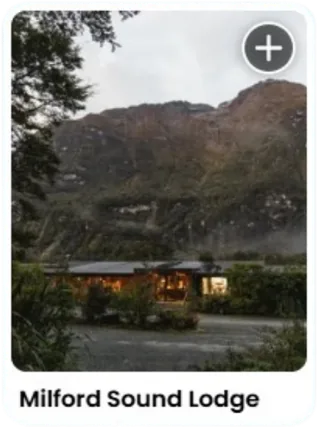
She got paid to learn about every native bird and got to see them all. There are lancewood trees on the track hundreds of years old, the biggest horoeka she's ever seen, and the water is so clear and fresh that you can swim in the rivers and drink at the same time. And on the guided walks, you stay in five-star accommodation with three-course meals, ensuites, towels and dry rooms, so you get a bit of luxury at the end of a remote day.
Sometimes they did back-to-back trips and stayed in the Milford for ten days, and those were her favourites.
Rain, and a flood
Fiordland's rain is real. The estimate they give you is rain five days out of seven. But the Milford taught Brooke, who used to skip a tramp if it looked rainy, that the weather doesn't matter if you're prepared:
"the Milford track reminded me that it actually doesn't matter. like If you've got good kit and you're out in the rain, it's actually beautiful."
She saw it in sun, rain, lightning storms and 100 km/h winds.
On one trip, there was the most rain she has ever seen. The first valley you walk through is like a baking tin, with really one way to drain, out through Lake Te Anau, so the water kept rising. The guides had 50 people, some of whom didn't speak English, and they had to convince them to follow them through a flooded section, in chest-deep water, to reach the helipad, because going back would have been worse. They got everyone through. People had their speakers playing It's Raining Men, and the attitudes were really good.
Brooke says it was stressful and could have been handled differently, and it was a huge learning curve. Guiding the Milford is amazing, but you need real outdoor and leadership skills when a weather event hits.
What the Milford means to her
For Brooke, the Milford is about a spiritual connection to that whenua, like the feeling you have for someone you adore to your core. It made her care so deeply about where she comes from and her environment, and understand why we talk about Papatūānuku. The land gave so much: the best water she's ever drunk (they bottled it at the end of the track to drink until the next trip), berries straight off the trees, and hen and chicken fern. One of her favourite parts was the DOC warden at the hut below the pass, who baked goodies for them at their morning tea stop. It was her first look at that as a job.
I walked the Milford over Easter, the weekend of the season's last guided trips, so helicopters were flying the mattresses out. I booked it a week before, when a friend's group had someone drop out. I hadn't worn my boots in a while, got really bad blisters on day one and walked day two in slides. My favourite parts were sunrise on Mackinnon Pass with the kea, and Mackay Falls.
A summer with DOC on Stewart Island
Brooke had been to Stewart Island before with friends. Then one summer, contracting to Otago Polytechnic teaching electrical, she had a random two-month break between contracts. She's someone who always needs something to do, and a friend suggested volunteering with DOC.
If you want to do the same, the DOC website lists volunteering opportunities all over the country, especially in summer, across a whole rainbow of different work. Brooke signed up for the dotterel team on Stewart Island. Dotterel are a really endangered bird that breed there, and the island's rat and cat population is bad news for them. That summer they had a really good breeding season (maybe her doing, she jokes).
Then a small Kiwi world moment: someone at DOC who knew her saw her application and suggested she come over and do electrical work instead, because the hut solar systems needed it. So a week of volunteering became two months working as a sparky, and the most incredible summer of her life.
She's done a section of New Zealand each summer: Franz Josef and Mount Cook with some climbing, then the Catlins, then Milford, then Stewart Island. Now when she goes to the beach at home, she can see the top of Stewart Island and think, I climbed that. She's never seen a place so plentiful and healthy. To a Southlander, it felt like a tropical island.
Hut ranger on the Rakiura Track
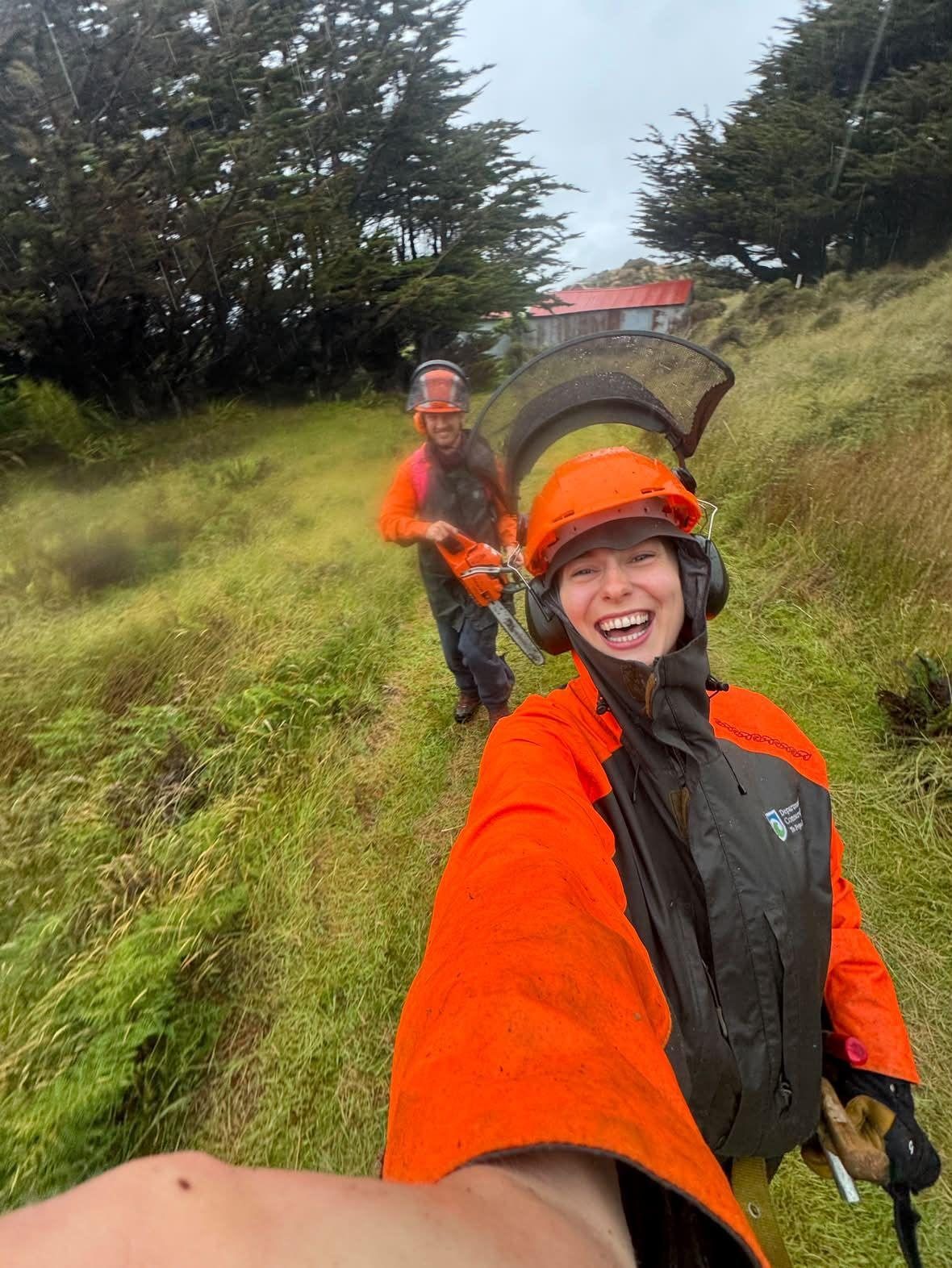
Brooke says yes to everything. Over the Christmas break there was a chance to be ranger at the first hut on the Rakiura Track, and she said yes in a heartbeat. She lived out there, cut back the track with a whipper snipper, cleared culverts and restocked the toilets. The first time she put on the DOC shirt, she did a happy little giggle. A Kiwi dream come true.
The DOC crew on Stewart Island are some of the most beautiful, heart-on-their-sleeve people she's met. They work so hard and care so much. And as a self-described chronically online girly, she loved being somewhere people barely touched their phones. It felt like New Zealand 20 years ago, when a Nokia and a text were enough. Her brain was so healthy, and she inherited a whole community. Along the way she climbed Mount Rakeahua and Table Hill and went to Mason Bay.
Cutting the track to Mason Bay
A lot of her work was track maintenance. DOC only gets funding for certain things, and backcountry tracks are only maintained every few years. Brooke's crew cut the track from Freshwater Hut through the centre of the island towards Mason Bay, carrying fuel, food, a first aid kit, layers and a 15-kilo scrub bar. When a harness broke, you made it work.
She's never worked harder in her life. And she loved it: being out in the middle of a chocolate swamp, in pure silence, completely alone.
"every bit of physical like pushing myself I just live for that"
That's why she loves hiking: she gets a kick out of seeing what she thinks she's capable of, then achieving even more.
The kindness of Rakiura
One night, out at her hut, Brooke got a rare text from a colleague asking if she wanted to come out to the boat for hot chocolate and Christmas cake. She lit up like a Christmas tree. He and his wife picked her up from the shore in their little outboard and rowed her back to their houseboat, and they watched the sunset.
Another friend wrote her a letter about overcoming her biggest fear, great white sharks, and took a group of them spearfishing near Ulva Island. Bull seals swam up to check them out, they caught blue cod, and Brooke, who would never usually swim in open ocean like that, was blown away.
I was supposed to have a photography job on Stewart Island last summer, but it fell through. Next time I walk from Freshwater Hut to Mason Bay, I'll know who to thank for the cleared track.
She was ready to pack her bags and move there. But she feels her purpose is improving the electrical industry, apprenticeships and life for women in trades. She has the best of both worlds, she says. You can do both.
What's next for Brooke
Brooke wants to say her South Island snobbery has been proven wrong. She's been to Gisborne and Rotorua and done the Tongariro Crossing, and fell in love with the North Island. She's never been to Northland or the Coromandel, and she only recently visited Taranaki and fell in love with New Plymouth.
She also wants to rep the regions. People sigh a bit at Invercargill, but she's so proud to be from Southland, which is booming. Growing up there, she had everything that didn't cost anything but made her feel rich: amazing friends, a community that looked out for her, the bush and a veggie garden.
On her outdoor list: some of Te Araroa, and the Takitimu Mountains. She walked the Hump Ridge for the first time last summer and loved the people at the Hump Ridge Trust. One of her goals is to volunteer her electrical skills for organisations like that, out of the main drag, that need help setting up electrical systems.
Apprenticeships and women in unconventional spaces
Brooke wants to see apprentices taken off the training wage, which is 80% of the minimum wage. During her apprenticeship, she realised she could get more on the benefit than working, which is damaging and gives no incentive to work. That's one of her key drivers for the next couple of years.
She also wants to see more women in unconventional spaces: business owners, CEOs, farmers, and women leading the organisations that have always been male. She was the first female electrician hired at Otago Polytechnic to teach an electrical programme. When she meets girls entering the trades, she says welcome to the family, because she doesn't want to do it on her own.
Her advice, whatever you want to do, whether that's a trade, hairdressing, nursing or welding: believe in yourself and go get it, and don't let your gender or anyone's stereotypes hold you back. She's as girly as they come and not your traditional tradie, and she found the trade and fell in love with it.
Places from this episode
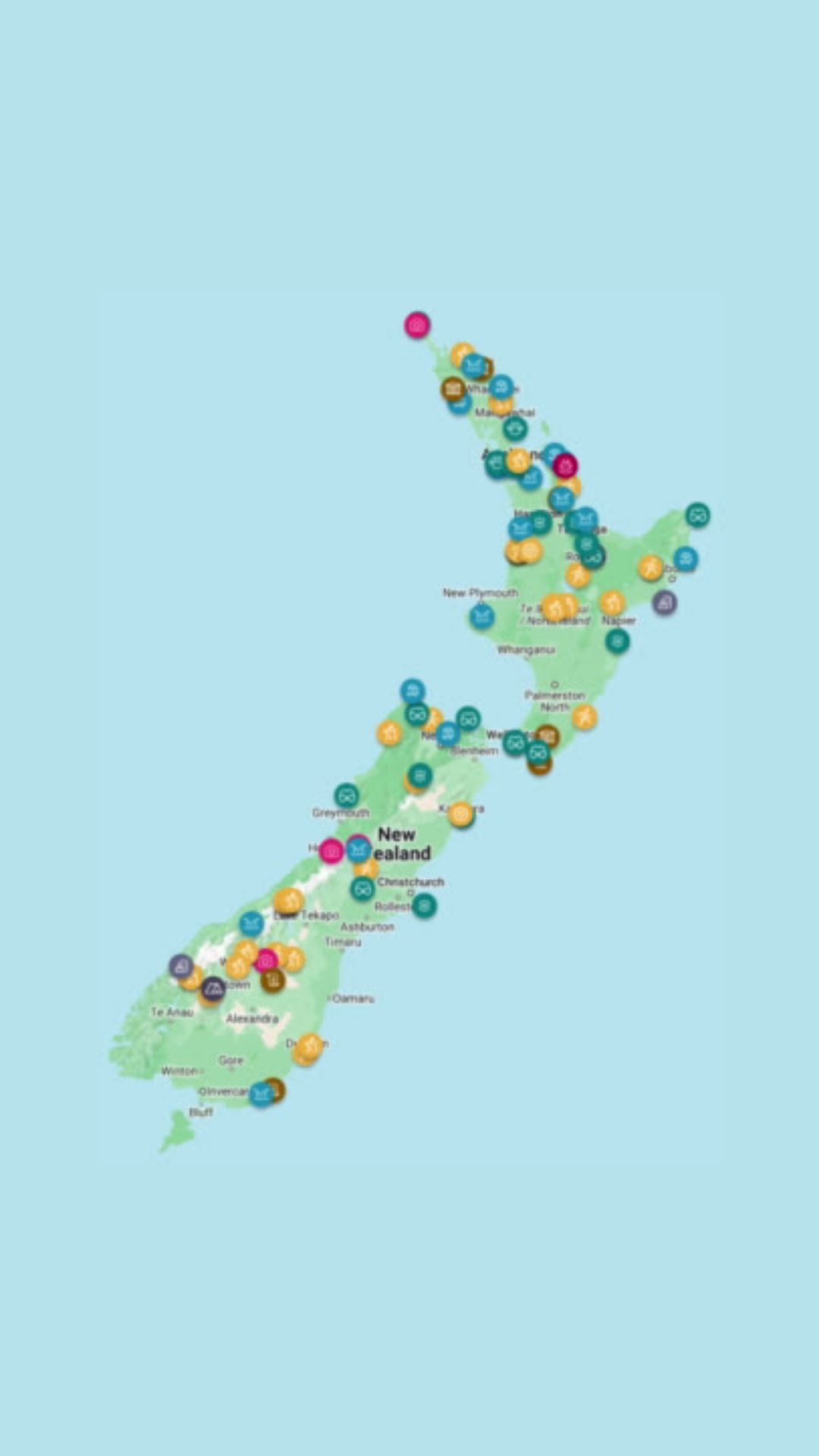
- Otatara
- Invercargill
- Bluff
- Stewart Island Rakiura
- Rakiura Track
- Freshwater Hut
- Mason Bay
- Mount Rakeahua
- Table Hill
- Ulva Island
- Milford Track
- Milford Sound
- Mackinnon Pass
- Mackay Falls
- Lake Te Anau
- Lake Marion
- Queenstown
- Catlins
- Franz Josef
- Mount Cook
- Hump Ridge Track
- Takitimu Mountains
- Taranaki
- New Plymouth
- Tongariro Crossing
Follow Brooke
- Instagram: @sparkygirlnz
Links from this episode
- Follow Brooke on Instagram: https://instagram.com/sparkygirlnz/
- Follow Abigail on Instagram: instagram.com/abigailhannnah
- Follow Aotearoa Adventures on Instagram: instagram.com/aotearoa_adventures_
More like this
- Conservation and Lessons from the Bush with Bushman Sam the Trap Man
- Hut Etiquette in DOC Huts and Exploring the Whitcombe Valley with Renee Cadigan
- Hiking the Milford Track in Fiordland with Sam Fulton
- Empowering Kiwi Women in Hunting & Fishing with Wild Chix Isabell Zitzelsberger
Until then, keep adventuring :)
The ultimate
NZ road trip adventure guide
Packed with insider tips and stunning photography, this is the only resource you need to plan your journey.