
Spotify Apple Podcasts Everywhere else Download
Last winter I tried so hard to line up some mountaineering episodes for the climbing season. But everyone was away climbing (fair enough). So I was really really stoked when Dom made the time.
Dom calls himself an ex-professional mountaineer. He's tried to retire a few times, but he still gets pulled back about twice a year, so retirement's not going too well. These days he's back living in New Zealand and rediscovering the New Zealand Alps.
So we talk about how the mountains became his safe space, the time he snuck off to climb Aoraki, how New Zealand mountains compare to Nepal, and taking a first-timer up Mount Aspiring. Plus where beginners can start, why patience matters more than plane tickets, how to stay warm up high, and what's next on his list. Fair warning: Dom geeks out on the technical stuff, and I loved it.
In this episode
- How Dom got into mountaineering
- Mountaineering in New Zealand and Nepal
- Climbing Mount Aspiring with a first-timer
- Why Mount Aspiring keeps pulling him back
- Getting started in mountaineering
- Weather windows and patience
- Staying warm and what's next for Dom
How Dom got into mountaineering
Dom's introduction to the outdoors was a bit of an accidental one. When he was young, older people gave him the chance to get out hiking, skiing and climbing. The mountains became a safe space for him, and he kept on saying yes to adventures. There was a bit of rock climbing, but he went straight into the snow and ice.
Sneaking off to climb Aoraki
Aoraki Mount Cook was always in the background: you drive past Tekapo and Twizel, and there it is. Dom had read all the books, and he wanted to see if he could do it.
So, very young, he snuck out of home, went up to the Grand Plateau and free climbed the East Face of Aoraki, no ropes or anything like that. He was very lucky to have perfect conditions. He went up and over and out the Hooker Valley, where the police were walking up to look for him: by then he was a missing person. They didn't believe him until he showed them his photos. Back at the village he got a bit of a telling off, and he knows he was very, very lucky it didn't turn into something else.
He picked up a name for being a bit loose, and thankfully some older alpinists took him under their wing. He had natural ability, they told him, and needed to learn more skills and really understand the environment he was operating in.
Mountaineering in New Zealand and Nepal
My husband grew up in Nepal, so we've been there heaps, and I asked Dom how its mountains compare to ours.
Nepal is the roof of the world, so you're dealing with serious altitude. Elevation gain in a day can be quite similar, though, and in New Zealand it can even be higher. The big difference is style. Most people picture Nepal as siege-style expeditions with fixed ropes and loads of support. In New Zealand you carry all your own stuff with no fixed lines, and being self-reliant, alpine-style climbers sets Kiwis up really well overseas. Dom climbs that way in Nepal too, which is pretty uncommon these days.
Altitude sickness, even for hikers
In early November last year, my husband and I walked to Tilicho Lake in the Manang Valley, basically starting at the height of the top of Mount Cook. We went slowly, and saw a lot of people on the trail who were clearly not okay.
Dom says altitude sickness is insidious: people know about it, but think it won't happen to them. He's seen pulmonary oedema, when your lungs fill with fluid and the only fix is to go down quite rapidly. The really scary one is cerebral oedema, fluid on the brain, where people do quite weird stuff. Even hikers in Nepal can get both, and it starts kicking in above 3,000 metres, depending on who you are.
Climbing Mount Aspiring with a first-timer
Dom was doing some work with Movember, getting blokes talking about mental health, and got on really well with the photographer filming him, a friend who was into new experiences and had a pretty good attitude to match. When Dom posted about heading back to New Zealand, his friend messaged asking to tag along on a trip. Dom climbs Mount Aspiring every year as a bit of fun. It's an intermediate climb, and he's clear it's no beginner peak: there are some serious hazards, and if you make a mistake on that mountain, you're going to be in big trouble.
With an epic weather window over Wānaka, Dom invited him, half expecting no reply. The answer: flying to Queenstown. Two days later, Dom got up at 2am, picked him up in Queenstown and drove over the Crown Range to Raspberry Flat.
Up the Matukituki to Scott's Bivvy
His friend had never been up a mountain. Aspiring Hut, down the Matukituki Valley, was quite crowded, so Dom offered the alternative: Scott's Bivvy at the end of the Matukituki, a famous rock you can shelter under with a sleeping bag. To his friend's credit, he was up for sleeping out under the stars, on a cold night.
The Slabs, the Bonar Glacier and Colin Todd Hut
From the bivvy, they went up through a section called the Slabs: a slippery, awkward gradient somewhere between rock climbing and scrambling, which Dom calls no man's land. Then up to Bevan Col, down onto the Bonar Glacier, and up the ridgeline to Colin Todd Hut, perched just above the Bonar.
Dom calls it an amazing resource. The New Zealand Alpine Club keeps these huts in good order, which is really hard when you have to walk or heli up for repairs, so if you're ever wondering why you pay to stay in one, that's why.
Summit day
Dom had hoped to get his friend up for sunrise on the summit. But he's getting older and it was really cold, so they got up at 5 and left at 6am. His friend went from the hut to the summit in five hours, with some pretty technical climbing and Dom short roping him on parts. At the top, he said he absolutely loved it and wanted to go to Nepal with Dom. So Dom is organising a trip.
Then it was straight back down, a cup of coffee, and the long walk out to the car park the same day. For the record, some Wānaka locals run from Aspiring Hut to the summit and back in under 12 hours, as a casual outing.
Dom was laughing and having fun, and his friend was probably terrified a lot of the time. Dom's approach:
- Have a really good plan, and go with someone who really knows what they're doing.
- Trust your plan and your gear, and fully commit.
- Climb within your ability. Wherever someone could get hurt, he made sure they had full protection, or coached his friend through it.
Everything fell into place: the weather, Dom's knowledge of the mountain and his friend's open mindset. The worst thing out there is someone complaining they're hungry, tired and wet. As Dom puts it, that's the experience.
Why Mount Aspiring keeps pulling him back
Aspiring is where Dom learnt a lot of his mountaineering, with peaks out the back from intermediate to hard, and you can walk from Wānaka down the Haast Range out to Jackson Bay. Because it's an intermediate mountain, it's the next step up for so many of his mates, and he loves seeing them grow.
The Matukituki has some amazing hikes too: over to Cascade Saddle, Liverpool Hut on one side, and French Ridge.
Mountains you can walk straight up to
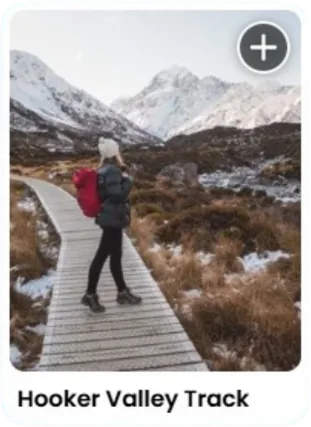
What blows my mind about New Zealand is how quickly the mountains rise. You've got the Canterbury Plains or the West Coast, and then boom, mountains. On the Hooker Valley Track, a short walk on an easy trail, you're looking straight at Aoraki.
Dom says that's why elevation gain here is so big, and the terrain gets pretty sendy pretty quickly. Growing up, he'd sleep in the little A-frame hut above the Hooker Valley towards Sefton, and open the door to Aoraki silhouetted.
He thinks we take our hut network for granted too, and the DOC rangers out in the middle of nowhere with weed eaters, chainsaws and spades don't get as much praise as they should.
Getting started in mountaineering
Asked about beginner mountains, Dom starts with Taranaki. In mountaineering terms it's simple, but a lot of people have died on it, because the elements are very, very real: people get cold, get hypothermia, fall or get disorientated. Getting into the mountains is serious, and the skill set builds over time.
In the South Island, he suggests peaks out of Arthur's Pass. Winter is a good time to play around on crampons, learn to use snow stakes and get used to moving around.
Clubs, guides and learning from people
His main advice is to learn from people:
- The Canterbury Mountaineering Club (CMC). A ragtag group of humans with varying degrees of skill, running great trips from their own huts.
- The New Zealand Alpine Club (NZAC). Similar meetups at a national level, with older, grizzled veterans who run really good skills trips.
- Guiding companies. All the South Island guides teach basic skills, if you've got a bit of money and want one-on-one tuition.
There's so much to learn. Rock alone varies, with cams, pitons, nuts and slings used in different contexts for protection, and snow and ice react differently again: New Zealand's snowpack is maritime, wetter and slushier in the sun, and Nepal's is continental, drier and colder. It's a lot like trad climbing on rock, snow and ice, moving fast enough to get up and down quickly while putting in enough protection to be covered if you fall. Start small, and it becomes second nature.
Dom's summary:
"there's groups of people which just froth the stuff. so find them"
And be open to not having much sleep. Finish work on a Friday, and within five or six hours you can be anywhere in the South Island, hike in that night, climb for two days and drive back at midnight, ready for work at 9am.
Dom's message for anyone stuck in brunch mode: just get out and have a crack. As kids we climb trees and play in the mud, then we grow out of it, and getting dirty and not being afraid of rain brings that excitement back.
Weather windows and patience
Most mountaineering accidents happen on the way down, Dom says. People max themselves out going up, gravity is helping you on the way down, and when you're tired, you make mistakes.
Time is the other big one, because we're not very patient. You want a proper weather window, and an understanding of the snow loading: after a week of heavy snow, you need consolidation periods. In New Zealand, the Avalanche Advisory is really good. In Nepal, Dom talks to people and uses an app called Windy for wind speeds at different heights.
A lot of accidents happen when people rush because they need to get back to work or have plane tickets, and that goes for pushing a Great Walk in the depths of winter too, because then other people have to come and find you. In Nepal, he tells people to get a flexi fare for the flight out, because you don't know what the season will bring. His advice:
"Be very, very prepared just to sit at the bottom of a mountain and look at it."
That reminded me of Alastair and Hamish, who enchained all the 3,000 metre peaks in Aotearoa. The weather gods were on their side, and they went in with the mindset that if it didn't happen, that was okay.
Dom calls that a mature mindset. When he was younger, he pushed things far more than he would now. The only things in our control are our approach and our risk tolerance, and in the end:
"the mountain's always going to be there"
So buy the ticket, figure it out, have the best plan you can, and know that stuff is going to change. Go in with open eyes and you'll have a great time. His own perspective has changed so much since Aoraki: these days, a rainy day is the best time for a run, because it's only you out there.
Staying warm and what's next for Dom
A listener asked how to stay warm up on the mountain, with weather that changes so fast. Dom's tips:
- Invest in shoes and gloves. If you're going to spend money on kit, don't skimp on those.
- Learn the layering system, which you start learning tramping. Know what a down jacket is for versus a Gore-Tex jacket: a puffer in the wet just gets wet.
- Carry fresh socks and thermals. After a hard day climbing, get into your bag and warm up quickly.
- Take a thermos with lots of tea and a lot of sugar.
Next for Dom is getting back to Nepal to climb Ama Dablam and a few other mountains, alpine style. He was there last year and had to bail out. He loves climbing that traditional way, carrying all your own stuff and setting up your own ropes, so you can truly say you went over and had an adventure, summit or not. After that, Pakistan.
Places from this episode
- Aoraki Mount Cook
- Grand Plateau
- Hooker Valley
- Tekapo
- Twizel
- Mount Aspiring
- Raspberry Flat
- Matukituki Valley
- Aspiring Hut
- Scott's Bivvy
- Bonar Glacier
- Bevan Col
- Colin Todd Hut
- Crown Range
- Wānaka
- Queenstown
- Haast Range
- Jackson Bay
- Cascade Saddle
- Liverpool Hut
- French Ridge
- Taranaki
- Arthur's Pass
Follow Dom
- Instagram: @rum_doodle (named after Rum Doodle, a satirical book about a 40,000 foot mountain)
Links from this episode
- Follow Dom on Instagram: instagram.com/rum_doodle/
- Follow Abigail on Instagram: instagram.com/abigailhannnah
- Follow Aotearoa Adventures on Instagram: instagram.com/aotearoa_adventures_
More like this
- First Ascents on Mount Lindenfeld and Mount Haast with Justin Wimmer
- Five days on the Sladden Glacier climbing Mt Sealy and Mt Jeanette with Kaleb Anderson
- Routefinding and Bivvying on Mount Wakefield with Jinal Govind
- Ski-Touring and Camping on Tasman Glacier in a Storm with Helena Sodergren
Until then, keep adventuring :)
The ultimate
NZ road trip adventure guide
Packed with insider tips and stunning photography, this is the only resource you need to plan your journey.