Episode 146
Hiking to Barker Hut and Ranking NZ's Best DOC Huts with Chris Lierheimer

Episode 146
Hiking to Barker Hut and Ranking NZ's Best DOC Huts with Chris Lierheimer
Spotify Apple Podcasts Everywhere else Download
Before we hit record, I had a little look at Chris's hut ranking spreadsheet. And it is so so much more thorough than my own system, which mostly comes down to whether there's a view at the end and whether the view was worth the effort.
Chris grew up in Colorado and first walked the Milford Track in 2015. He and his wife moved to New Zealand in 2019 (right before a pandemic, as it turned out), and they've been out tramping ever since. You might know him from his hut ranking series on Instagram, where he scores huts out of 100, right down to whether there's a flush toilet.
So we get into how the series started, how he ranks a hut, and the first hut that had commenters telling him to harden up. Then the big one: Barker Hut, the trip that pushed him and his wife to their limit. The wrong side of the river, a fall on the scree, a rock slide and a kea, all before dark. My shoulders were up round my ears for most of it. And somehow it's gone straight onto my hit list.
In this episode
- From Colorado to New Zealand
- Bealey Spur Hut, his first New Zealand hut
- How the hut ranking series started
- How Chris ranks a hut
- The Milford Track and a pounamu mask
- Getting to Barker Hut from Klondike Corner
- A long day up the White River to Barker Hut
- Tramping in New Zealand from overseas
From Colorado to New Zealand
Chris grew up in Colorado and has always loved the outdoors. Every summer he went to a camp in Bailey built around introducing kids to the outdoors, which is where he first learned about Leave No Trace and backcountry camping. His family lived in a rural part of Evergreen, backing onto a national forest, and he was climbing Colorado's 14,000 foot peaks from a pretty young age. The big difference from New Zealand is what's out there with you: in the States there are bears, so campsites have big bear lockers for your food.
His first trip here was in 2014. He had the Milford Track booked months in advance, and that all went out the window. So he came back in 2015, completed it, fell in love with the country and vowed to return. In 2019 he married his wife, they were both tired of their corporate jobs, and that November they moved to New Zealand.
When the pandemic arrived, they were on the Abel Tasman, staying at Anchorage Hut. Two days later, back in town, the alerts were on their phones: level four, stay home. They were six hours from Christchurch.
Bealey Spur Hut, his first New Zealand hut
Bealey Spur Hut was the first New Zealand hut Chris and his wife went to. It's a fairly steep two hour hike, and it was her first hike in new boots, so the blisters were terrible. At the top they found an old sheep herders' hut with a dirt floor and wire mesh bunks, so they pitched a tent and a hammock instead. They slept without the rain fly, admired the stars and watched a train go past, then walked down and soaked their red feet in the Waimak. It spurred them on: they realised their legs could carry them up something like that, and started looking for the next thing.
His Bealey Spur video drew plenty of comments, including one telling him to put a spoonful of cement in his coffee and harden up. In it he mentions the hut is rated easy on the DOC website, with a snippet of Fleetwood Mac's "Little Lies" underneath, and commenters were quick to explain that easy refers to how easy the track is to follow. He takes it in his stride and thanks them for the engagement.
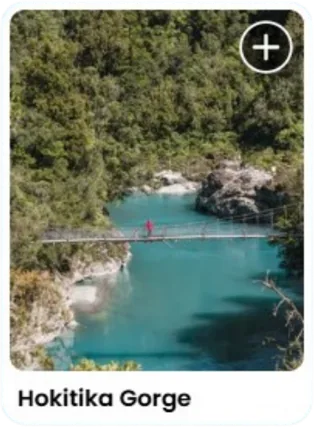
My most viral video is of Hokitika Gorge. The first time we went it was the middle of winter and tossing it down, so the river was brown, and I was a stupid Aucklander holding out hope for bright blue. A couple of summers later it was beautiful and blue, so I stitched the two together as Instagram versus reality. Cue the comments mansplaining the weather to me.
How the hut ranking series started
In their first summer, Chris and his wife also walked the Kepler Track and part of the Abel Tasman. After that they picked five or six more huts every summer, and by 2025 they'd been up to Siberia Hut and walked in to Welcome Flat Hut over New Year. Welcome Flat is a fabulous hike on the West Coast, with natural hot pools and a glow-worm grotto as the reward, and Chris can't recommend it enough.
The long walk in gave them time to wonder how many huts they'd been to in five years, and which were their favourites. Chris is systems and processes oriented, so a list became an Excel spreadsheet with subcategories, and five years of footage became a video series. People loved the introduction video, and spotted that the spreadsheet used the Department of Conservation colour scheme.
Then he realised how big a bite he'd taken. He'd promised the most scenic huts over 30 days, it was unpaid, and he had paid work to do, so it became a drain on his creative spirit and he took a break in the middle to recharge. What helped was stopping to reflect on what he'd already published, and how good it felt. He edits the same way: a rough cut on day one, dumped in like a block of raw marble, then chiselling away at it the next day.
How Chris ranks a hut
Chris tried to take the emotion out of it. A perfect hut scores 100 points across five categories:
- The hut itself, up to 30 points. A flush toilet, or a stinky long drop with flies? Seating, an outdoor deck, enough tables for everybody?
- Sleeping, worth 10. There's always somebody snoring or rustling through their bags, so a sleeping area away from the kitchen helps, and so does a hard-to-reach hut where the other people are fit and maybe snore less.
- The hike, worth 20, built on an effort to payoff ratio.
- The experience, worth 20: the setting and what there is to do there.
- The je ne sais quoi factor, for the things he can't put his finger on.
Effort to payoff is the only way I rank my hikes, so his spreadsheet got me thinking about the other factors.
Mueller Hut is his gold standard and top rated hut, at 95 out of 100. It sits against Aoraki Mount Cook with glaciers all around, and it isn't a huge effort compared to some. In late spring you can slide back down the snow on your bum. The only thing better would be paragliding off the top and not grinding your knees to dust on the way down.
Water counts for a lot. Chris is a water baby, first to strip off and get in, and coming from Colorado, where giardia is a risk, New Zealand's clear water was irresistible. Welcome Flat scores well here too, with hot pools and glow-worms in a naturally occurring grotto. Where else in the world can you see these things, he asks.
The je ne sais quoi factor is where your own experience comes in. However rational he makes the system, so much depends on your mood, the weather and the people you're with.
The Milford Track and a pounamu mask
Chris walked the Milford Track a third time on the day he lost his mum. He'd been able to FaceTime her one last time before he got on the boat at Te Anau Downs.
He had three days of sunshine, which the Milford is not known for, then rain on the last day. To Chris, it felt like his mum coming to New Zealand to visit one last time, and then releasing her tears.
Back in Queenstown, at a market, a pounamu carver had a greenstone mask on display, about the size of Chris's palm. He felt it was his mum leaving her impression on New Zealand. When he told the carver, the carver said he'd been waiting for the right person to take that mask. Chris bought it, was given a small toki as a gift, and passed the mask around at the service. For Chris, it's the kind of experience that makes it easy to believe this place holds a special mana.
Getting to Barker Hut from Klondike Corner
Chris's top line on Barker Hut:
"My top line takeaway from Barker Hut is that it was an experience that pushed me and my wife to our limit, and we came away stronger for it, realizing what we could do."
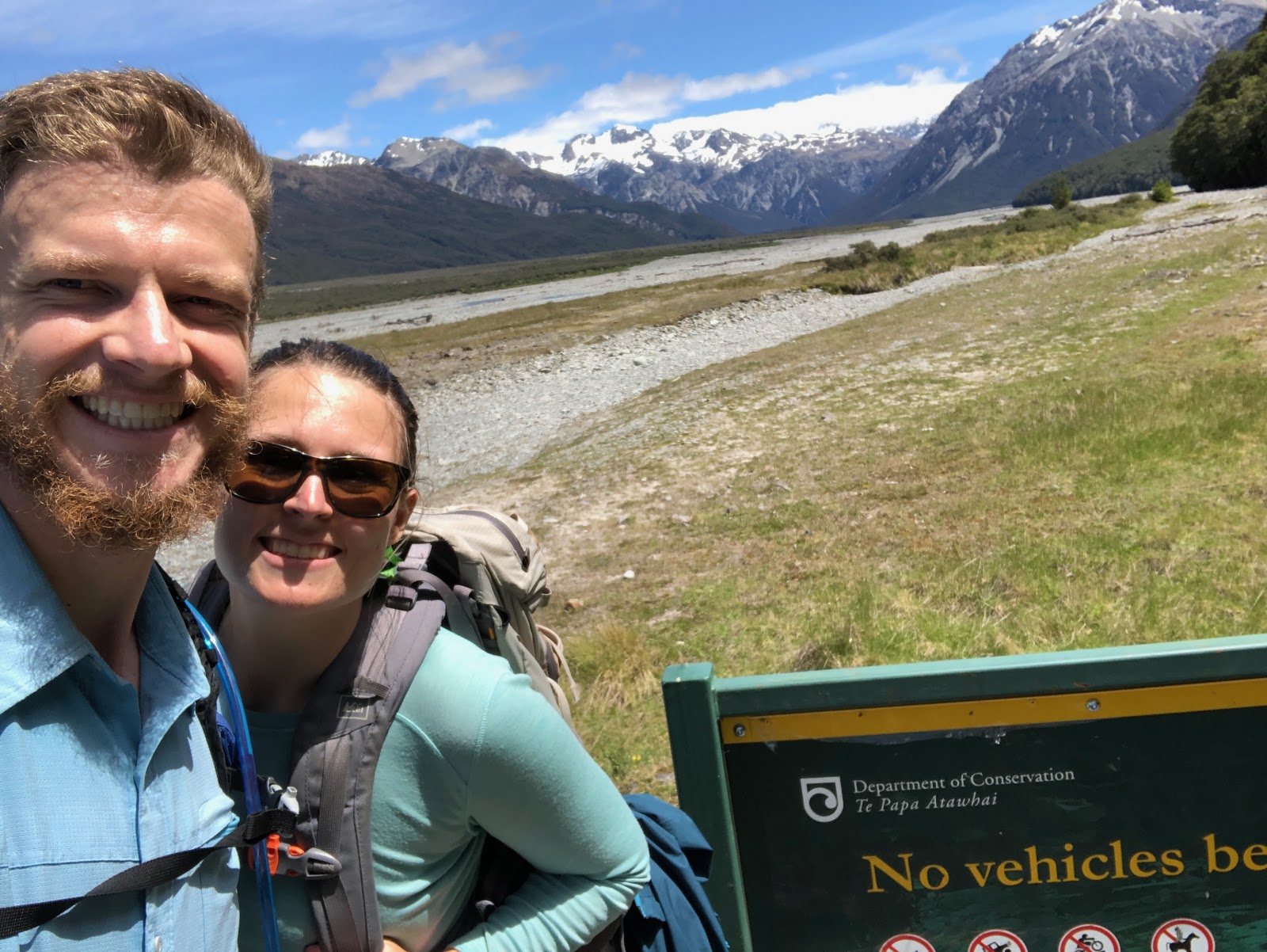
From Christchurch, it's about two and a half hours' drive towards Arthur's Pass. Just before Arthur's Pass you cross the Waimakariri River and park at Klondike Corner. The track heads up the Waimakariri to Carrington Hut, an enormous hut with two wings, and Barker Hut is much further up the White River valley.
It was their second summer, and they picked Barker for its high effort to payoff ratio, knowing the route finding, vertical gain and distance would be at the edge of their comfort zone. They left the trailhead at 10am and reached Barker at 8pm, and they still see it as a pivotal moment: these are big mountains, and if you're not careful and prepared, it can cost you your life.
A long day up the White River to Barker Hut
Klondike Corner to Carrington Hut
The first lesson was to start earlier. It was summer, but they left Christchurch at a leisurely 8am. The stretch to Carrington is Chris's least favourite kind of hiking: at least two hours on a riverbed of uneven, smooth rocks, in wind and blistering sun, with knee-deep crossings that wet your shoes from the start.
Over lunch at Carrington they radioed the ranger station for the weather (barely understandable, between the high frequency radio and the Kiwi accent) and confirmed rain was coming the next day. So they decided to push on to Barker before the White River could flood, and come back to Carrington the next day, where there are high water routes for a flooded Waimak. They told the ranger their plans, and they carried a PLB.
The true left, and three lemons
A trip report said the markers were on the true left of the river: the left as you face downstream. They were facing upstream. It was the hardest going tramping they had ever done, in the water, then the bush, backtracking, then hunting for somewhere to cross the wide, deep river. Finally they spotted an orange pole.
That was news to me too. Now I know the true left is when you're facing downstream.
Chris thought of Survivorman's Les Stroud and his three lemon system: if three things go wrong, turn around. Running late was lemon one. Soon they lost the markers and ended up in a narrow gully with no way through. Chris retraced his steps and found the trail, well above them, and as they looked up at it, his wife fell backwards with her pack onto sharp scree. Shaken, she got back up. They were almost at lemon three.
The rock slide and the kea
Trampers coming down set them on the right trail, a little incredulous they were still going. Then came what they thought was thunder: a rock slide. They were past halfway, with no tent and two more tributary crossings ahead, and even Chris's panic was rising.
But they could see the hut the whole time, a red dot on a huge bluff at the head of the valley. Then a kea called and landed on a rock about 10 metres away. Chris took it as a good omen telling them to keep pushing.
Up the bluff at dusk
The bluff looks like a sheer cliff from below. They scrambled on hands and feet over loose scree, grabbed tussock to stop sliding sideways where the poles ran out, and this time took the left side as the trip report said. The sun dropped below the horizon with about 30 minutes of light left. Sitting on the deck at Barker Hut, the relief flooded Chris's veins. A few mountaineers were there, heading for Mount Murchison the next day, and the pair made dinner and fell into a deep sleep.
The next morning brought a cloud inversion and a relaxing walk back down to Carrington Hut, which they had to themselves on show weekend.
What he'd do differently
Next time, Chris would spend the night at Carrington first, go up early the next day and stay on the correct side of the river. They came away with a stronger relationship, knowing they could do hard things together. His encouragement:
"if you're prepared and you can do it correctly, i think your body is capable of doing a lot more than you actually think it is."
My first solo hike was 85 kilometres on the Old Ghost Road, a big one to pick for a first. I cried on the last day. But now I don't have an excuse: I did something really, really hard.
Tramping in New Zealand from overseas
For visitors, Chris's top line is that New Zealand's hut system is unparalleled, history and all. Bealey Spur was a sheep herders' hut, and near Glenorchy there's a series of huts around an old scheelite mine, including Heather Jock Hut and Boozer Hut, named for an occupant who liked a drink.
When we recorded, most huts needed only a hut ticket, while the famous Great Walk huts were typically booked six months ahead. Some locals find the Great Walks too touristy. Either way, in places like Fiordland, the West Coast, Wānaka and Queenstown, Chris says it's almost like stepping into Jurassic Park, and you don't need a bear canister or a tent. Some Great Walk huts even supply cooking gas. His ask of visitors:
"New Zealanders cherish and value these huts. We really appreciate the land. And I would say if you're coming to New Zealand from overseas to share that same awe and respect for the land, don't leave litter, leave the hut in a better condition than you found it in."
As Kiwis, I think we take the hut network for granted. I had Ben on the show, who's been to 500 huts with another 500 to go. We're so, so lucky.
Places from this episode
- Bealey Spur Hut
- Arthur's Pass
- Waimakariri River
- Klondike Corner
- Carrington Hut
- White River
- Barker Hut
- Mount Murchison
- Milford Track
- Te Anau Downs
- Queenstown
- Glenorchy
- Heather Jock Hut
- Kepler Track
- Abel Tasman
- Anchorage Hut
- Siberia Hut
- Welcome Flat Hut
- Mueller Hut
- Aoraki Mount Cook
- Fiordland
- West Coast
- Wānaka
- Hokitika Gorge
- Old Ghost Road
Follow Chris
- Instagram: @chrislierheimer (his hut ranking system is linked in his bio and on his website)
Links from this episode
- Subscribe on YouTube: youtube.com/@ChrisLierheimer
- Hut Ranking Spreadsheet
- Follow Abigail on Instagram: instagram.com/abigailhannnah
- Follow Aotearoa Adventures on Instagram: instagram.com/aotearoa_adventures_
More like this
- Hut Etiquette in DOC Huts and Exploring the Whitcombe Valley with Renee Cadigan
- Backcountry Huts as Art and Tiny Home Living with Kemi & Niko
- Three Months of Road Trips and Hut Bagging in the South Island with Sophie Wakelin
- Family Heli Trips to Chancellor Hut and Almer Hut with Hami Tangiora
Until then, keep adventuring :)
The ultimate
NZ road trip adventure guide
Packed with insider tips and stunning photography, this is the only resource you need to plan your journey.