Spotify Apple Podcasts Everywhere else Download
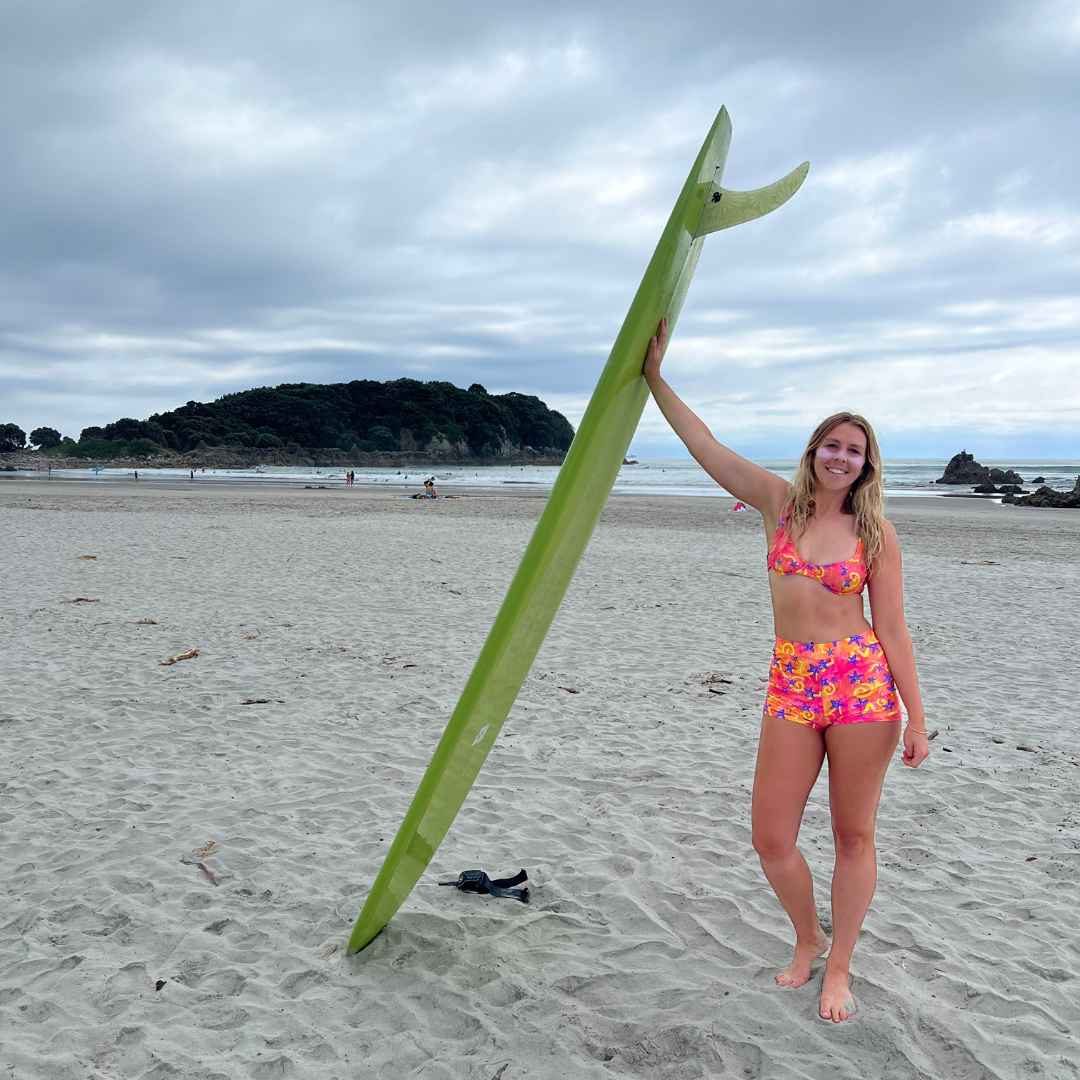
With summer pretty much here when we recorded, I was super excited to talk all things surfing. And I'll admit something: I'm yet to be on a surfboard. I've watched people fall off and fall off and fall off. So who better to ask than Amber Holyoake?
Amber is a surfer (and like a lot of people who come to it later, she still gets imposter syndrome calling herself one). She's based in Auckland, Tāmaki Makaurau, works for a social media agency, and didn't grow up surfing. She got into it properly in her twenties, and now she can't stop.
So we get into how she learnt, from a surf camp in Portugal to the growing community of women in the water at home, her favourite spots on both of Auckland's coasts, the lingo and the learning curve, a few big-wave moments and her very bad luck with dolphins. Plus her tips if you want to give it a go.
In this episode
- How Amber got into surfing
- Learning to surf at a surf camp in Portugal
- A growing community of women surfers
- Best surf spots around Auckland
- Surf lingo and the learning curve
- Big waves and close calls
- Wildlife in the water
- Tips for learning to surf
How Amber got into surfing
Amber has always been outdoorsy, in what she calls a happy medium: bushwalks and beach holidays around New Zealand. She grew up at the beach like most Kiwis, boogie boarding and going out on the boat, and it was in her later twenties that she really got into the outdoors.
I love that wording, because being an outdoorsy family is a spectrum.
She saw Blue Crush as a teenager and fell in love with surfing then, but it felt like one of those far-away things that only the babes in Hawaii did. In her early twenties she got her first beginner board, and for a few years she'd surf once or twice a summer, be excited about it for a week, then forget about it.
Learning to surf at a surf camp in Portugal
In 2018 Amber went on a big Europe trip. It was meant to be a summer, and she ended up living a Peter Pan, Neverland kind of life for a year and a half.
To finish, she spent two months volunteering at a hostel linked to a surf camp in Portugal. She did a few shifts a week cleaning and doing breakfast, and whenever she wasn't working, she'd do a lesson or hire a board. If there wasn't space in the van, she'd hitchhike to the beach.
Some people, often young, fit men, would do one lesson of a paid week, stand up and head off on their own. Amber took the opposite approach. Free lessons meant as many lessons as possible, because:
"you can be a really good surfer or any kind of sports person and you still need a bit of coaching"
Then her money and her visa ran out, and she came home just before COVID with the surfing bug.
A growing community of women surfers
Back in Auckland, Amber got a board and went out a lot with a friend, an older bodysurfer whose work car came with free petrol. But she wanted people her own age to surf with, and for a couple of years she didn't have that community.
In the last couple of years, that's changed. Women have been connecting on Instagram, and now there's a huge community. She went from surfing alone with her buddy every weekend to seeing videos of people she's met online, with group chats and everyone knowing everyone. She looked up and realised there are so many of them now: a little sisterhood, almost.
She's never felt limited as a woman in surfing, which she knows is a privilege. Some of the surf chats on Facebook are very misogynistic, and the female community is slowly growing to support each other.
Is surfing social?
It's becoming more social. Men have told Amber the lineup (the line of surfers) is a lot friendlier when there are women in it. On a bigger day, when she's often one of the only women out, it gets more serious, and some men can be quite aggressive. So it's a mix.
Best surf spots around Auckland
Auckland is blessed with two coasts. The west coast is very wild, and the east coast is a lot more mellow, because the Coromandel blocks the swell, so when the east coast does get swell, it's awesome.
Amber's favourites:
- Ōrewa. It gets a small wave, and she's been raving about it for years while everyone says it's too small. On a good day you can catch so many waves, and her friends are catching on.
- Tāwharanui. Her favourite on the east coast, further north.
- Piha. Her go-to on the west coast. A lot of people are scared of it because of Piha Rescue, and the west coast beaches are all wild, but once you know them, they're great.
Further afield, she hasn't surfed as much, but anywhere around the country there's going to be a wave somewhere.
Why it's worth the drive
Amber has driven two hours to catch one or two waves. When you love something, the point is being out there, even when you read the forecast wrong and paddle around doing nothing. It always beats being in an office.
She calls it an addiction: something in her switched on, and now she can't stop. She's been injured since June, and it's been really hard. Out at Piha on a biggish day she wears such a serious face that people don't talk to her much, but it's something she can't live without:
"if someone said to me, we're going for a dawn surf get up at four thirty in the morning I'd do it no questions."
Put me on a mountain for sunrise and I'll be up at 4am too.
Surf lingo and the learning curve
Amber sees two types of surfers: those who grew up with it, and those who came to it later with a dose of imposter syndrome. Her partner grew up surf lifesaving, surfing and bodyboarding, and tells her when she's sounding too much like a kook.
A kook, she explains, is someone who's bad at surfing, or out there making a bit of a fool of themselves. Then there's the technical talk about waves: green waves, out the back, set waves, getting tubed or the green room. You don't need to know any of it to start.
Every stage has a challenge
Standing up is the beginning. You have to learn to read waves and understand how the beach works, including that rips are actually good for surfers, which seems counterintuitive. Once Amber became aware of what she was doing wrong and what to work on, she progressed a lot more.
The stages, as she's found them: popping up onto the board, reading waves, getting from the shore out the back where the waves are bigger and unbroken, learning etiquette, then all the gear. For her, surfing was quite easy to learn up to the popping-up level, and a lot harder to get better.
Her other limits are time (she works a busy nine to five, so she's a weekend warrior) and injuries, all from netball, so she's giving up netball to keep surfing.
Hearing all the parts, it sounded like learning to drive, where there's so much to think about at first and then it's second nature. I imagine paragliding is the same, with all the ropes the first time.
That's also why Amber reckons a lot of really good surfers are terrible teachers. Someone who went through it a year or two ago remembers what it's like to not understand how to pop up:
"you become an expert and you forget what it's like to be a beginner."
Big waves and close calls
Amber hasn't had any really bad calls. She knows her ability and won't get in the water if she isn't comfortable. But she's not super risk averse: she'll go out on her own, and on her longboard she'll sometimes take on surf she maybe shouldn't. The rule of thumb is bigger boards for smaller waves and smaller boards for bigger waves.
One day at Māori Bay, next to Muriwai, she was one of the only women out, in a bright pastel wetsuit on a big green longboard, among men in black wetsuits on little white shortboards. It was very obvious when she screwed up. One wave was a lot bigger than she expected, and the drop was so big her board bounced at the bottom and flew her off.
The Taranaki wave
One of her pinch-me moments came on one of her last surfs before this injury. She was in Taranaki for a girls' surf event, the main beach was a bit average, so the next day she and her partner drove an hour south to a secret spot. The waves were big. She sat away from the shortboarders, and it felt like all her learning came together.
She caught one wave that session, with the biggest adrenaline rush, and came off it so shaky she couldn't paddle back out. On the drone footage it didn't look as big as it felt, but she was really proud of herself.
It's what you feel that matters most. When I'm rock climbing, my legs sometimes go fully shaky, and I think, okay, maybe I need to call it.
Tāwharanui on a big day
Cody shared a gnarly moment at Tāwharanui on the podcast. Amber says that beach can be deceptively scary for a mellow east coast beach. One big day she paddled out the back with a friend, decided it was not for them, and paddled round to a safer spot and back in.
When we camped at Tāwharanui once, my husband and a friend went bodyboarding and got washing-machined by every wave.
Wildlife in the water
Amber is dying to surf with dolphins or orca, and she is completely jinxed. The day after she went to Ōrewa to film her friends, there were dolphins. Another day, plans to fly her drone at Piha fell through, and there were orca at Piha. Then friends surfed with Māui dolphins in the lineup at a spot she'd skipped because of the drive and the weather.
The best she's seen is a stingray, twice, looking down from a wave. She did once save a little blue penguin in really big surf, chasing it out beyond the break when it was getting tired.
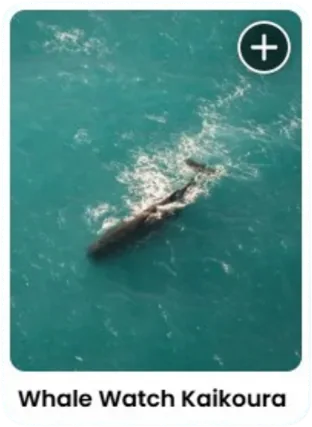
Down the Kaikōura coastline, I feel like wildlife encounters are almost guaranteed, so maybe she needs to head there.
Tips for learning to surf
Amber's advice if you want to start:
- Take lessons. People underestimate how good they are, and you can pick up bad habits teaching yourself. Find a local surf school, and go back for more lessons when you want help progressing.
- Find your people. There are groups on Facebook, and Amber is always happy to give free advice in a DM.
- Be a confident swimmer. She has surf friends who can't swim, and you need to learn.
- Build some fitness. It can get very tiring, and if you want to progress and surf somewhere like Piha, you don't want to be away from your board and floundering, putting someone else's life in danger. If you stick at it, you'll pick up the fitness naturally.
- Start in the whitewash. A good surf school will take you out in the shallow water, and you can probably stand up on a wave in a day.
- Don't worry about age. You can surf your whole life. Some of the old dudes in her longboard club are still shredding, and her women's groups include mums in their forties and fifties.
When we recorded, Amber's dream trip was the Mentawais, off the coast of Indonesia, and she was heading to Australia's east coast that summer: the Gold Coast, Byron Bay and Port Macquarie. Most of all, she just wanted to surf again.
She also offered me one of her old beginner boards (a big canoe of a thing, high volume and really easy to catch waves on), and I said I'd take her up on it after our South Island trip.
Places from this episode
- Auckland
- Ōrewa
- Tāwharanui
- Piha
- Māori Bay
- Muriwai
- Coromandel
- Taranaki
- Kaikōura
Follow Amber
Amber shares her surf photography and adventures on Instagram and TikTok.
More like this
- Learning to Freedive, Spearfish and Building Community with Renee Taylor
- An Ocean Obsession, Great White Encounter and Spearfishing with Laura Kuggeleijn
- Crossing the Cook Strait on a Paddleboard and Surf Lifesaving with Britt Spencer
- Empowering Kiwi Women in Hunting & Fishing with Wild Chix Isabell Zitzelsberger
Until then, keep adventuring :)
The ultimate
NZ road trip adventure guide
Packed with insider tips and stunning photography, this is the only resource you need to plan your journey.