
Spotify Apple Podcasts Everywhere else Download
I had my first ever scuba dive six months before this chat, and it was a big deal. I am terrified of the ocean, and I don't like fish. Why would I put myself in that position?
But a few years earlier in Kuala Lumpur, I made my husband (who's scared of heights) go in a glass box hanging off the side of a building. His deal: if he did the glass box, I'd go scuba diving. Post COVID, he made me keep that promise. And I loved it.
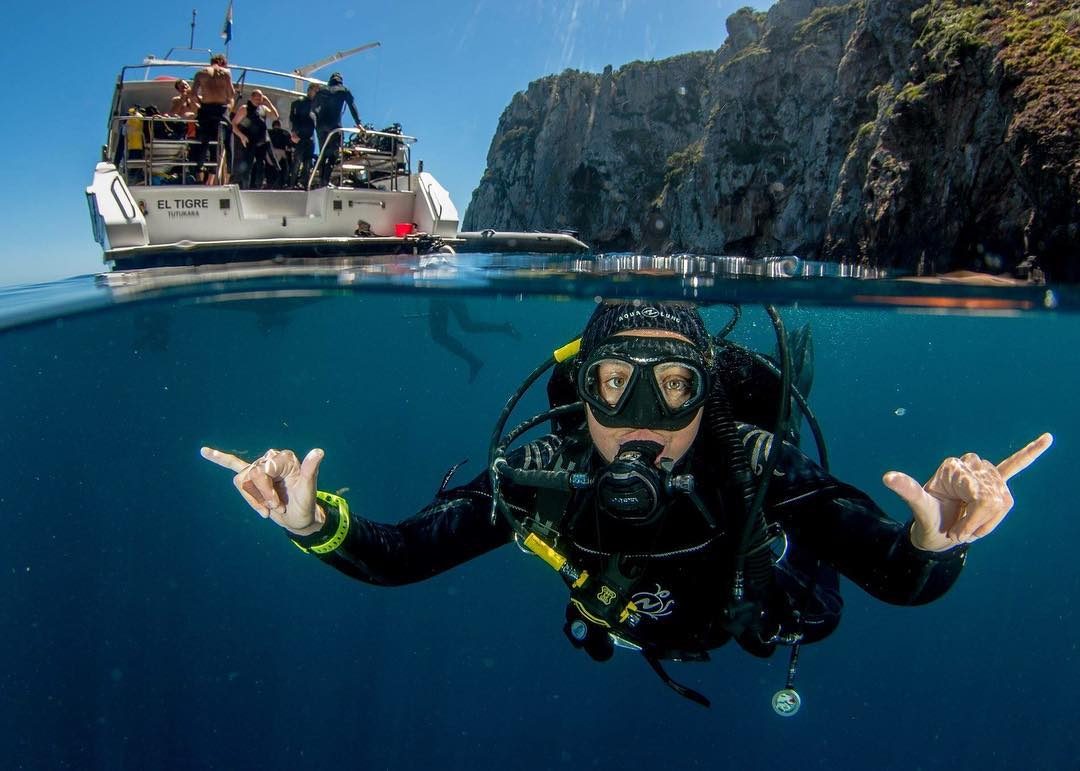
So I was really really excited to sit down with Annika. She grew up sailing around Aotearoa, worked her way up from deckhand to dive instructor, and now helps run marine expeditions. Her passion for everything underwater is contagious.
We talk about the Poor Knights Islands (including a stingray dive she'll never forget), tropical visitors on our coast, staying calm when a very big shark turns up, how dive certifications work, night diving, how to ease into the ocean if you're nervous, and where to dive all the way down the country.
In this episode
- Growing up on a yacht around Aotearoa
- From deckhand to dive instructor
- Diving the Poor Knights Islands
- Tropical visitors and big fish
- Staying calm underwater
- Dive certifications, from open water to technical
- Easing into the ocean if you're nervous
- Where to dive in New Zealand
Growing up on a yacht around Aotearoa
Annika was very lucky, she says, to grow up on a little 30-foot yacht, sailing around the coast of New Zealand. The ocean has always been her backyard and a place where she feels very comfortable.
They'd go to school in winter and live on the boat over summer, spending Christmas and New Year on board, catching up with other families sailing the coast and coming back a day or two before school started.
The boat's open transom suits coastal missions more than big offshore waves, so they stayed around Aotearoa. They'd start from Auckland and sail up to the Bay of Islands or down the coast, island hopping in between.
As a kid she got to try breathing from a regulator underwater, which is weird in general. Then at university she did her open water course, and she was hooked. She saved up and dived every moment she could.
From deckhand to dive instructor
Annika studied architecture, which is quite different to anything marine. While she was studying, she emailed Dive Tutukaka asking for a summer job, and made a point of saying she could identify all her New Zealand fish and species. They gave her a three-day trial, and she started on the boats as a deckhand and snorkel guide.
She came back every summer. In her first season, she thought the dive instructors had the coolest job ever, so she slowly did her courses and worked up there as an instructor herself.
In winter, she worked as a casual aquarist at Kelly Tarlton's Sea Life Aquarium, feeding the creatures and talking to people about them.
Her thesis looked at design as a tool for people to better understand their environment, which led to teaching kids about the ocean in schools with 360-degree underwater VR videos. The closest thing to diving without getting wet, as she puts it.
Along the way she's been a hiking guide, a dive instructor for other shops, and done stints at architecture firms (to make sure that was definitely not what she wanted to do). Her current job grew out of a vessel she guided on: she and the owner talked about using vessels as platforms to support marine projects. Now she's part of an Auckland-based team, within a global organisation, building a company from the ground up, running expeditions and working with world-leading scientists. Work and adventure, merged together.
Diving the Poor Knights Islands
New Zealand has always been Annika's favourite place to dive (she learned here, so she admits she's biased), with spots you can't compare anywhere else in the world.
She was lucky enough to work at the Poor Knights Islands, rated one of the top ten dive sites in the world by Jacques Cousteau, the famous explorer who invented the aqualung for breathing underwater. On some dives you're surrounded by thousands of fish, above, below and all around you.
The stingrays at Northern Arch
One of her favourite dive sites is Northern Arch, at the very northern end of the island. The archway is 40 metres deep with about 20 metres above the water, and it's narrow, so the current pushing through draws in a lot of fish.
She'd grown up hearing about stingrays gathering there, sitting midwater stacked up like pancakes. It hadn't happened for 15 years.
In her briefings, Annika teaches her divers hand signals for how they're feeling: one okay is average, double okays are good, double shakas are great, and if it's out of this world, you make a big A with your hands above your head.
One season she jumped in there with five divers, stuck her head around the corner to check the current, and saw over 60 stingrays filling the archway, above and below them. Then she turned around:
"they've all got their hands above the head making the a signal and I was like yes you are doing exactly how I'm feeling inside"
Sharing it made it a massive standout dive. They've had manta rays, dolphins and orca there too.
Night diving
One season Annika worked on a liveaboard at the Poor Knights, doing a night dive every couple of weeks. What she loves about New Zealand night diving is that eyes shine different colours in your torch. All the crustaceans, like crabs and crayfish, have red eyes, and the rocks are covered in them. Predators like stingrays have green eyes, so you spot a green eye and it's a stingray coming in to have a look or hunt.
Different species come out at night too. Her best night dives are with bioluminescence: you turn off your torch, move your hands, and there's glowing blue light everywhere. Any night dive she does, she turns her light off quickly to check.
Tropical visitors and big fish
In summer, easterlies push the East Auckland Current (think of the current the turtles ride in Finding Nemo) in close to the North Island. It brings blue tropical water and tropical species that aren't normally here, like mahi mahi, manta rays and turtles. You'll be diving among your New Zealand fish when a brightly coloured one swims past that's not meant to be here.
You get it at the Poor Knights, and down off Whakatāne around Whakaari White Island too. Whakaari has the biggest fish. On one dive, a kingfish bigger than Annika sat right in front of her, like a staring competition. As she puts it:
"that's what I really love about diving. Is you … Get a glimpse into a different world and and be a part of their world just for a little bit"
Staying calm underwater
Annika's first scary moment came as a kid, around the time Steve Irwin died, when she was really scared of stingrays. She saw one while trying out diving, jumped out of the water and didn't want to dive again. It took years to get back in, and it was working at the aquarium that did it, because part of the job was feeding the stingrays.
The barb on a stingray's tail is like a bee's sting, a last resort. If you don't step on them or try to catch them, they swim away. Learning that, she's taken the same approach into every nervous moment since.
When she started guiding as a divemaster, with a hundred dives to her name, some of her divers had thousands, and her confidence took time. Her rules:
- Never hold your breath. Always keep breathing. It's the most important rule in scuba diving.
- Go slow. You don't want to rush anything. Slow is key.
- Take a breath and stop. If you feel your heart rate going up, slow everything right down.
A tiger shark in the Kermadec Islands
On a recent expedition to the Kermadec Islands, a group of volcanic islands between New Zealand and Tonga, Annika was guiding four divers, including the boat's captain.
Partway through the dive, the Galapagos reef sharks that are common up there all dropped to the bottom, which was unusual. Then three kingfish came in and hugged in underneath her. Something else was in the water. They saw a much bigger shape, and her first thought was a great white. She'd never seen one in the water without a cage.
The whole team got down onto the reef like the sharks. As the shark approached and turned, they saw it was a tiger shark, a similar size. In her words:
"I remember in that moment going whoa. Okay I feel very small I did feel very small in the water"
She breathed through it and admired how amazing the shark was, while keeping the team really calm on the bottom until the shark swam off. Then they slowly swam back to a wall and surfaced. No one had seen a tiger shark diving up there before. The team debriefed, talked it through, and jumped back in the next day.
What freediving teaches you
Freediving helps too, Annika reckons, because it's all about lowering your heart rate and staying calm, a mindset that carries over. She's done a little, off the boat with friends, and it's great for creatures that don't like bubbles, like whales and dolphins.
Dive certifications, from open water to technical
Courses run through companies like PADI and SSI. Annika explains the steps:
- Open water. Your first course, certifying you to 18 metres. That's a really good depth to get a feel for it, because the top 15 metres is where you get the most light, nutrients and fish.
- Advanced open water. Takes you to 30 metres, through five adventure dives, each a different skill: navigation, buoyancy, a deep dive, a wreck dive or a night dive.
- Rescue diver. One of the best courses ever, she says, all scenarios: a missing diver, spotting problems early, bringing someone up from the bottom. The more rescue divers, the safer the diving community.
- Divemaster. An internship where you help on courses, guide people and set up dive sites. It can get you work around the world.
- Dive instructor. Workshops, then assessment on how you teach, calmly and step by step.
She compares it to getting your licence. Open water is your learners and advanced is your restricted. At first you're thinking mirror, indicator, breathe. With time that's automatic, and you start noticing the kids with the ball on the side of the road. That's when you're ready for rescue.
When I did my first dive, it was a try dive with an instructor, after a day snorkelling while the others dived. I was taught to clear my mask and get my regulator back if it got knocked out, and I managed to knock it out of my own mouth, so I was really glad they taught us that. I was definitely on my learners.
Technical diving
Past the professional route, there's technical diving:
- Wrecks. Sunken planes, vessels or any man-made object.
- Caves. There's a little in the South Island, and a lot overseas in places like Mexico.
- Gas mixes. You start out breathing the same 21% as on land, and changing your mix lets you stay underwater longer.
- Rebreathers. They collect, clean and recycle the air you breathe, so there are no bubbles.
Easing into the ocean if you're nervous
Annika's advice:
- Read up first. New Zealand Geographic has 360-degree underwater videos online.
- Start shallow. Somewhere you can stand up and put your face in the water with a mask.
- Go with someone who's done it before. They can point things out and give you tips. At Goat Island, she rates the Goat Island Snorkel and Dive team.
- Add buoyancy. A wetsuit, a pool noodle across your chest, a boogie board to lie on, or a life jacket that already floats (not the self-inflating kind) gives you that extra security.
She also rates Experiencing Marine Reserves, all around the country, for all ages and experience levels. Their snorkelling and kayaking days are a really good first step.
My first ever snorkel was at Goat Island with Experiencing Marine Reserves, before I threw myself in the deep end in Thailand. I'm not a confident swimmer, so I held on to a little boogie board, and putting my face underwater and seeing it was okay made all the difference.
Where to dive in New Zealand
Most visitors are surprised New Zealand has diving at all, Annika says. It's colder, so you wear a thicker wetsuit. Her picks, top to bottom:
- Poor Knights Islands. Definitely.
- Bay of Islands. The Canterbury, a navy vessel sunk for divers at Deep Water Cove, sits upright, so swimming through it feels like being on a boat above water (most wrecks lie on an angle). Out at Cape Brett, there's the Hole in the Rock and some really cool pinnacles.
- Cavalli Islands. The Rainbow Warrior wreck, with interesting history.
- Waiheke Island. Shallow reef diving in the Hauraki Gulf, and you can finish the day with a winery tour.
- The Coromandel. Her favourite islands are the Mercury Islands, plus the Aldermen Islands, with some really cool pinnacles.
- The Rena, a container ship wreck off the coast of Tauranga.
- Whakaari White Island and the Volkner Rocks, a marine protected area to the north.
- Wellington. A marine reserve with no boat needed: walk across the road from the dive shop and into the water, with pāua, seals and lots more crayfish.
The South Island is as different from the North as snowy mountains are from beaches, Annika says. In Doubtful Sound and Milford Sound, where there's a dive operator, rainwater forms a freshwater layer on top called a tannin layer, which stops sunlight getting in. Even during the day it's like a night dive. Black coral (beautiful white coral trees) normally grows deeper than 40 metres, but here you see massive trees at 6 to 10 metres, with heaps of blue cod and walls full of crayfish.
When I did a Milford Sound cruise, they took us down into a little underwater observatory below the freshwater layer to peek at the coral and the fish.
For the really keen, there's Stewart Island. Annika hiked the Great Walk there and didn't dive, but she'd love to go back for the giant kelp forests.
Her bucket list: the Lermontov, a ship that sank in the south after cutting a corner and hitting a rock, to look inside, and the Three Kings Islands, north of the North Island. She's slowly trying to dive every island in New Zealand.
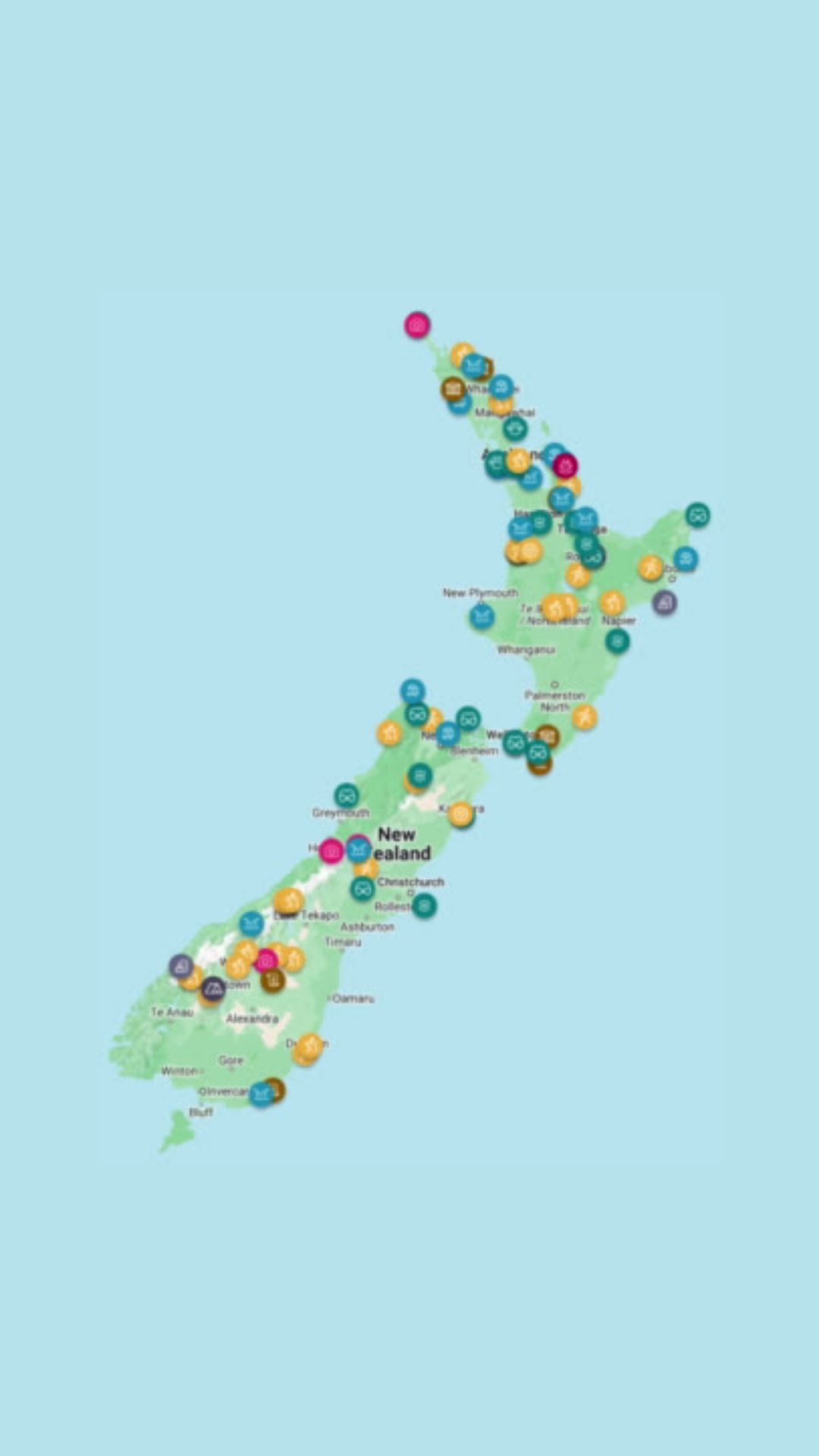
Places from this episode
- Poor Knights Islands
- Northern Arch
- Bay of Islands
- Deep Water Cove
- Cape Brett
- Hole in the Rock
- Cavalli Islands
- Waiheke Island
- Hauraki Gulf
- Coromandel
- Mercury Islands
- Aldermen Islands
- Tauranga
- Whakatāne
- Whakaari White Island
- Volkner Rocks
- Kermadec Islands
- Goat Island
- Wellington
- Doubtful Sound
- Milford Sound
- Stewart Island
- Three Kings Islands
Follow Annika
- Instagram: @annika_andresen
Links from this episode
- Follow Annika on Instagram: instagram.com/annika_andresen/
- Follow Abigail on Instagram: instagram.com/abigailhannnah
- Follow Aotearoa Adventures on Instagram: instagram.com/aotearoa_adventures_
More like this
- An Ocean Obsession, Great White Encounter and Spearfishing with Laura Kuggeleijn
- A Sea Kayaking Expedition Along the Fiordland Coast with Mark Jones
- Ultra-Swimming and 11 Hours to Swim Across the Cook Strait with Ivan Polyntcev
- Learning to Surf in New Zealand with Amber Holyoake
Until then, keep adventuring :)
The ultimate
NZ road trip adventure guide
Packed with insider tips and stunning photography, this is the only resource you need to plan your journey.