Episode 161
Empowering Kiwi Women in Hunting & Fishing with Wild Chix Isabell Zitzelsberger

Episode 161
Empowering Kiwi Women in Hunting & Fishing with Wild Chix Isabell Zitzelsberger
Spotify Apple Podcasts Everywhere else Download
I'll be upfront: I get the ick with raw meat. I don't even cut the chicken in my own kitchen. So a chat about hunting and fishing was always going to push me a little, and I loved every minute of it.
Isabell is originally from Germany, lives in Tauranga, and started Wild Chix to get more women into hunting, fishing and boating, spaces so often dominated by men. She went from sitting with a Sudoku book while her partner fished to catching her first marlin, and from never having towed a boat to running hunting weekends in the bush.
And so much of what she said hit home for me (I was nodding along the whole time). We cover why Tauranga is so well placed for adventure, how she got into fishing and hunting, the art of deer stalking, the safety stuff nobody tells you, and why turning up at a busy boat ramp as a woman with a boat and trailer is the best feeling.
In this episode
- From Germany to Tauranga
- How Isabell got into fishing
- Learning to tow the boat
- Getting into hunting
- Deer stalking: slow, quiet and patient
- Hunting safety and first aid
- Wild Chix and women in the outdoors
- Isabell's fishing and hunting bucket list
From Germany to Tauranga
Isabell and her partner travelled around the world for a year, and realised they're outdoorsy people and that New Zealand was the perfect place for it: extremely pretty, very accessible, and full of welcoming, friendly Kiwis. In 2012 they came back to see if they'd still like it when they had to work and pay tax. When we recorded, she was still exploring every weekend and loving it every single day.
They started in Auckland and moved to Tauranga in 2016. Every so often they wonder about living somewhere else, but Tauranga is so central for what they love doing. The Kaimai Range is right there, the Kaimanawas are close, there's the west coast, the east coast, the ocean, the lakes, the Coromandel around the corner and an international airport not far away.
Isaac and I had just spent a week in Tauranga, and we wondered if it's the Christchurch of the North Island: everything is close, without being right in the mountains.
Isabell reckons Tauranga has the edge on the water, with islands like Motiti, the Aldermen Islands and Slipper Island to explore, and fishing that's a bit more accessible because it's not such an open coast.
A city childhood and the Kiwi welcome
Isabell grew up in a flat in a big German city, taking the subway to school, without much of an outdoor life. Living so close together, she found, makes people protect their space, like they're walking around with their elbows out. Kiwis have space, so they're far more welcoming. On their backpacking trip, their supervisor at a campervan cleaning job invited them to live with him, and people at the supermarket checkout offered them a job and a barbecue. That was part of what drew them back.
How Isabell got into fishing
Her partner became obsessed with fishing when they lived in Auckland. At first, Isabell found land-based fishing the most boring thing ever, and sat with her Sudoku book while he spent hours catching nothing.
Then he got better, they caught fish they could eat, and her interest grew. They drove up to Northland so many times, to remote fishing spots like Spirits Bay. Then they got their dive certificates, and a few offshore dive trips sparked the idea of a boat.
Suddenly they had a little old orange Sea Nymph with a two-stroke Yamaha on the back, and their fishing journey began in the Hauraki Gulf: the back of Waiheke Island, the Noises and beyond.
Growing up, she'd look out of the window at another house or a bus stop. Out on the boat:
"when you sit down, on your boat, on the ocean, with your rod in the water, and you can look far, and it's almost endless, and that is like, almost like a breath of freedom"
The next thing out there might be Chile. Fishing is exciting, calming, freedom from the busyness of work and life, topped off with catching your own dinner. And coming from Germany, where you need a licence to fish, she was blown away that here you can buy a boat and go fishing without one.
I've only recently started exploring the Hauraki Gulf islands by kayak. Tiritiri Matangi is a favourite, and we've circumnavigated Rangitoto and Motutapu and camped overnight on Motuihe. It's such a cool way to get out there.
Learning to tow the boat
In 2018 Isabell got a job with a boat manufacturer. The first thing they asked was whether she could bring her boat in, since it was one of theirs. She had to admit she'd never towed it. She couldn't back a trailer. Her boss nearly fell off his chair: she'd been fishing for ten years.
Her partner had always towed, bought the rods and bait, and knew how to fish. That was a big realisation, because she thinks it's the case for so many women: it's the family boat, but the husband is the skipper and the one backing the trailer. Men tend to wing it, while women are often more self-conscious about embarrassing themselves at the boat ramp.
It's also hard to learn from your partner. Isabell learnt to back a trailer with her work colleagues, because with her partner, they'd be arguing within a minute.
I felt so seen. On tramps, my husband always thought about the food and the kit, and I'd pack my layers while he gave me everything else. It wasn't until my first solo tramp that I made sure, very intentionally, that I had everything I needed. It's the same with kayaking: I rely on him for the PFDs, the spray skirts and the paddles (quite an important part of the kit).
Getting into hunting
In 2021, Isabell got her firearms licence and did a hunting course with the New Zealand Deerstalkers Association. It was amazing. Then you sit there with your licence and think, so what now? What calibre do I buy? Where do I go?
She quickly became secretary of the Deerstalkers Association's Bay of Plenty branch, and realised there were hardly any women. If you're reluctant to ask the dumb questions in a room full of older men, it's really hard to find a way in, unless a partner, uncle or dad takes you. And even then, you often take the back seat.
Isabell doesn't mind being the only woman in the room, having worked mostly with men in the marine industry, but it does make you stand out.
Why she loves it
Out on the water, every trip is like going to the casino: there might be dolphins, whales, or your personal best snapper. For hunting, she loves the tops in the Kawekas: waking above the clouds for sunrise, going light with just the essentials, and being with nature. Then there's bringing food home to share with family and friends, meat on the table with a story behind it, rather than a plastic packet from the supermarket.
Some trips have been hot, heavy and exhausting enough to bring her close to tears, but her brain filters out the bad memories and she's ready to go again.
Deer stalking: slow, quiet and patient
On the tops, you might shoot from three or four hundred metres away. In the North Island bush, it's mostly stalking, where a deer could be 20 or 30 metres away and you'd never see it. Isabell sums up the skills:
"Being slow, quiet and patient. Three things which are incredibly hard."
The deer live there, they're super smart, and they're in no rush. So you need to:
- Learn the environment. Which ground and which plants make noise as you pass.
- Read the wind. If it's blowing the wrong way, they'll smell you and lie low. Get it right and you might smell them.
- Let the deer make the first noise. If you hear a noise that isn't you, something is walking nearby.
- Wait. Sometimes half an hour or longer.
Once, her dog kept telling her there was a deer. She couldn't see it, until it jumped up ten metres in front of her and ran off. Trust your dog.
Isabell says she's still too fast and too noisy. One hunter she met takes three steps, stops, scans and listens, then takes three more. He once waited out a flicker behind a bush he'd taken for a bird, and it was a deer's ear.
The sika deer in the Kaimanawas are very inquisitive: they'll whistle at you, or walk a circle and turn up behind you to check you out. Super smart, super hard to hunt.
Hunting safety and first aid
You learn from your mistakes, Isabell says, but in the bush or on the water you hope you don't make one you can't learn from. Her biggest points:
- Respect the rifle. Be over-conscious that you're carrying a firearm. Every year, accidents happen when someone gets "buck fever", desperate for a stag, and shoots at movement in the bush without identifying their target.
- Get your first aid sorted. A cheap first aid kit won't save your life if you slip with your knife while butchering a deer and hit a main artery. Can you stop that bleed? Can you get yourself out of the bush?
- Carry a PLB.
- Know your navigation. It's so easy to lose your bearings in thick bush.
- Take a torch and a spare. You often shoot a deer just before dark, and by the time you've found it and started butchering it, it's dark.
- Tell someone where you are.
Isabell mostly hunts and fishes with other people, but a solo trip is high on her list, to make her own mistakes and learn to enjoy her own company.
Wild Chix and women in the outdoors
Isabell started Wild Chix because women aren't really present in fishing, boating and hunting, and often don't back themselves enough to step in. Women often learn differently, and can feel judged even when nobody means it.
She sees couples buy a boat together, and then the wife can't use it without her husband. The goal is a community where one friend can ring another and say: it's a great day, I've got the boat, let's go. Or: let's take the rifles and go bush.
And her favourite feeling:
"When you turn up as a woman with a boat and a trailer on the boat ramp, everyone will look at you and you just can turn around and go like, watch me."
I want a boat and a trailer now, purely so I can do that.
Go as far outside your comfort zone as you like
I asked Isabell about my meat ick.
Her answer: Wild Chix gives people room to try things, and nothing has to be for you. On one hunting trip, a woman determined to carry a deer out for photos burst into tears when she saw it, because it had fur like her dog. The others butchered it, and she was comfortable with the meat afterwards in the kitchen. Everyone has their strengths: you might be the one backing the trailer or rigging the rods.
On our kayak trip from Cape Reinga to Tauranga, we'll have hand lines off the back of the boats, and I'm going to try to catch, fillet and eat my own fish. Maybe I'll hate it, maybe I'll love it.
As Isabell says, if it's not for you, at least you gave it a shot.
What Wild Chix does
It started with safety: giving women the knowledge to be another layer of security on the boat or in the bush. When did we last check the life jackets? Do we have an EPIRB? (If not, there's a Christmas present sorted.)
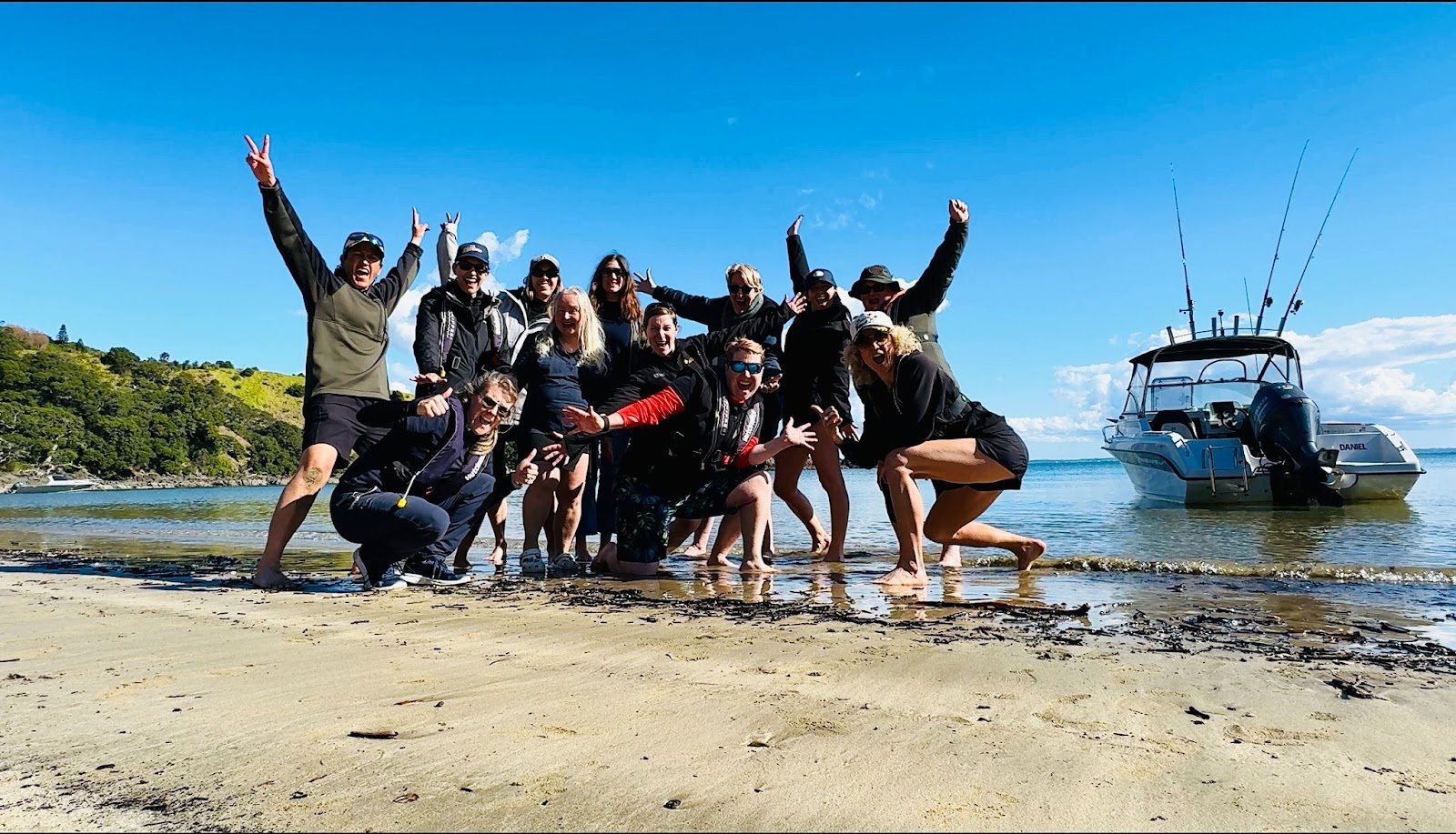
Now there are bush weekends, intro to hunting and fishing weekends, boating theory classes, women's days on the water and girls-only fishing charters, covering everything from fish species and surfcasting to biosecurity and conservation. Wild Chix works with Coastguard, MPI, Water Safety New Zealand and the New Zealand Sport Fishing Council, and Isabell thinks it works because they feel like a group of friends exploring together. A first aid course in a classroom is boring. In the bush, when it's suddenly relevant, it's an eye-opener.
On a charter, nobody has to tie their own knots or bait their own hooks. The goal is that they can if they want to, without waiting for someone else.
That one hit home. With a kayak expedition coming up, just the two of us, I need a first aid course and to know the PLB and the inReach. I need to be the redundancy.
When we recorded, hunting weekends were returning in March and then running monthly from May.
Isabell's fishing and hunting bucket list
- Another marlin. She caught her first the year before we recorded.
- Bluefin tuna, which they chase every year, and a swordfish.
- Taking their own boat to Great Barrier Island.
- More South Island hunting. She loves the South Island.
- Fiordland. When we recorded, she was about to take a group of Wild Chix on a boat trip into the Fiordland sounds to hunt, fish and dive, and couldn't wait to take her rifle into the Fiordland bush.
Isabell has inspired me to take the next steps where I don't have the confidence, fishing included. Hunting might take a little longer.
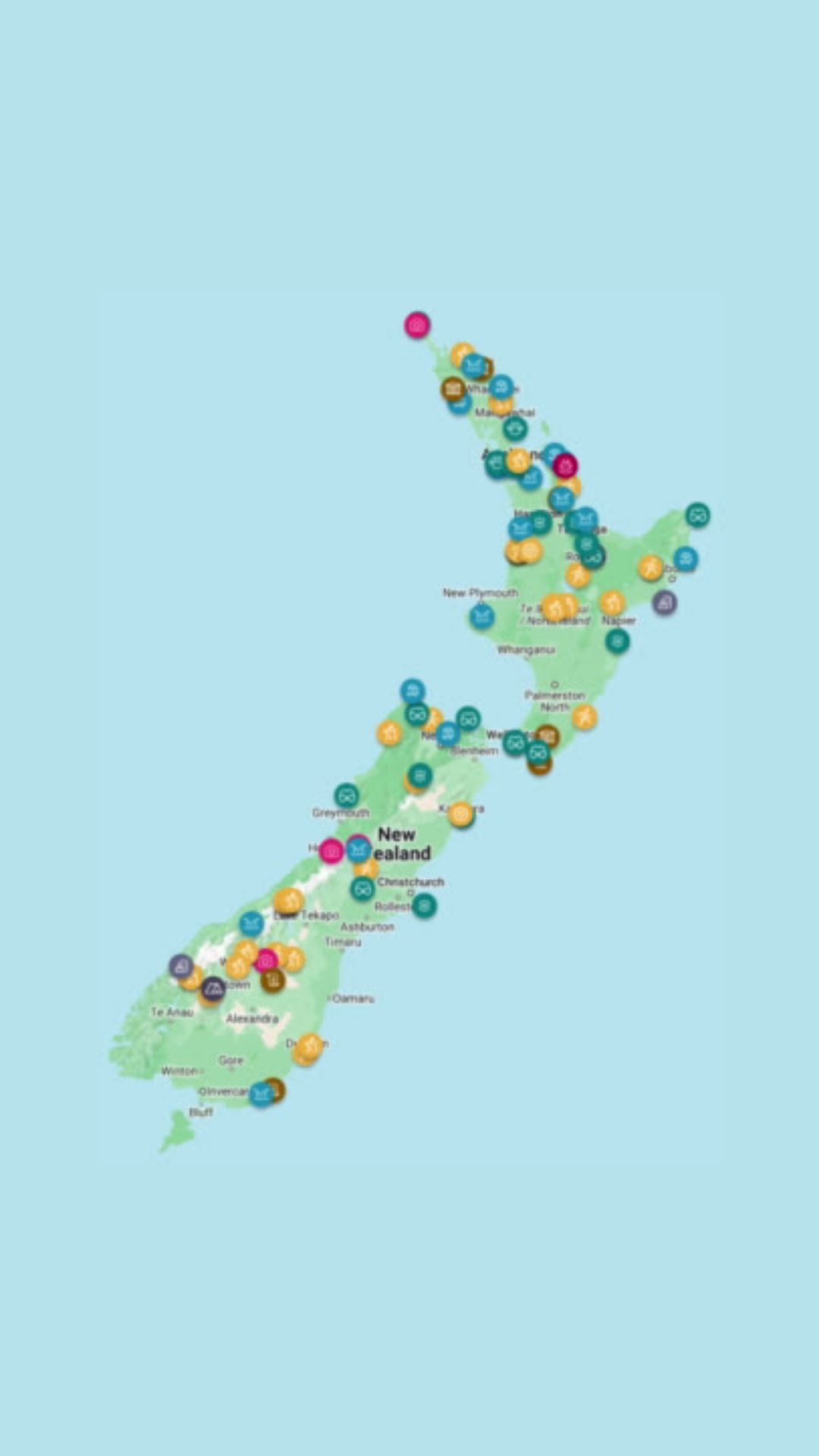
Places from this episode
- Tauranga
- Kaimai Range
- Kaimanawas
- Coromandel
- Motiti
- Aldermen Islands
- Slipper Island
- Northland
- Spirits Bay
- Hauraki Gulf
- Waiheke Island
- The Noises
- Tiritiri Matangi
- Rangitoto
- Motutapu
- Motuihe
- Kawekas
- Great Barrier Island
- Fiordland
Follow Isabell
- Wild Chix: on Instagram and Facebook as Wild Chix
Links from this episode
- Follow Wild Chix on Instagram: instagram.com/wild_chix_nz/
- www.wildchix.co.nz
- Follow Abigail on Instagram: instagram.com/abigailhannnah
- Follow Aotearoa Adventures on Instagram: instagram.com/aotearoa_adventures_
More like this
- Learning to Freedive, Spearfish and Building Community with Renee Taylor
- An Ocean Obsession, Great White Encounter and Spearfishing with Laura Kuggeleijn
- From Fly Fishing Guiding in New Zealand to Starting an Outdoor Gear Brand with Matt Butler
- Conservation and Lessons from the Bush with Bushman Sam the Trap Man
Until then, keep adventuring :)
The ultimate
NZ road trip adventure guide
Packed with insider tips and stunning photography, this is the only resource you need to plan your journey.