Episode 157
Setting the Fastest Self-Supported Record on Te Araroa with Billy Meredith

Episode 157
Setting the Fastest Self-Supported Record on Te Araroa with Billy Meredith
Spotify Apple Podcasts Everywhere else Download
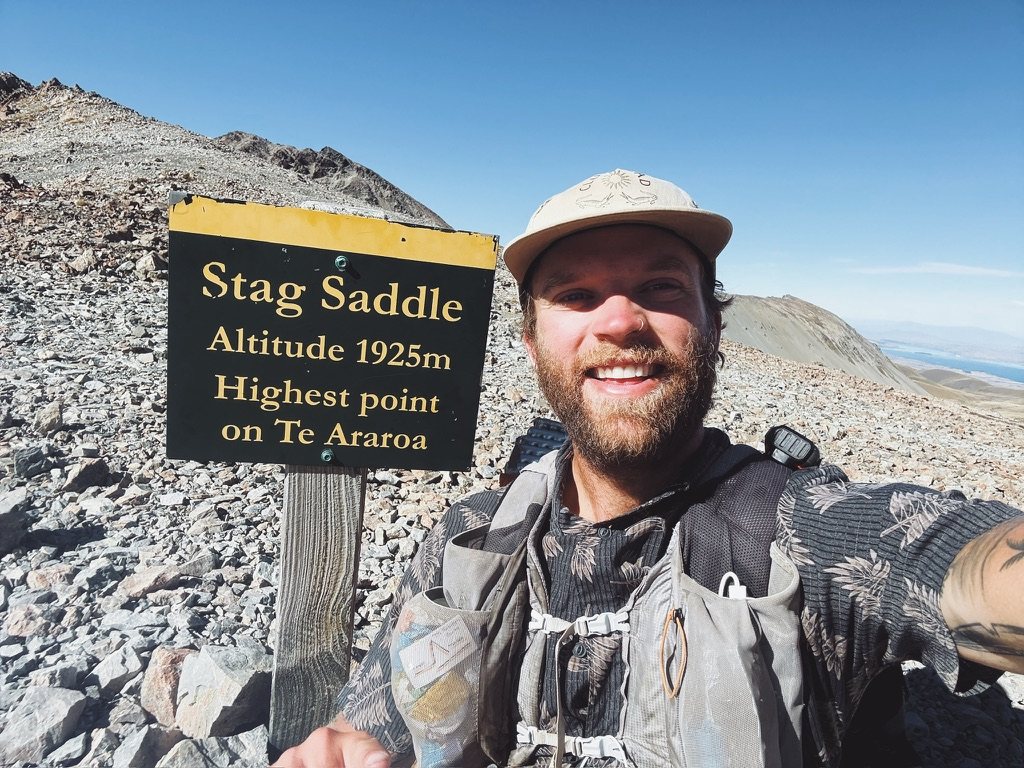
This was a really exciting one to record, right as people start hitting Te Araroa for the season. Billy Meredith (or Wahoo, if you know him by his trail name) holds the fastest known time for walking Te Araroa self-supported, which he set in 2025.
And he's no stranger to big trails. Billy is from the US, and in 2023 he walked the Appalachian Trail, the Pacific Crest Trail and the Continental Divide Trail all in one calendar year, setting the speed record for that too. Then he moved to Nelson on a working holiday visa, spent the best part of a year exploring, and finished Te Araroa a few days before his visa ran out.
So we get into all of it. Planning a record attempt (including a shoe delivery with two right shoes), the daily distances, his highs and lows from Ninety Mile Beach to Bluff, trench foot right near the end, and how Te Araroa stacks up against the big American trails. Plus his tips if you're walking it at a normal pace. I took five days on the Old Ghost Road, so some of his numbers are WILD to me.
In this episode
- Who is Billy Meredith, aka Wahoo
- Why Te Araroa
- Training on the Old Ghost Road and Great Walks
- Planning a self-supported Te Araroa record
- Daily distance, pack weight and food
- Te Araroa highlights, from the Whanganui to the south
- Low points: road walking, the Tararua and the Richmond Ranges
- Trench foot before the Longwoods
- Te Araroa compared with the AT, PCT and CDT
- Tips for walking Te Araroa and what's next
Who is Billy Meredith, aka Wahoo
Billy grew up in Georgia, in the US, playing sports, and wasn't super passionate about the outdoors until college in Arizona. Backpacking trips to Zion National Park and down the Grand Canyon to Havasupai Falls sold him on it.
He'd always heard about the Appalachian Trail, which starts in his home state and runs roughly 2,000 miles up to Maine. He and his best friend had wondered about walking it since they were about 18. At 24, a couple of years into a corporate marketing job, he quit, and in 2019 they walked it together. That's where he got his trail name, Wahoo.
Since then he's worked outdoor jobs like snowboard instructing and wildland firefighting, sneaking in thru-hikes between them, then got into marathons, an Ironman, ultras, trail running and fastest known times (FKTs).
When he finished the Appalachian Trail in 2019, he never thought he'd walk it again. But in 2023 he took on the calendar year Triple Crown: the Appalachian Trail, the Pacific Crest Trail and the Continental Divide Trail, all in under a year. He was the 18th person to complete it, and he set the speed record doing it, walking from May to December and finishing in time for Christmas.
Why Te Araroa
After the Appalachian Trail, Billy realised how many thru-hikes there are, and Te Araroa soon popped up. After hiking across America three times in a row, it felt right to see a new country, and he'd seen so many incredible photos of New Zealand. The hut system was enticing too.
So in March 2024, he flew to New Zealand on a working holiday visa and based himself in Nelson. The FKT was in the back of his brain, but after the Triple Crown, it was the last thing he wanted to think about. He wanted to chill out and enjoy the country and the culture first.
Training on the Old Ghost Road and Great Walks
Billy tried to stay off Te Araroa entirely before his attempt, to save that feeling of discovery for the real thing. He admits it has its pros and cons. The only part he'd done before was a stretch of Nelson Lakes over Waiau Pass.
He was working four days on and three days off, so his build-up was out-and-back trips on his days off, finishing at his car:
- Old Ghost Road: a little over a day in, one night out, then back again, within his three days off. He loved it, and reckons it could be a Great Walk.
- Abel Tasman: one day to the end, and less than a day back to his car.
- Heaphy Track and Paparoa Track: the other two of his four big build-up trips.
The Old Ghost Road was my first ever solo hike. I took it real slow, stayed in all the huts and did it over four nights and five days. It's one of my favourites, a bit of a secret gem because it isn't a Great Walk, and I tell everyone to go and do it.
Planning a self-supported Te Araroa record
Blisters, injuries and exhaustion can send a day-by-day plan down the drain, so Billy planned only so far.
Shoe boxes, and two right shoes
Billy shipped five boxes of shoes to himself along the trail. At his first shoe resupply, he found two right shoes, so he pushed on with one new shoe and one old one. Two left shoes were waiting further down the trail. They'd all been in one big box, unsorted.
His advice if you're bulk buying: make sure you send one left and one right.
Food boxes and a list of food stops
He shipped himself food boxes where resupply looked sparse or expensive, because on a record attempt you can't wait an hour to hitch into town, and kept notes on his phone of every food stop. With the trail running through the heart of so many North Island towns, there were far more than on any other thru-hike he's done.
Kayaks, tides and huts
- The Whanganui River: Te Araroa includes a paddle down the Whanganui, and finding somewhere to rent a solo hiker a kayak was really challenging, because operators like thru-hikers to paddle in pairs. Billy started southbound from the top of the North Island in February, way behind everybody else (most southbound walkers start around October to December), so there was nobody to pair up with. He ended up getting one.
- Tide crossings: he noted where they were, but there's no way to know far in advance what time you'll reach one.
- Huts: he mostly didn't book them. He'd arrive so late that he didn't want to disturb people, he was always first up, a lot were full, and he couldn't know which hut he'd reach.
All those towns slowed him down, too. On blazing hot summer road sections, it was hard to resist a second ice cream, a coffee or a minute in the air conditioning.
Daily distance, pack weight and food
Billy aimed to walk about 70 kilometres a day (44 miles), well over an ultramarathon (50 kilometres) every day. He was trying to finish in under 50 days, and was on pace for it until trench foot cost him two days near the end.
Pack weight
His base weight (everything except food and water) was about 4.5 kilograms, or 10 pounds. He carried:
- One shirt and one pair of shorts
- A lightweight windbreaker
- A puffy jacket
- Rain pants and a rain jacket
He didn't carry leggings. Towards the end it got chilly, but mostly for an hour or two in the morning, and he pushed through.
Food carries
On the North Island, he usually carried one or two days' food at a time, because moving that fast, and with the trail so urban, he reached towns often. On the South Island, three days was about his longest carry.
Long days
Self-supported means carrying all his own gear and food, and pitching and packing up camp himself. Billy did really long days, first up in the morning and last in at night.
Te Araroa highlights, from the Whanganui to the south
Paddling the Whanganui River
One of Billy's highlights was his first day paddling the Whanganui, the non-hiking part of the trail. He'd never done an overnight kayak trip, and he was alone, which felt unique: everyone else he saw was in a tour group or paddling with friends. He paddled between the gorge walls as the sun went down and saw glow worms on the walls.
He did it in two and a half days, sitting in the kayak all day without breaks. He was super excited at the start. By the end, his butt and back were so sore, and he was more than ready to get out.
The Richmond Ranges
The Richmond Ranges were really awesome, with lots of sunrises and sunsets. He had good weather there, which he knows was fortunate, because it can get pretty hairy up there when it isn't clear.
Beaches, Tongariro and the south
Billy really liked Tongariro, and has a love-hate relationship with the beach sections, starting with Ninety Mile Beach. Hiking under the stars and the sunrises and sunsets were awesome. After hours on soft sand in the summer sun, with wet shoes and sandy socks, he was so sick of it, and on an FKT you don't stop to dry things out, so you get blisters.
Queenstown, Wānaka and Lake Tekapo were really beautiful too.
Low points: road walking, the Tararua and the Richmond Ranges
Road walking and shin splints
Te Araroa starts on Ninety Mile Beach, on hard sand, and then goes straight onto roads. The North Island's road sections were tough for Billy mentally, and physically too. He's used to trails, and pounding the pavement for days on end gave him really bad shin splints. At times he couldn't even flex his foot. The bottoms of his feet were sore from alternating hard sand and road, until around Tongariro, where the trail started hitting more track.
Early on, he was still committed mentally, but wondered if his body would hold up. Getting a compression sleeve dialled helped, and as the trail turned into the kind he's used to, the shin splints went away. He wore the sleeve the whole way after that, because when he ditched it at one point, they came back.
The Tararua Range
The Tararua Range was another low. Billy had windy, wet, gross weather, and it was some of the hardest hiking and climbing he's ever done: muddy, rooty and rugged, like the Appalachian Trail with no switchbacks. As Billy puts it:
"New Zealand is kind of like just straight up, straight down, lot of bushwhacking in there too. Like I do feel like tramping and hiking are different things"
He'd say tramping in New Zealand is a little more challenging than hiking in the US.
Running out of food in the Richmond Ranges
On the South Island, Billy was in pretty good spirits. He was excited to finish, back among the big mountains and trails he's used to, and catching up to thru-hikers who'd started months before him. The dry riverbeds were tough, with rolled ankles and sore feet.
The real low was the Richmond Ranges. Most people head into Nelson halfway through. Billy didn't. He planned to knock it out over two nights and half a day into St Arnaud, but it took him almost an extra day. He'd underestimated how many calories he'd be burning by then, so his food box wasn't enough. From 9am until about 7.30pm, climbing huge mountains, he ate nothing at all, and bonked hard: lightheaded and dizzy. He knew there'd be pizza and burgers waiting in St Arnaud.
Trench foot before the Longwoods
Billy really wanted to finish in under 50 days, and he was on pace, cutting it close. With under 48 hours to go, he decided to push through a night without sleeping. He'd heard plenty of stories about the Longwoods, with mud up to your waist for a couple of days, and was mentally preparing for it.
Before he even reached them, he hit a really muddy stretch. It had rained the day before, everything was sopping wet, and his shoes and socks stayed wet for the full 48 hours. With no sleep, they had no time to dry. Right before the Longwoods, he got trench foot. His feet were infected, raw, with no skin on the bottoms of his toes, and he couldn't walk on them. He had 98 miles left (under 160 kilometres) of about 2,000, and he thought he might not be able to finish, or at least not in time for the record.
He got off trail and took a zero day. A local couple took him in for the night, fed him, and took him to a doctor the next day. He told people he was done. Then, the next morning, something came over him, and he decided he was going back out.
The doctor told him not to: his feet needed to get dry and stay dry. But by the time he was back on trail it was 6pm, so he pushed on through the night, straight into the Longwoods, the wettest and muddiest section of the whole trail, wading through waist-high mud. He knew that if he stopped, his feet would hurt too much. He did the last 98 miles in one push of about 47 hours, hallucinating by the end.
He finished in Bluff at 4pm, a few days before his visa expired, then flew from Queenstown to Nelson to pack up his stuff. The trench foot added two days and cost him his sub-50, and he still broke the previous record. Back off trail, he wore fuzzy socks and slides for the rest of his time in New Zealand, to let his feet breathe without anyone having to see them.
When we recorded, work had started on boardwalk in the Longwood section, so future walkers might get it a little easier. Billy got the authentic Longwoods experience.
What trench foot taught him
Looking at his feet at the finish, Billy couldn't believe he'd walked a hundred miles on them. He puts it down to will:
"It was out of pure will and dedication and I found another gear"
He's clear that you have to be wary of injuries that could do permanent damage, and in life or death situations, like a high river after rain, you listen to your gut. He calls days early for exactly that reason, and he only knows his limits from years of finding them. If he'd thought he'd lose a toe, the record wouldn't have mattered that much. For him, half the battle is committing, and if he hadn't got the record, that would have been okay:
"I pushed myself to my absolute limit. That was the goal. … the record was just a way to do that."
I'm a really big advocate for knowing your boundaries and not putting yourself at extra risk, and it's also cool to see how far we can push our bodies. My husband and I have a kayak expedition coming up this summer, from Cape Reinga to Tauranga, and I'm sure it'll push me beyond my limits in so many ways.
Te Araroa compared with the AT, PCT and CDT
A listener asked how Te Araroa compares with other thru-hikes for difficulty, logistics and camping.
- Difficulty: Billy thinks the Appalachian Trail is probably the hardest of the US big three, and that Te Araroa is harder than all three. Someone coming from the Pacific Crest Trail would find it shocking, and someone going the other way might find the US trails a breeze.
- Logistics: easier, with the hut system and more frequent town stops.
- Scenery: the South Island is on par with some of the best parts of the US. Parts of the North Island were beautiful, but he didn't love walking on the beaches for that long.
Trail markings and maintenance
Volunteer crews look after the well-known US trails, and the Pacific Crest Trail is very well marked, with little bushwhacking and gentler climbs. Billy sees Te Araroa as a hybrid: the rough marking, bushwhacking and remoteness of the Continental Divide Trail, the ruggedness of the Appalachian Trail, plus mud.
There also aren't specific Te Araroa markers on most of the trail. It's mostly orange triangles, which tell you you're on a track without telling you which one. Several times, Billy followed them and realised he was on a different trail.
Bushwhacking, hospitality and solitude
Te Araroa was far harder than Billy expected, even after a year of living here and getting a taste of it in Kahurangi. Great Walks are well trodden and well marked. He didn't expect the bushwhacking along farm fence lines on the North Island, or all the road walking.
He also didn't expect the Kiwi hospitality. On the road sections, countless people pulled over offering rides and drinks. At first he'd take a cold beer, until it got so frequent that he had to say no, because he couldn't be drunk while breaking a record. It gave him a mood boost.
My previous two Te Araroa guests both went northbound, the less common direction, and struggled with the isolation. Billy didn't. He'd spent almost eight months of 2023 hiking alone on the Triple Crown, since people can't keep up with record pace. On Te Araroa, going through towns all the time, he got far more social interaction than he's used to.
Tips for walking Te Araroa and what's next
Billy's tips
- Pack good rain gear and layers. New Zealand weather is sporadic, even in sunny Nelson. Bring good rain pants and a light rain jacket you'll wear even on nice days, because wet plants, morning dew and overgrowth will soak you anyway.
- Bring plenty of fresh socks.
- Take trekking poles. They're his number one: for the steep downhills and uphills, fording rivers and whacking down spiderwebs. He wouldn't hike without them.
- Let your feet dry out, especially through the Tararua. Don't get trench foot like he did.
- Add 20% to your times. Te Araroa always took him longer than he expected from US trails, which is why he ran out of food in the Richmond Ranges. Pack a little extra food, because muddy stretches and wrong orange triangles will slow you down.
- Enjoy it. Go for swims on the water sections and beaches, use the hut system, and have a few more trail magic beers than he did.
I remember that dew from my longest day on the Old Ghost Road, first on the trail, with spiderwebs in my face all morning until some cyclists cleared them.
Walk the South Island, drive the North
If you want a true wilderness backpacking experience, Billy would recommend the South Island section to most people. You could follow the North Island in a car for most of it, hit the beaches and enjoy them in the ocean, then add the Tongariro Crossing, a paddle down the Whanganui, and the Tararua if you're up for a challenge.
Lots of people walk the South Island section only. Te Araroa is on my husband's bucket list, and if I ever walk it, I'll probably only do the South Island. One of the Paddle for Purpose group had walked the southern section, so they kayaked the North Island's East Coast from Cape Reinga to Wellington instead. Coastline is better enjoyed from the water.
What's next for Billy
Thru-hiking comes in waves for Billy, and right now he's enjoying community and going slower, with long day trips in Glacier National Park near his home in Montana. Next summer, he's talking with the best friend he walked the Appalachian Trail with about the Great Divide Trail through the Canadian Rockies, going slow with friends, without the pressure. And he wants to find his way back to New Zealand, because there are still so many trails to hike here.
Places from this episode
- Te Araroa
- Ninety Mile Beach
- Whanganui River
- Tongariro
- Tararua Range
- Nelson
- Richmond Ranges
- St Arnaud
- Nelson Lakes
- Waiau Pass
- Kahurangi
- Old Ghost Road
- Abel Tasman
- Heaphy Track
- Paparoa Track
- Queenstown
- Wānaka
- Lake Tekapo
- Longwoods
- Bluff
- Cape Reinga
Links from this episode
- Follow Billy on Instagram: instagram.com/billymeredith_/
- Follow Abigail on Instagram: instagram.com/abigailhannnah
- Follow Aotearoa Adventures on Instagram: instagram.com/aotearoa_adventures_
More like this
- Thru-Hiking New Zealand Before Te Araroa Opened with Shalane Hopkins
- Section Walking Te Araroa over Multiple Seasons and Battling Cancer with Te Aroha Hohaia
- Quitting his Corporate Job and Preparing for Five Months of Thru-Hiking Te Araroa with Anurag Sharma
- Finishing Te Araroa as a Family Two Years Later with Deanna Gerlach
- Thru-hiking the Te Araroa Trail with Zoe
Until then, keep adventuring :)
The ultimate
NZ road trip adventure guide
Packed with insider tips and stunning photography, this is the only resource you need to plan your journey.