Episode 187
From Beginner Trail Running to Setting Course Records with David Haunschmidt

Episode 187
From Beginner Trail Running to Setting Course Records with David Haunschmidt
Spotify Apple Podcasts Everywhere else Download
I am not a runner. I was always the last one in the cross-country races at school (or second last, on a good day). But the more trail runners I talk to, the more I kind of see the appeal. And David might be the one who tips me over the edge.
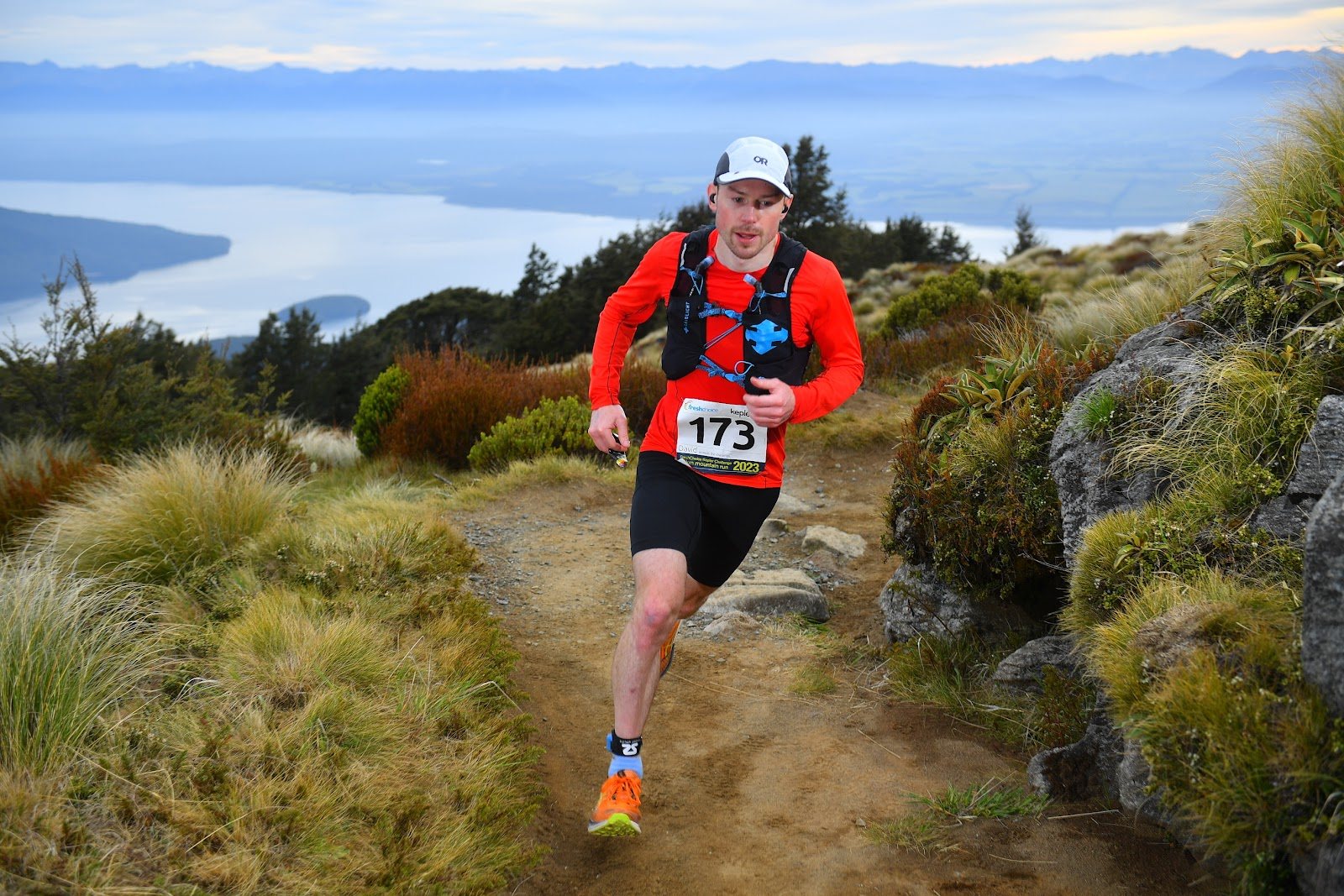
David is an emergency medicine doctor, originally from Scotland, who you might know as the Flying Doctor or as David Zebedee on social media. When he moved to New Zealand he started working his way through every DOC walk he could find on his days off. Then he started running them to save time. It turned out he was rather good at it.
So we cover how he got here: growing up on a tiny Scottish island, the burnout that brought him to Aotearoa, his first trail race, the week he ran three Great Walks, and how he plans a big day out in the hills. Plus his gear, his hardest races, and his advice if you're starting from zero. Like me.
In this episode
- Growing up on Westray in the Orkney Islands
- From junior doctor to a move to New Zealand
- From DOC walks to trail running
- Injuries, swimming and triathlon
- Kepler, Milford and Rakiura Track in one week
- Planning a Great Walk run: gear and food
- Favourite races, hard days and getting lost
- Shift work, coaching and starting out
Growing up on Westray in the Orkney Islands
David grew up on Westray, a really tiny island in the Orkney Islands, off the north of Scotland. Everyone there is outdoors all the time. Nobody locks their cars, everyone knows each other, and as a kid you're let roam free.
Going for a walk was the go-to family activity, at home and on holidays, and that ingrained in him that walking somewhere nice was fun.
Running came much later. He tried lots of sports at school, but on a small island there aren't the clubs to push you to a high level. At university he joined every club he could, including slacklining: in medical school in Edinburgh, they'd string a line between the trees in the Meadows and spend time in the sun.
I've done it too, on a slackline friends gave us one Christmas. It teaches you patience.
He ran a little at high school and university, and did a couple of road events, but never trails. He now finds that crazy, because Scotland is fantastic for trail running.
From junior doctor to a move to New Zealand
After medical school, David went straight into two years as a junior doctor, then a year of specialty training: 85-hour weeks, unpaid overtime and night shift after night shift. It was work, work, work, and that was the culture in the NHS back then.
So David and his partner decided to try somewhere else. New Zealand looked like an easy transition with the same degrees, and the plan was six months, then home again. When we recorded, they'd been here 11 years.
The reason was work-life balance: here, you work, and you also have time for all the things you love. David first landed in Hamilton, in the Waikato, along with a whole bunch of UK doctors who'd finish a shift and head off somewhere fun.
He reckons Hamilton is underrated, and a nice central hub for the North Island. Over those first years he lived in Hamilton, then Rotorua, then Tauranga, and every time he was off he found somewhere new to go. They also bought a little campervan and did two and three week trips around the country.
I see that too. On a community hike to Rangitoto, I met a woman in her 50s who'd lived in Auckland her whole life, and it was her first time. We all need a kick up the butt to go and see our own backyard sometimes.
From DOC walks to trail running
Every day off, David would look on the DOC website for a new walk. At first he walked them, spending the day on a tramp. Then, after a year or more, he realised he could run them and see so much more in less time.
The switch happened naturally. He was out with a heavy pack, running late to get back for a shift, so he started running. Some friends were doing trail events, and he discovered a scene he didn't know existed. He's grown to love the trail running community. It's so supportive, from grassroots races to big international ones.
His first event came pretty quickly: a local mountain run near Raglan. It's really brutal, technical and rugged. He did a few practice runs, loved using his whole body to climb a mountain with a view at the top, then ran the event and was hooked.
I hate that trail, and it's great. It kicked my butt. When I did it, it was shoulder season, but it was such a hot day, and I wasn't expecting it to be so hot and so steep or so exposed.
From there, he'd use his time off to run somewhere new, often lined up with an event. Running became his vehicle for travel.
Even in those first events he was near the top of the field, and from a medical and scientific background, he started researching training and nutrition. It took a couple of years to reach the podium. He likes the competitive side, but the bigger joy for him is new places. His view is that it's never too late to start anything, especially running.
Injuries, swimming and triathlon
About two years into running, David got injured, as most people do while they're learning what to do and what not to do. His first injury was a stress fracture, back in 2019. He's always someone who wants to be doing something, so that's when he found swimming.
He learned to swim properly as an adult. He could swim to save his life, but only one length before gasping for breath. So he set himself a daily challenge at the pool, had a swim analysis, and improved over time. That led to a few triathlons and a few Ironmans.
He's been good at cross-training. Once he bought an old second-hand elliptical trainer off Trade Me and used it for four weeks, because that's what he could do in a moon boot. He might not be running, but he can always improve something.
His main advice for anyone starting out is to get very good at listening to your body. A lot of people stick rigidly to a fixed plan. David wakes up, has a stretch, and decides what he's capable of that day. Sometimes he's a kilometre into a run, decides he's not feeling it, and gets on the bike instead.
Kepler, Milford and Rakiura Track in one week
David's first runs on the Great Walks came in 2020. The Kepler Challenge was due to run in December, and it was cancelled because of COVID. They kept their flights and went down anyway. Kiwis could travel, the tourism trade was still running, and there were far fewer people around.
So he ran the Kepler in a day, on his own, filling up from the streams. It was his first time on that amazing track.
They had no real plan for the rest of the week. He got talking to someone who told him he could do the Milford in a day too: he'd need to catch a boat, and he wouldn't need bookings. Did he want to go tomorrow? He was quite tired, but why not.
Then they drove back to Invercargill for their flight home, found they were there a bit early, and popped over to Stewart Island. He ran the Rakiura Track, and saw his first kiwi in the wild.
That made three Great Walks in a week, in a New Zealand summer, and it's one of his favourite memories. He knew how far he'd come:
"I remember at the time thinking … I wouldn't have been able to do this. And it's just from the consistency of running and training and doing these events that my body was able to do this, have fun and run it fast."
The Old Ghost Road was my first solo hike, and the longest I'd done at the time. It took me five days and lots of tears. Back at our campsite in Murchison, sitting down with my barbecue sausages, someone in the camp kitchen was wearing an Old Ghost Road Ultra shirt. There was no way they'd run the whole thing in a day. It blew my mind, and I think that's the first time I came across ultra running as a sport.
David was exactly like that ten years ago. That week on the Great Walks is when he realised that if you put in the work, it's possible.
The trips he might once have done as multi-day hikes, he's done as runs, so he hasn't done much overnight fastpacking. Some of his favourite trips have been in campervans, parked on a clifftop with an amazing view after a day outside.
Planning a Great Walk run: gear and food
David hasn't done all the Great Walks yet. On the ones he has, he didn't set out for the fastest time. He went for the adventure, and he's been lucky enough to run them fast.
He plans a big day in the mountains much like an event:
- Mandatory gear lists. Many events publish one, and he sticks to it, because it's usually good advice and covers what you'd need if you got into trouble.
- Nutrition. The sport is so competitive now that people eat far more carbohydrate per hour than when he started. Carry the fluids and food you need, even if your pack is heavy.
- Water. Research where you can refill (DOC is a good start). He carries a little water filter flask, and sometimes tablets.
His non-negotiables, every time:
- A running vest he loves, with his flasks and everything where he's used to it
- A waterproof
- Warm clothes, gloves and a buff
- Sun protection
- Podcasts. He's learned a lot from endurance running podcasts, and this one has kept him company too
Keeping people company on the trail is exactly what Aotearoa Adventures was made for.
The day before an event, David does a big carb load to top up his glycogen stores. The amounts are quite scary, mostly white carbs and sugar, and as a doctor he wouldn't advise it for everyday eating. Then rest. Lots of people get the taper crazies, restless with random niggles. That's normal: your body is decompressing before the big push.
Favourite races, hard days and getting lost
David can't pick a single favourite race, though some of the Great Walks rank up there. They're Great Walks for a reason. At the Rakiura Challenge, leading the race early in the morning, he passed kiwi on the track. You look at each other and run on. He won that race two years before we recorded.
He leans towards technical, mountain-heavy races, because he's good at them and enjoys using his whole body, and he loves being fit enough to say yes to a race next week. He once ran a short mountain race that was all scramble, arms and legs climbing, then running down. It's only 6 kilometres, and you finish absolutely gassed. The following week he ran the Queenstown Marathon, which is reasonably flat. He loved them both, and loved that both count as running.
He's run the run section of the Coast to Coast, pretty gnarly in itself, and would love to do the whole thing once his kayaking is better. Road running has never been his true joy. That's being alone on a trail with amazing views and birdlife around him.
Lavaredo, sick in the Dolomites
Two weeks before we recorded, David ran Lavaredo in the Dolomites, in Italy, with a virus he didn't know he had yet. It was a very long day, and for a big part of it he thought about pulling out, because his body wasn't responding the way it normally does.
But he was in the Dolomites, on incredible trails, with amazing views and fantastic people. So he finished. It took a long time, and he enjoyed it so much.
In a race, he wants to see what he's capable of, so he pushes through the pain barrier. The next day you might forget the pain, but you'll remember the result.
Hard days and getting lost
David plans so that even in bad weather he still has a good time. He's frozen on mountain tops and got lost a few times, including a couple of times in the Remutaka Range, north of Wellington. None of it was a disaster. You plan for it, carry the equipment you need, and he carries a tracker his partner can follow, a PLB. With the fitness and the know-how, he can get himself out. And everything feels and tastes better after a hard day out.
When we recorded, he was planning to go back to the Rakiura Challenge and to the Kepler Challenge in December, which he's run three times, and he'd love to go back to the Old Ghost Road Ultra. The last couple of New Zealand winters he's escaped to Europe to race.
Shift work, coaching and starting out
Shift work has made David very efficient, and consistency is the main thing. He tries to do something every day, even on a night shift or when he feels terrible, because it always makes him feel better afterwards. As he puts it:
"I think a day is always better when you go for a run."
I believe him. I hear runners say this a lot. I haven't experienced it personally.
He runs lower volume than a lot of the people he races, partly because of the biking, swimming and strength work. And he keeps it fun. Running is his hobby, and he worries that doing it full time would make it a chore.
A lot of fitting it in comes down to mindset. After a hard shift you can come home knackered and scroll on your phone, or you can spend the hour improving yourself. His drive has always been a constant 1% improvement.
Coaching
David now coaches other endurance athletes. Many come to him without the background to weigh up the evidence, or they've trusted something rubbish from TikTok. He gives every session a purpose and steers them away from junk miles and pushing on when they should rest. Seeing people smash their goals is super rewarding.
On sorting good information from bad, his advice comes from science: be sceptical, and look for the evidence.
Getting started
For a first trail event, David says there are so many, and they cater for all abilities, with aid stations and generous cutoff times, so you can often get through even hiking fast. Distances run from under 10 kilometres to 200 mile events. His go-to resource for finding the next one is Running Calendar New Zealand, which lists events throughout the year.
His advice for every level:
- Do it for the right reasons. Keep the fun and the enjoyment.
- Be consistent. If your first run is a run-walk for a kilometre, that's something. Next time it gets easier and longer.
- Find a reputable resource or a coach, and mix easy efforts, harder sessions and strength work. You'll become robust enough for these adventures.
That's how both trail running and triathlon happened for David: people suggested it, and he dipped a toe in.
I know the feeling. I talked to some people about kayaking, and then I ended up on a two month expedition. So this might be a slippery slope.
Down the track, David sees himself moving towards triathlon, multisport or orienteering, and staying active as long as he can. For him, longevity is about the life in your years too:
"if you've gone to a new place and had an emotional attachment and had a really fun time, that memory is there for years. So I think the way you increase your longevity in your perception perception of time is to do these new things all the time."
Places from this episode
- Hamilton
- Waikato
- Rotorua
- Tauranga
- Rangitoto
- Kepler Track
- Milford Track
- Stewart Island
- Rakiura Track
- Old Ghost Road
- Queenstown
- Coast to Coast
- Remutaka Range
Follow David
- Instagram and social media: David Zebedee
- Website: davidzebedee.com, where you can find his coaching
Links from this episode
- Follow David on Instagram: instagram.com/david_zebedee/
- David's coaching and website: davidzebedee.com
- Follow Abigail on Instagram: instagram.com/abigailhannnah
- Follow Aotearoa Adventures on Instagram: instagram.com/aotearoa_adventures_
More like this
- Hiking and Trail Running in Mount Somers with Lauren Korstrom
- Setting the Fastest Self-Supported Record on Te Araroa with Billy Meredith
- Fastpacking from St Arnaud to Arthur's Pass in 8 Days with Alice Brice
- Southland's Five Great Walks in Five Days with Simon Patton
Until then, keep adventuring :)
The ultimate
NZ road trip adventure guide
Packed with insider tips and stunning photography, this is the only resource you need to plan your journey.