Episode 185
Thru-Hiking New Zealand Before Te Araroa Opened with Shalane Hopkins

Episode 185
Thru-Hiking New Zealand Before Te Araroa Opened with Shalane Hopkins
Spotify Apple Podcasts Everywhere else Download
Te Araroa comes up a lot on this podcast. But I'd never talked to someone who walked it before it was even officially open, with a paper map, a compass and an old-school button phone. And I was really really excited for this one.
Shalane is an author, speaker and coach based in Otago, originally from Canada. In 2010 she set off from Cape Reinga to walk to Bluff, about 3,000 kilometres, with a walking partner she'd known for four days. Fifteen years later, she's written a memoir about it, called One Step at a Time.
So we cover how she got there: a walk across British Columbia, planning the whole thing from a tent in Broome, and doing it on a budget. Then the trail itself. Rivers (and wet socks), the Richmond Ranges, the Christchurch earthquake, a week of rain that broke her, and the mindset that got her to Bluff. Plus why it took her 15 years to write about it, and her advice if you've got a big idea that everyone around you thinks is crazy.
In this episode
- From Calgary to walking across British Columbia
- Finding Te Araroa before it opened
- Planning Te Araroa from a tent in Broome
- River crossings and wet socks
- The Richmond Ranges and the Christchurch earthquake
- A week of rain, giardia and an empty bank account
- One step at a time
- Finishing in Bluff and writing the book
From Calgary to walking across British Columbia
Shalane grew up in Calgary, a decent-sized city in Canada, and only heard bits and bobs about New Zealand. Her first real love of the outdoors came from summers at a family cabin, where the kids were let run through the bush, making their own trails and little houses. She thought that was normal, and only realised how special it was much later.
She didn't get into hiking until the end of high school and early university. Before that, walking in the bush seemed boring. Then she started to love being out there with a backpack, connecting with nature and getting away from city life.
Reading opened her mind to other ways of exploring the world. One author she loved was Colin Angus, a Canadian explorer who travelled around the world under his own power, with no motorised vehicles. That showed her that if you put your mind to something, you can make it happen, and she loved the idea of challenging her body that way.
She planned to leave Canada on a one-way ticket to Australia. But first she wanted to really enjoy the Rocky Mountains, because she didn't know when she'd be back. So she walked across British Columbia: 1,000 kilometres in seven weeks, from a ski resort near Banff to Vancouver, on a route she joined together from her own maps.
She'd only done a couple of overnight backcountry trips before, and her gear was really basic. She met three bears and a bobcat, and wildlife woke her in the early hours. The biggest challenge was mental. Walking alone on a route she'd designed herself, there was no one telling her to keep going, and there were moments she felt she was going a little bit crazy, battling whether to give up and hitch a ride. It was her way of saying goodbye to Canada, and it showed her she could go far beyond what the people around her were doing in the bush.
Finding Te Araroa before it opened
In Australia, working in the Sydney area, Shalane started thinking about what came next, because the journey wasn't over. The more she learned about New Zealand's wilderness, the more she wanted a long-distance trail to get to know the country, without animals trying to eat you. The Great Walks didn't feel right. She wanted something more raw, more unexplored and less touristy.
Then she found the story of an American who'd taken a sabbatical to walk the length of New Zealand, and she knew she wanted to do that: to say she'd walked from one end to the other on her own two feet. Her research led her to the Te Araroa Trust, already building the trail. Even better, it wasn't open yet. She could be one of the first people to explore it.
Back then, nobody was making Instagram-worthy blogs about it. It was very under the radar, and you had to dig around Google to piece together information from people who'd walked it or were about to.
Planning Te Araroa from a tent in Broome
Shalane found out about the trail while she was a backpacker on a working holiday visa. Over the next few months she made her way across to Broome, in the north-west of Australia, to work, save and plan.
She pitched a tent at a local campground, surrounded by other backpackers working and living there for the season. She was the odd one out, spending all her free time in her tent on a tiny laptop, planning, building a website, looking for sponsorship and sorting gear. People asked what she was doing in her twenties in such a beautiful place, when she could be partying on the beach.
One fellow backpacker asked too, and when Shalane told her, she was the only person who was interested. She asked if she could come. Shalane said if she was crazy enough to come, who was she to say no. Her new friend went away, did her own research, and came back with a big yes. They'd known each other for four days.
Based on about 3,000 kilometres, they gave themselves six months, hoping it would take less.
Walking Te Araroa on a budget
Shalane worked two jobs to save, cleaning at a resort and waitressing, as many hours as she could. She didn't really know what New Zealand would cost. Her thinking: with a tent they could sleep anywhere, and with a New Zealand working holiday visa, the worst case was stopping to work.
The budget shaped their gear. They didn't chase the flashest or lightest kit, and a PLB came off the list pretty quickly, because back then they were really expensive to buy and there weren't many options to rent or buy second-hand. They went with a cell phone and hoped for the best. If gear failed, they had to make do.
Their kit was a world away from today's long-distance walkers, who might carry GPS, a PLB, solar panels and the lightest gear going, and film YouTube videos on the tops. Shalane and her friend had heavy packs, a map and a compass, and an old button phone. To update friends and family, they'd find an internet cafe in town and madly type up their blogs. She says it made the journey what it was.
Her view on gear now is that the best kit is wonderful if you can afford it, because it makes things more efficient and easier on your body. But so many people have done similar things with less, and you don't have to have it a certain way at all.
River crossings and wet socks
Shalane admits she came to Te Araroa a little overconfident. New Zealand had no bears, no cougars and no knee-deep snow on the tops in summer, so she expected to crank out the kilometres. She learned quickly:
"there's a reason that it's called tramping in New Zealand and it's called hiking in North America."
The big example was rivers. In North America, she was used to every little creek having a bridge. She'd also had it drilled into her that wet socks were a huge no-no, because wet socks meant hypothermia. Here, wet feet are part of being in the bush. You grab roots to climb up the mountain, or slosh through a waist-deep river, and everyone says she'll be right.
It was a culture shock, and one she grew to love, because overcoming those challenges showed her so much more of what she was capable of.
The Richmond Ranges and the Christchurch earthquake
The Richmond Ranges were one of Shalane's favourite parts of the trail, because you got so much out of them in a short time. At the time, they were a relatively unknown section, and lots of people they met along the trail had never heard of them. You could climb mountains, see 360 degrees across the South Island, and hardly anyone knew it was there.
The Richmond Ranges come up nearly every time I talk to someone about Te Araroa. My husband would love to walk the whole trail one day. I don't see the need, but I do want to do the Richmond Ranges section, because if that's the best part, I'd love to do that bit.
They were also walking in February 2011, when the Christchurch earthquake happened. They were close enough to go and help with the recovery. She's clear it wasn't in a rubbernecking way. As someone from outside New Zealand, she felt it was a privilege to be alongside people as Christchurch came together at such a horrific time. She wouldn't have been part of that if she hadn't been walking Te Araroa, and it gave the whole walk a different perspective.
A week of rain, giardia and an empty bank account
In the North Island, a rain cloud followed them for about a week. Wherever they went on the trail, the black cloud stayed over them, pouring. They were near Te Kūiti, on a section that was mostly farmland: wide, flat gravel and dirt roads with no one around and little to see. In sunshine it might have been beautiful. In grey cloud and pouring rain, it was hideous.
They walked around eight hours a day. At the end, you set up your tent, absolutely buggered, eat and fall asleep, knowing you have to walk again tomorrow. In weather like that, nothing dries. You've got one outfit. In the dark, cold morning, you pull on the dripping wet clothes from the day before, and go and walk in the rain again. Shalane says something about that is so mentally depressing, and it ate away at her.
They made it back into the bush at Bog Inn Hut, at the end of that week, with Christmas around the corner, behind schedule and everything wet. Then Shalane got giardia. They had to get out of the bush, find a doctor and get medicine, and they ended up right back in Te Kūiti. She remembers sitting on the grass, realising they'd walked all those kilometres in the rain only to end up where they'd been a week before. It was a punch in the gut.
So they talked it through: what did they really want, and why were they doing this? They could physically keep going. The struggle was feeling beaten down, with nothing going the way they'd hoped. They decided to keep going, and she's so glad they did.
I hate tramping in the rain. I'm a good weather outdoor person. On our kayak trip, we only paddled in good weather, so we only had one or two days of rain on the water, and the summer sun would dry our clothes in half an hour. It was hard enough getting up at five in the morning. I can't imagine pulling on wet clothes for a whole week.
Injuries and money
Other moments raised big questions too. Her walking partner was injured early on, and it flared up again later, and both times they had to decide whether to wait for it to heal. Their budget was tight, they were on working holiday visas, and they'd been told they needed to finish by April, before the seasons changed.
Then there was money. Shalane remembers looking at her bank account, seeing almost nothing in it, with the whole South Island still to go, and wondering if they'd have to stop and work. Fortunately, they made it work.
One step at a time
That question of how you keep going is why Shalane called her book One Step at a Time. With a big goal, it's easy to get caught up in the magnitude of it until it stops you. Her answer is to scale it back to the next thing. Can I take one more step? Can I get to the hut tonight, or to lunchtime?
"And more often than not, you'll find that actually, I can take that next step, I can do one more step. And if you just kind of continue with that mentality, all a sudden, you'll be able to look behind you and go, oh, wow, I've actually gone all that distance"
When she was second-guessing herself, it usually came down to knowing that if she gave up in that moment, she'd regret it. She also didn't want to feel she had to justify quitting to other people. If she wasn't ready to say with certainty that she'd quit and why, she needed to keep trying.
I use that regret test in my own life, too: imagining I'm looking back with hindsight, and asking whether I'd be glad I made the decision.
Knowing when to stop
Knowing when to push and when to stop was on my mind when we recorded. The summer before, my husband and I set off kayaking from Cape Reinga to Tauranga, and we called it quits in Auckland. It was a terrible summer with so many storms, and we lost a lot of time staying off the water for safety. I wanted to get home in one piece. Isaac was clear that it was a human-powered expedition, so driving past a section was out.
Shalane says the call is so individual and so dependent on the environment you're in. Since Te Araroa, she's learned the only person who knows whether you made the right call is you, and you can't judge someone else for pulling out or pushing on.
Finishing in Bluff and writing the book
From Queenstown, the trail heads south to Bluff. They'd been talking about how to celebrate since day one, so in Queenstown they booked accommodation for the end and stashed a few supplies. After Bluff, they went straight back to Queenstown. With no one else in New Zealand who really understood what they'd done, it was the two of them cheering. Celebrating meant clothes that weren't tramping clothes, food that wasn't tramping food, long showers and a real bed.
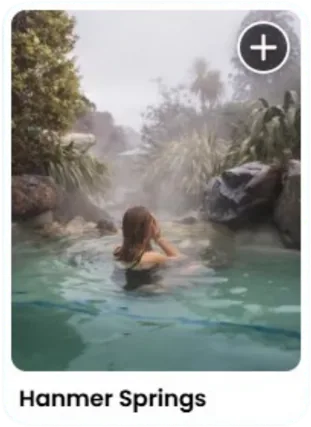
Then they went to Hanmer Springs and worked there for a few months. That's when it sank in that Shalane loves New Zealand, and over time it became home.
Why the book took 15 years
After Te Araroa, Shalane was desperate to get back to normal life, so she packaged up the experience and tucked it away. Nobody in her social circle would ever consider doing something like that, so the experience shone too brightly, and her instinct was to shrink and present herself as a normal backpacker looking for her next visa.
She calls herself a natural people pleaser. Over the years, she made herself smaller, until she no longer recognised the person who had walked Te Araroa. So she turned her life upside down and started rebuilding who she'd always been. In that healing, she went back to the story, and realised walking it so early, before so many others, made it worth telling. Now she coaches people who've been where she was, helping them build a community around them that celebrates them, so they can chase the goals they've always had.
Her advice for anyone with a big idea is that it's almost always possible, however crazy it is. If the people around you say it isn't, don't believe them. Find the people who've gone before you, because if they've walked the trail, or done it on a smaller budget, you can too:
"There will always be someone out there that has gone through the same challenges or the same experience or achieve the same goals that we're wanting to go out there and do We just have to find them."
Before our expedition, talking to people who'd kayaked big sections of the coast made all the difference for me. It shows you it's possible, and that they're normal humans too. And if your family thinks you're totally crazy, that's okay.
Places from this episode
- Te Araroa
- Cape Reinga
- Te Kūiti
- Bog Inn Hut
- Richmond Ranges
- Christchurch
- Queenstown
- Bluff
- Hanmer Springs
Follow Shalane
Shalane shares her coaching, speaking and writing on her website, which links to her Instagram, YouTube, Facebook, LinkedIn and Substack.
Links from this episode
- Follow Shalane on Instagram: instagram.com/shalanehopkins
- Get Shalane's memoir One Step at a Time: shalanehopkins.com
- Follow Abigail on Instagram: instagram.com/abigailhannnah
- Follow Aotearoa Adventures on Instagram: instagram.com/aotearoa_adventures_
More like this
- Nine Months of Solitude Walking Northbound on Te Araroa with Naomi Arnold
- Section Walking Te Araroa over Multiple Seasons and Battling Cancer with Te Aroha Hohaia
- A Healing Journey on Te Araroa Trail with Germaine
- Finishing Te Araroa as a Family Two Years Later with Deanna Gerlach
Until then, keep adventuring :)
The ultimate
NZ road trip adventure guide
Packed with insider tips and stunning photography, this is the only resource you need to plan your journey.