Episode 093
A Team Effort to Sea Kayak the North Island of New Zealand with Paddle for Purpose

Episode 093
A Team Effort to Sea Kayak the North Island of New Zealand with Paddle for Purpose
Spotify Apple Podcasts Everywhere else Download
Four guests at once! The most I've ever had on the podcast. So bear with us on the who's who.
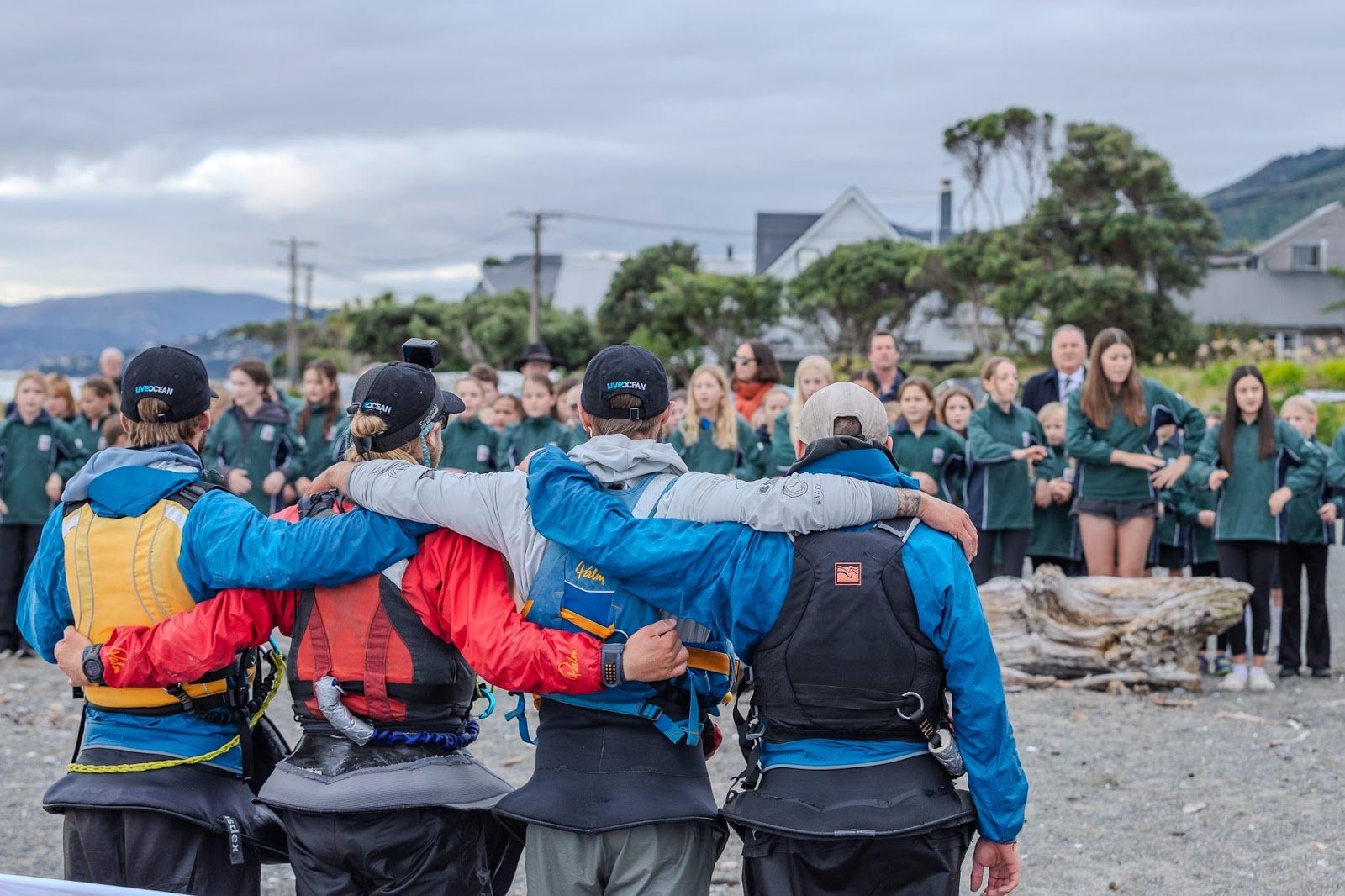
Kurt, Connor and Drew Stewart are brothers, and Carro is the younger brother from another mother. Together they're Paddle for Purpose, and they paddled down the east coast of the North Island, from Cape Reinga to Wellington, raising money for mental health and conservation. And I followed along the whole way, because right around the time they got on the water, I'd had my own idea to kayak from Cape Reinga to East Cape (only the pretty part, I'm too scared of the rest).
So this one covers where the idea came from, a year of planning, each of their highlights from Northland's caves to a wild day at Cape Palliser, the people doing the mahi they met along the way, how they looked after their mental health as a team, and what's next.
In this episode
- Who's who in Paddle for Purpose
- Where the idea came from
- Planning a North Island sea kayak expedition
- Highlights from Cape Reinga to Wellington
- Meeting the people doing the mahi
- Looking after mental health on a 75-day paddle
- Their advice for getting outside
- What's next for Paddle for Purpose
Who's who in Paddle for Purpose
Kurt is the oldest of the three Stewart brothers. Connor is the middle brother, based in Whangārei and working in outdoor guiding and instructing. Drew is the youngest, based in Mount Maunganui. Carro, the fourth member of the crew, is based in Wellington.
The name came from wanting the journey to be about more than themselves and more than paddling down the coast as an epic mission. They raised money for two causes close to their hearts: the Mental Health Foundation of New Zealand, and Live Ocean, which supports research that helps keep our oceans healthy.
Where the idea came from
The trip was Drew's idea. About five years before we recorded, he walked the South Island section of Te Araroa, then went kayaking in Abel Tasman with a friend who guided there.
Sitting around a campfire, someone asked if he'd do the North Island section next. He'd heard it was beautiful, but with a lot of road walking, and thought it would be cool to do his own version along the coast. The first idea was to walk it. Then someone suggested kayaking, and that stuck: an epic trip that not many people get to say they've done. He pitched it to Connor and Kurt soon after, and they were super keen. It didn't take much convincing. It was more a matter of timing.
Planning a North Island sea kayak expedition
Kurt, Connor and Carro met on an adventure tourism course, which gave them a lot of their sea kayaking and multi-day expedition skills. All of them except Drew have since worked as sea kayak guides.
They started planning about a year out, splitting the North Island coast into four sections so each of them could scope one: campsites, where to get food and so on. They needed a lot of permission in the Far North to start the trip at all, and they set up land-based support crews along the way to top them up.
The logistics took a really long time, and a big part was contingency planning: what could go wrong, how the support crew would help, and the triggers for a potential emergency. Sponsorship was hard too. The trip came with a significant cost, including fuel for the support crew, and they had to learn on the fly how to write sponsorship letters and pitch themselves. To a lot of people it sounded impossible or dangerous, so they had to show they had the skills to finish it. The sponsors only came on board close to the start.
My first sea kayaking was a few summers ago in the Abel Tasman with my partner, and this past summer we did two days in the Queen Charlotte. The North Island has so much beautiful coastline, and with no boat, kayaking is how we get to it. In Auckland, we've done overnight sea kayak missions around Rangitoto, Motuihe and Motutapu.
Carro says my Cape Reinga to East Cape idea is a good one. When they reached East Cape, Connor said that's how he'd do it, missing the hardest part.
Highlights from Cape Reinga to Wellington
The whole trip took 75 days, and each of them picked a highlight.
Carro: the changing coast
For Carro, it was how fast the geography and geology changed. They'd go from paddling past white sand to a massive cliff, which was really cool around North Cape. He thinks we're lucky to have so much variety to explore here.
Northland caves and a wild day at Cape Palliser
For one of the brothers, Northland was the standout for its caves and cracks to explore, with a few in the Coromandel too. His favourite single day came close to the end, rounding Cape Palliser. He started that morning with less energy than on any other day of the trip. After lunch the wind picked up, and it was the strongest wind of the whole trip. They had to stick together, and he got a big burst of energy as they battled it for hours, past seals and through rock gardens, with so much variety in one stretch. They really had to work for it, and by the end he was absolutely gassed, with two hours still to go. Carro says the wind was crazy, dropping off the hills and creating whirlwinds.
Basalt cliffs in the Coromandel
Another loved the Coromandel section, with its big basalt cliffs and really interesting coastline. He wishes they'd been able to dive it. On a trip like this you have to make distance, and you're dependent on the forecast and the swell, so you can't wait around to see every cave or for the visibility to clear.
Tāwharanui to Kawau Island by moonlight
The third loved the Coromandel and Northland coastlines too, and knew going in they'd be the best. His favourite afternoon was paddling from Tāwharanui to Kawau Island. They got on the water very late that day, so they paddled to camp almost in the dark, the only time on the trip they did.
"the sun was setting and then it was getting dark and then there was a full Moon Rise at the same time"
They had to get their head torches out, and it was magic.
I've paddled that stretch. We set off from Tāwharanui late in the afternoon, stayed a night on Kawau and did a loop of the island, and got sunset on the water too, so I know exactly what they mean.
Meeting the people doing the mahi
One of the brothers says meeting people working in conservation was a massive memory of the trip. They walked with someone from a kauri dieback organisation, met a marine scientist at Goat Island and went for a dive there, and met a man around East Cape doing pest control, native restoration and erosion control.
What struck him was how passionate every one of them was, putting everything into their work and wanting to spread the message. Meeting them every so often along the way boosted the crew's energy and gave them a kick to keep going. By happenstance, Live Ocean turned out to be a key funder of the work at Goat Island, which they didn't know until they turned up.
They filmed a side project along the way too, asking the people they met the same set of questions about mental health and conservation, to turn into a longer video.
Looking after mental health on a 75-day paddle
Before they set off, they did a paddle together to talk about how they wanted to go about the trip, and agreed on four values: gratitude, respect, honesty and enjoyment.
The five-out-of-five check-in
They started each morning with a debrief about the day, with the floor open for anyone to say how they were feeling, and they kept asking each other through the day. But they realised it was easier to say "yeah, I'm good" and paddle through it. So partway through, they started rating their mental and physical health out of five. Everyone knew roughly how everyone else was doing, and they could work around it.
I think that takes real psychological safety, being able to put your hand up and say you're a two today. Men especially aren't great at talking about it, and you don't need to be on an expedition to ask your mates how they're doing out of five.
What each of them struggled with
One brother, who's quite introverted, found it tough being with the same people 24/7. What helped was the team debriefing a lot, accepting what each person needed, and finding his own routine: space, a slow morning with time to meditate, and being by himself in his own boat.
Another felt the overwhelm hit very early, when he realised how far they had to go. Taking it day by day and moment by moment became a valuable tool, because thinking too far ahead drained his energy. His biggest battles came from physical pain: he had sore legs early on and kept wondering whether to keep going.
When I did a solo hike earlier that year, I found it so hard to stay mentally strong when everything hurt.
For Carro, the overwhelm came and went with the conditions. A couple of rough days of big swell or headwinds and he didn't want to get up to face another surf launch.
"once I was on the water it was … all good and I was happy to be there."
Rotating leaders
Another tool was splitting up leadership. Every two days, one of them took a turn as team leader, so resentment didn't build up and the load was spread.
Their advice for getting outside
Carro's advice is simple: get outside. It's easier said than done with other commitments, but the trip showed him how good it is for mental health. Out there you're out of the safety net of a house or a car, and he finds it humbling, out under the stars:
"it gives you a sense of where you are and who you are in the world"
One of the brothers says don't take New Zealand for granted. The mountains, the bush and the ocean are on your doorstep, and compared to a lot of the world we're so lucky, even if conservation can always improve. The day before we recorded, he and Connor went for a hike at Whangārei Heads, a place they've been going for years, and were blown away all over again.
That's how I feel about Auckland. If it wasn't Auckland, it would be the Abel Tasman of the North Island, with its volcanoes, the Waitākere and Hunua Ranges, all the bush and all the islands.
Another brother's advice is to focus on what you can control. It's easy to get stressed about things you can't, and the state of the environment can feel too big to even start on. But you can break it down: they could control going on a trip and trying to make a difference, and he could control 30 minutes of meditation in the morning.
Connor says they're always trying something new: kayaking, white water, rock climbing, hikes. But his absolute favourite thing is a simple walk or a swim. It's accessible, and it makes him feel good every single time.
What's next for Paddle for Purpose
When we recorded, they were all heading off to different parts of the world, and with winter coming, back to work. If they come back together, there might be a South Island trip. Ideas so far:
- Alaska to Vancouver Island by sea kayak, and the South Island's West Coast, for one of the brothers.
- A month in Fiordland, mixing it up: kayaking the fiords, hiking, canyoning and diving. It's the trip one brother dreamed up while paddling towards the end, as he's never been there.
- Another big trip every three to four years. Since Te Araroa, Drew has told himself he'll do one at least that often. Fiordland sounds good to him, and so does some mountaineering.
Places from this episode
- Cape Reinga
- North Cape
- Far North
- Northland
- Coromandel
- Tāwharanui
- Kawau Island
- Goat Island
- East Cape
- Cape Palliser
- Wellington
- Whangārei Heads
- Abel Tasman
- Queen Charlotte
- Rangitoto
- Motuihe
- Motutapu
- Waitākere
- Hunua Ranges
- Fiordland
Follow Paddle for Purpose
- Instagram and Facebook: Paddle for Purpose, plus their Givealittle page and a YouTube channel
Links from this episode
- Donate to the fundraiser for NZ Mental Health Foundation and Live Ocean
- Follow Paddle for Purpose on Instagram: instagram.com/paddleforpurpose/
- Follow the team on Instagram: Cared , Connor , Kurt & Drew
- Follow Abigail on Instagram: instagram.com/abigailhannnah
- Follow Aotearoa Adventures on Instagram: instagram.com/aotearoa_adventures_
More like this
- A Solo Kayak Circumnavigation of New Zealand Over 5800km with Red Paterson
- Sea Kayaking for Beginners and the Best of the Hauraki Gulf with Bennett Lim
- One month into a 1000km Sea Kayak Expedition with Isaac and Abigail
- Finishing a Two Month Slow Paddle Sea Kayak Expedition with Isaac and Abigail
Until then, keep adventuring :)
The ultimate
NZ road trip adventure guide
Packed with insider tips and stunning photography, this is the only resource you need to plan your journey.