Episode 083
Finishing Te Araroa as a Family Two Years Later with Deanna Gerlach
Spotify Apple Podcasts Everywhere else Download
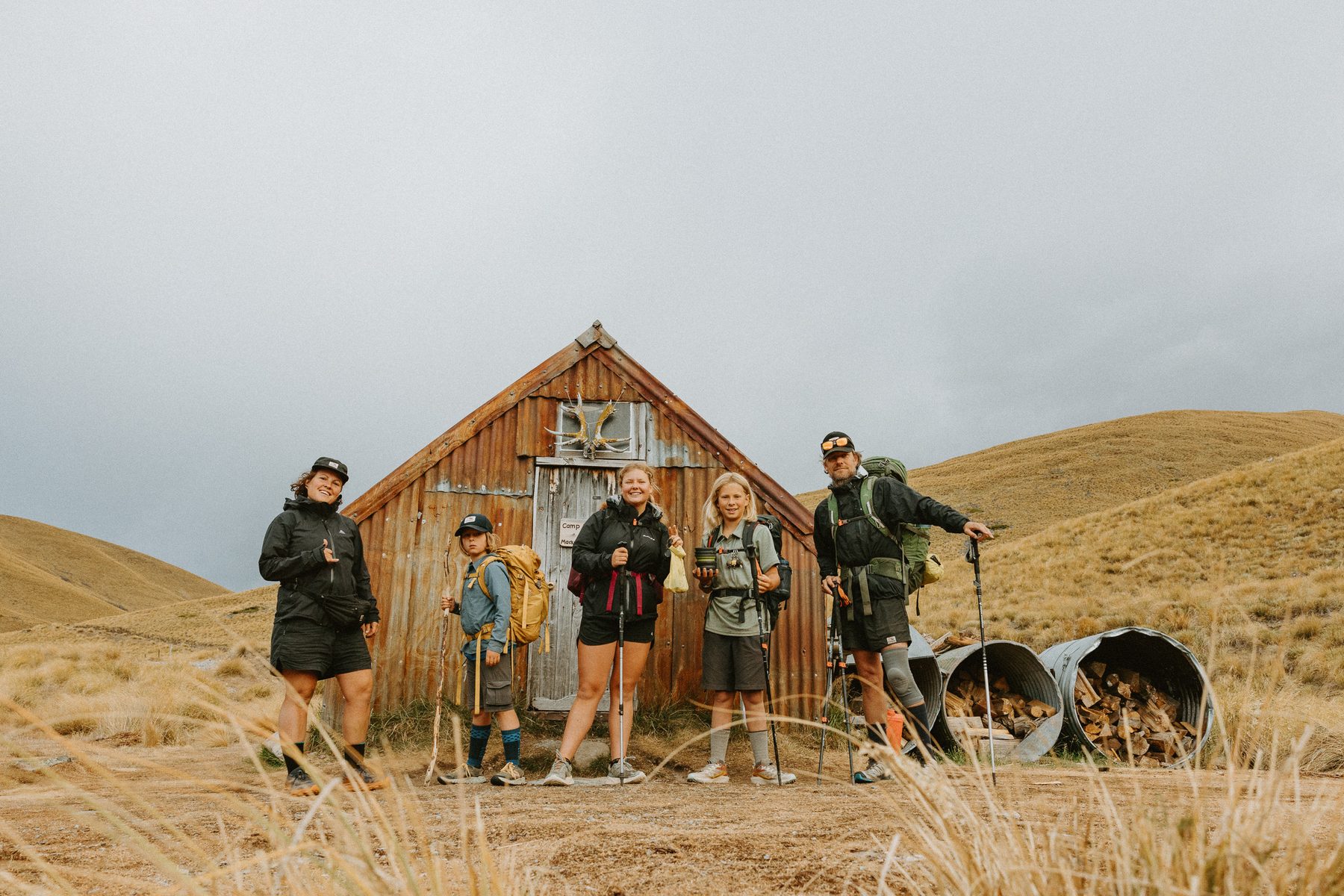
This one was a listener request, and it always makes me so happy when I can bring on a guest you've asked to hear from.
Deanna grew up in Whangārei, went to uni in Dunedin and spent 20 years in Australia. Then in 2020 she moved home with her husband and their three kids, and the whole family walked Te Araroa for six months. Their first ever overnight hike as a family. Six months! They've since settled in Wānaka.
The trail threw a few curveballs, and swollen rivers meant they had to skip the Canterbury section. So this summer they went back, with two teenagers who were very much over it, to finally finish. We talk about how the idea was born in lockdown, what six months on trail is like as a parent, the final section from the Rakaia to Tekapo (including the best swimming hole), and Deanna's tips for tramping with kids. So so inspiring.
In this episode
- Growing up outdoors on a low budget
- How a lockdown dream became Te Araroa
- Six months on Te Araroa as a family
- Why they skipped the Canterbury section
- Finishing Te Araroa with two teenagers
- Rakaia to Tekapo: terrain, rivers and spear grass
- Tips for tramping with kids
- What's next: the Routeburn, winter and Nepal
Growing up outdoors on a low budget
Deanna grew up on a farm and spent most of her time outside. Her family was adventurous in a really low-budget, no-rules Kiwi kind of way, with very little gear: cheap tents and sleeping bags, fires on the beach, and nights under the stars with silage cover over the top to keep the dew off. They did lots of tramping, but never overnight, because they didn't have the packs or the gear. Back in the 80s, she reckons, that wasn't too abnormal.
These days they have heaps of great gear, which means bigger and more extreme adventures. But to get started, you have to go for it.
I love that. Tramping can get more and more expensive, especially if you want ultralight gear, but you don't need all of that to have a good time outdoors.
The kids grew up on the northern beaches of Sydney, with Ku-ring-gai Chase National Park wrapped right around them. They did lots of short day hikes there, but no overnight hikes at all before Te Araroa.
How a lockdown dream became Te Araroa
Feeling the pull home
Deanna felt a real need to connect with her homeland and her whānau, and she'd had an itch for adventure her whole life. She and her husband had never found a way to scratch it: they'd fallen into having kids and working, and on a fairly low budget, they couldn't pack up and travel overseas for a year like they'd often dreamed. So they'd talked about moving back to Aotearoa.
Lockdown in Sydney
Then COVID lockdown happened, which Deanna calls a beautiful lockdown baby. A lot of her work as a photographer was cancelled, and her husband, who used to commute to Melbourne, was suddenly home. They were terrible at homeschool. Deanna took the kids into the national park every morning, and they sat around playing cards and board games, which was a revelation after their busy, typical suburban life. She feels they were incredibly lucky to be able to act on that feeling so many people had in COVID.
The spark was a New Zealand Geographic article, with photos by Neil Silverwood, about a family who'd walked the trail the year before with kids of similar ages. Deanna had known about Te Araroa for a while, but only as something adults did. From there, they researched it thoroughly, and she did an alpine guiding course in Jindabyne with a friend, which gave her the skills and confidence to get the family through safely.
The plan was to sell everything in Australia and start with a clean slate: no jobs or house to worry about, only tramping. After two weeks of hotel quarantine and catching up with whānau in Auckland and Whangārei, that's what they did. They felt it was their last chance before their eldest became a teenager and really wanted to be with her mates.
Six months on Te Araroa as a family
Cape Reinga to Bluff
They walked southbound, from Te Rerenga Wairua (Cape Reinga) to Motupōhue (Bluff), over 177 days. They were very inexperienced when they set out, with no idea whether they'd love it, and they knew they might pull the pin at any point if it wasn't working for everybody. Every step was a revelation.
Deanna compares it to childbirth: they remember the awesome parts now. But it was incredibly challenging, physically and mentally, for all of them. The logistics of planning each section were tricky, and the kids found it really hard being away from their peers, their own space, their own rooms and their books. The physical side became normal. They got really fit, and that just became what they did.
No time out as a parent
Deanna and her husband downloaded audiobooks and podcasts for the trail, then realised on day one that they'd have to listen out for the kids instead. They didn't put headphones in for a single minute.
You go through your own tough moments, then manage one of the kids', then notice your partner having one and take over the strength. The family got good at tag-teaming, and even the kids would step up if an adult was having a tough time. There's no time out, and it's exhausting. Deanna's escape was going to bed early with her youngest, in full summer daylight. But as a parent at home, she points out, you're doing that every moment anyway.
That blows my mind. My first solo hike was five days long, and I found it so hard, physically and mentally. What I tell people is to start with something small. Deanna's family started with six months.
Gear, YouTube and trail community
The family hadn't been on an overnight hike together because of COVID: their tent from the States was held up by shutdowns and arrived the day before they flew out.
To prepare the kids, they watched lots of YouTube, including Dixie, a well-known American hiking YouTuber, and their favourite, a Kiwi hiker they later met on the trail. That set expectations well. But the first week walking down the beach was much harder than the videos, and there were tears from all of them while their bodies adjusted.
What pulled them through was the people. Early on, they spent five days hiking with that Kiwi hiker and her mates, and then five days with an epic couple they met in the forest. Deanna says moments like those take you to the next stage, like reaching a new level in a computer game.
Why they skipped the Canterbury section
By the time they finished the Waiau Pass section, they'd done what they saw as the three big sections: the Tararua Range, the Richmond Ranges and the Waiau Pass. They felt they'd earned their stripes. They'd also been out of range for ten days, and ten days before that, so they were out of touch with everything beyond the day ahead.
It was Easter and getting cold. They were waking up to frozen shoes and starting to get a bit miserable, so family picked them up and took them to Christchurch for warmer gear.
Then they started on the logistics. The rivers were incredibly high, and their youngest was still quite small. Taking any of the kids through swollen rivers was way too risky. First they thought they'd skip the Arthur's Pass section. Then they realised there are hundreds of river crossings all through Canterbury. On about day five of their logistical nightmare, they decided to skip all the way to Tekapo (Takapō).
It was heartbreaking. They'd been so looking forward to that section, especially Stag Saddle, the highest point on Te Araroa. But there was no way they were taking risks with the kids and rivers. They walked on from Tekapo to Bluff. The following summer they came back for the Arthur's Pass section, and this summer they finished the last piece: from the Rakaia to the Rangitata, and from Two Thumbs to Tekapo, over two weeks.
Finishing Te Araroa with two teenagers
The two teenagers were definitely over it. The youngest was pumped: she still loves the trail lifestyle, and hanging out with her parents is her number one.
Deanna's first mistake was the timing. They'd come straight off a three-week road trip up north to see whānau for Christmas, so the kids had already spent three weeks in the car together, and they had only two days at home in Wānaka before heading off again. Ideally, the teenagers would have had two weeks with their mates first.
It was an awesome experience, but emotionally very challenging for their eldest. She didn't try to pull out at any stage: she'd committed, and she nailed it. But she really missed her friends, being connected to them online and having her own space.
The beautiful thing about walking, Deanna says:
"When you're out there walking side by side. You're not really looking each other in the eye. It's a pretty cool opportunity to be incredibly honest with each other. You can yell you can scream you can storm off you know all of the emotions um can can come out in quite a safe space."
The teenagers have told her they're done with long trails, though they're still really happy to do multi-day hikes. Meanwhile, the youngest is jumping up and down asking to do the Pacific Crest Trail. Deanna would need the funds, and she couldn't split the family up for it. Maybe the teenagers will come round to long trails when they're older, she says, and the family could walk a week behind.
On my solo tramp I read Wild by Cheryl Strayed, about walking the Pacific Crest Trail, and it was so comforting to read about everything going wrong for her while I was out there. Deanna's recommendation: her friend Holly Kipling's book about walking Te Araroa on her own, Roots, Boots and Two Pairs of Glutes.
Rakaia to Tekapo: terrain, rivers and spear grass
Alpine tussock and low rivers
This section gets quite alpine. There's scree, dry Canterbury tussock and so many rivers. When they went, the rivers were really low, and soon after they finished, huge rains came in and swelled them again.
From the north end, you go pretty much straight up into low alpine tussock, and it's incredibly hot and dry. The kids would get their whole bodies into any stream they found, even ten centimetres deep, without taking their shoes off, because their shoes and socks were wet anyway from the constant river crossings. Low rivers also meant thick layers of scum, river snot, and some of the water tasted awful. They'd left their water filter at home because they hadn't used it for years, and that was a mistake. Luckily, no one got sick.
Shorter days on purpose
Knowing they were unfit and it would be hot, they kept to eight hours a day or less, after knocking out 13-hour days on the full trail when they needed to. They used the trail notes to pick campsites so no day was too strenuous, plus a couple of longer days to prove they still could.
It isn't overly technical, without much scrambling with your hands. But the dense tussock hides matagouri and spear grass, so their legs were constantly sliced up and bleeding. It's incredibly beautiful, and Deanna compares it to the Routeburn, where the beauty is condensed. Here it's laid out, and you see the same thing for days.
The jump rock on Bush Stream
Deanna's favourite moment was on Bush Stream, at the start of the Two Thumbs Track, on the day up to Crooked Spur Hut. They'd had a town day to resupply while it rained, everyone was tired and not feeling it, and it was a really hot day.
Then they found an epic swim spot: a chasm with bush high on both sides, rocks all around and fast-flowing aquamarine water. You jump off a huge rock, the rapids carry you down, then you swim back round and do it again. Shoes and socks on, shirts off, in and out. The kids asked if they could come back to the same spot every year.
It took the heat out of the next six hours of hills. As Deanna puts it:
"you forget about all that stuff you just remember the jump rock."
Tips for tramping with kids
Don't rush in like they did
Deanna's first tip: don't run in like they did. It was a very different time, with a quiet trail made up of about 70% Kiwis and hardly any tourists, and they could always get a campsite. It's quite different now. They've had chats with a lot of the families who've walked it, and she's open to more. Think about your motivation, what you want to get out of it, and how flexible you're happy to be.
Give every kid a job
Giving kids a sense of purpose and information about where you're going really helps. Every kid is different, so match the job to the kid:
- Navigation, checking the elevation profile and how many kilometres are left.
- Helping at camp and cooking dinner.
- Card games or snack delivery.
- Writing the menu before you go.
Distraction, stories and ABBA
Distraction was number one, and that meant storytelling, which was exhausting for the adults. Their middle child could tell a movie from start to finish in great detail, and entertain the youngest for hours. With the kids homeschooling on the trail, it was good practice for comprehension and storytelling. Deanna's husband got very good at making up stories the kids loved and she couldn't stand.
They sang a lot, and for emergencies they carried a tiny waterproof speaker. The biggest hit of the whole trail was ABBA. With teenagers this summer, the same tactics worked at a higher level.
This summer, tramping with my husband, I started doing the same thing. When my knees and feet were hurting, I'd ask him to tell me the whole story of the book he was reading, then I'd tell him about mine. It's such a fun way to be distracted.
What's next: the Routeburn, winter and Nepal
Next up, Deanna and her husband were walking the Routeburn with friends from Australia and no kids, which felt really exciting. They're also pumped about another winter around Wānaka, getting more comfortable and savvy in alpine environments and camping in the snow with the kids.
The big dream is trekking in Nepal, where the family does some fundraising work with the Himalayan Trust for schools. One beautiful thing about Te Araroa, Deanna says, is that it takes you through lots of small towns and lower socioeconomic areas, so you see a real cross section of the land and its people, and they'd love to show the kids the world that way. For now, the kids want to be with their peers, so the family is meeting everyone's needs as best they can.
Deanna has around 14 hours of footage from their Te Araroa, which she hopes will become a film one day, and enough photos for a book.
Places from this episode
- Te Araroa
- Te Rerenga Wairua (Cape Reinga)
- Motupōhue (Bluff)
- Whangārei
- Wānaka
- Tararua Range
- Richmond Ranges
- Waiau Pass
- Christchurch
- Arthur's Pass
- Rakaia
- Rangitata
- Two Thumbs Track
- Bush Stream
- Crooked Spur Hut
- Stag Saddle
- Lake Tekapo (Takapō)
- Routeburn Track
Follow Deanna
- Instagram: @dgerl
More like this
- Nine Months of Solitude Walking Northbound on Te Araroa with Naomi Arnold
- Section Walking Te Araroa over Multiple Seasons and Battling Cancer with Te Aroha Hohaia
- Setting the Fastest Self-Supported Record on Te Araroa with Billy Meredith
- Family Tramping on a Budget and Child-Free Trips with Shoshannah Shand
Until then, keep adventuring :)
The ultimate
NZ road trip adventure guide
Packed with insider tips and stunning photography, this is the only resource you need to plan your journey.