
Spotify Apple Podcasts Everywhere else Download
I've done exactly one tandem skydive in my life, and it was completely on a whim. So I was really really excited to talk all things skydiving with Anne, because she jumps out of planes for a living.
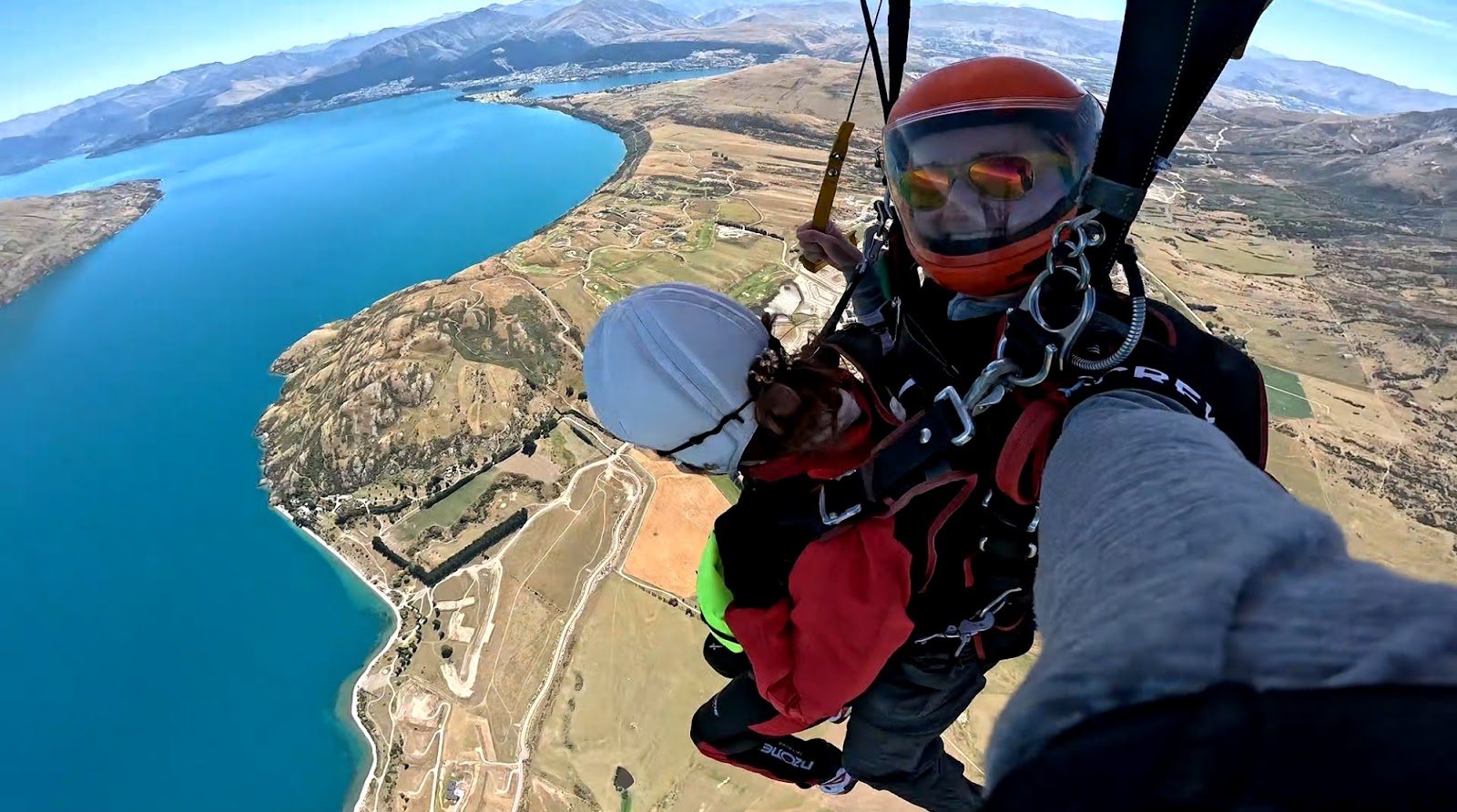
Anne is originally from Germany and has been travelling for most of the last 10 years. This year marks 10 years since her first tandem jump, and she's now a full-time instructor who has taken tandem passengers in New Zealand, Thailand, Namibia, Germany, Spain and Portugal. New Zealand was her long-term dream, and she got to live it for just short of five months, jumping at Skydive Wānaka.
So we get into how she started, the two ways to learn, and soooo much about what it takes to become an instructor (more than I ever realised). Then her time in Wānaka, how she calms nervous passengers, why she'd rather kids waited, and her days off tramping and kayaking, including two slow nights at Brewster Hut. And yes, I talk about my own jump, and the most humbling video I've ever watched.
In this episode
- From the Alps to Namibia
- How Anne got into skydiving
- Learning to skydive: static line or AFF
- Becoming a skydiving instructor
- Tandem skydiving nerves and fear of heights
- Tandem skydiving for kids
- Working at Skydive Wānaka
- Days off in the Southern Alps, Abel Tasman and Stewart Island
- Brewster Hut over two nights
From the Alps to Namibia
Anne grew up in the south of Germany, a two to three hour drive from the Alps, and she reckons she learned to walk there. Holidays were spent in bushland cabins where they had to provide for themselves, and she loved it. Then, as a teen, she decided hiking was super uncool. It took until her mid-20s to come back to it, and now she's all over it again.
About 10 years ago she moved to Namibia and worked as a sandboarding instructor, outdoors all day. She had an indoor climbing wall for a while and organised rock climbing trips to the mountains. The first time she camped with local friends, they handed her a mattress and told her nothing out there could hurt her, then walked her around with a UV light pointing out all the scorpions. She needed a couple of beers to sleep that night.
That's partly why New Zealand appealed: she knew there wasn't much here that wanted to kill her, except maybe the roads.
How Anne got into skydiving
Nobody grows up saying they want to be a skydiving instructor, Anne included. In Namibia, her group of friends were skydiving instructors or pilots, so a tandem jump was always going to happen sooner or later. It was never a dream of hers. But when a friend says they're going to jump out of a plane with you, you don't say no.
It was fun. After four or five tandems, her friends said they weren't taking her on another, so she signed up for the course. Anne doesn't do things halfway (rock climbing went the same way, all the way to climbing instructor), and she's practical about the money:
"It is a fun hobby for sure. It's not a cheap one. And the way to make it work is make it pay for you is the best way."
You'll never get rich, she says, but as long as it pays for your life, that's all you want.
Learning to skydive: static line or AFF
You don't need to do a tandem before you learn to skydive on your own. There are two ways to start as a student.
- Static line. The old military method. A line attached to the aircraft pulls your parachute open as soon as you leave the plane, so there's no freefall on your first jumps. It's the cheaper way, with a longer progression, so you'll probably need more jumps before you get your licence.
- AFF (Accelerated Freefall). You start with freefall from above 10,000 feet (most places do the first jumps from around 12,000 to 13,000). You have your own parachute, and two instructors hold you, one on each side, stabilising you and giving hand signals. It's the most popular method these days.
The saying goes: if you have the time, do static line; if you have the money, do AFF.
Both start with a ground course. You only get 30 to 40 seconds of freefall, so most of the training happens on the ground, and it can be repetitive. If you can't do something on the ground, Anne won't take you up, because you won't manage it up there either. On AFF, you do three jumps with two instructors, then go down to one, and after seven passed jumps you become a solo student.
Anne learned on static line. What she remembers of her first solo jump is the terror of sitting by the open door (the plane had no door at all), and not knowing what was happening for the first few seconds. It's all about body awareness and staying symmetrical, because when something isn't symmetrical, you're not in control, at 200 kilometres an hour.
Becoming a skydiving instructor
Anne studied early childhood education and development, and teaching is what she loves. So her first job in skydiving was as a coach, a step below instructor, taking solo students up to teach them how to fly together and approach others safely in freefall.
She also worked as a parachute packer, the least favourite job of anyone, though she doesn't mind it and still packs her own rig almost every time. Then she became a camera flyer, filming tandems from the outside.
The AFF instructor rating
To become an AFF instructor, you need between 500 and 600 jumps, depending on the country and the association. Anne did her first jump in 2015 and became an AFF instructor in 2019.
With students, Anne does no more than three jumps a day, because that's about as much as most of them can take. The rating starts with an examiner and more ground training, much of it on how to talk to nervous first-timers so they feel confident in freefall.
Then comes the scary part. The examiner goes up and plays the worst student ever, and you have to catch him, release him and pull his parachute, the full nine yards, over five to 10 jumps. When he's happy, he signs you off.
Then you have to stay current, because if you don't jump often, you're not safe. Instructors need at least 15 jumps a year.
The tandem rating
In 2021, Anne did her tandem rating. The two are separate disciplines, and plenty of people only do one. Anne finds AFF mentally more demanding: on a tandem, the person is attached to you, but as an AFF instructor you have someone somewhere in the sky doing weird things, and you need to control them.
Tandem skydiving nerves and fear of heights
Plenty of Anne's passengers in Namibia have bungee jumped at Victoria Falls. She's done one bungee, and she will never do another:
"So for someone afraid of heights, the worst for the fear is standing on top of a bridge looking down. … So you don't get that feeling up in the air, in the aircraft when you're at 10, 12, 15,000 feet because you're way too high. Your brain doesn't actually understand what is happening."
You only feel the ground getting closer once the parachute is open, and by then you've slowed right down. The hard bit is the few seconds leaving the aircraft, so her tip for nervous jumpers is to go first, before you've watched seven or eight people disappear.
Talking a passenger to the door
Recently, during a group briefing, Anne could tell who would be the most nervous, and that passenger was hers. On the way up, the woman turned around and said she didn't want to. So Anne didn't stop talking: she showed her how tight the harness was and went through every step again.
Instructors never force anyone to jump, but plenty of people say no at the door when they mean yes, so the instructor has to work out which it is. The engine is loud, and "no, no, no" sounds a lot like "go, go, go". This passenger said it exactly twice, saw the camera flyer hanging outside, gave in, and had the best time of her life. By the door, the biggest mental part is done. The instructor has trained for anything after that: the tandem examiner even pretends to pass out under the parachute.
I feel like that passenger was probably me. My instructor was having a good chat to me in the plane too.
My own tandem at Aoraki
We were at Aoraki Mount Cook National Park on a clear bluebird day, and I said to my husband, should we go skydiving? They were fully booked, so we jumped the next day from near Twizel, on our second wedding anniversary. The door of the tiny plane opened, my husband jumped first, and I thought, is this where I lose my husband on our anniversary? What surprised me most was the wind. My instructor kept telling me to lift my chin and look at the entire Southern Alps. And the video is so funny: your whole face flaps.
Anne likes that it was spontaneous, because you don't have time to get nervous.
Tandem skydiving for kids
When we recorded, Anne says, New Zealand allowed tandem passengers from six years old, and she doesn't agree with it. In the States, a tandem passenger is treated as a student, so you have to be 18. In Namibia and Germany, it starts at 10.
Her reason comes from her early childhood background: a child's ears aren't developed yet, and the pressure can permanently damage them. She wouldn't recommend a tandem before 12 or 13.
She's also seen a lot of parents push kids into it. A six-year-old sees the plane and thinks it's cool, with no idea what jumping out of it means. So she asks manifest (who pair passengers with tandem masters) not to put young kids with her. If she gets one, she asks them whose idea it was, because kids are honest. And she boards first, so she's last out: if the child shows any sign they don't want to jump, she lands with the plane.
Once teenagers understand what it means and want to do it, and their parents agree, she says go for it. And young adults who bring their mum along leave her two terrified people to calm down. Her advice: bring your mates, and send your mum the video afterwards.
Working at Skydive Wānaka
Anne and her husband have worked in skydiving together since 2019, sending CVs to drop zones in places they'd both like to go. They were after work over the Northern Hemisphere winter, and Skydive Taupō and Skydive Wānaka both said no at first. Anne was about to book flights to Thailand when Wānaka came back saying they needed them, and they had less than two months to get there.
The sad part was that Wānaka only did tandems. It offered them a longer job, but they'd only take a year-long role if they could teach as well. They flew camera and jumped tandems, and Anne's New Zealand record was 15 tandem jumps in a day. The same company owns Skydive Queenstown, so she jumped there too.
Jumping while pregnant
Anne was in her first trimester when she was doing those 15-jump days. Tandem passengers aren't allowed to jump pregnant, and nor can you start skydiving pregnant. But for licensed skydivers, she says, no association she knows of has a rule against it, so it's your call. She kept jumping as her pregnancy went on, only ever on a parachute she'd packed herself.
Her view is it's like any other sport: if you feel weak or nauseous, you shouldn't jump, instructor or not. Wānaka lands across from the airport, near the mountain, and the 10 to 15 minute ride back was what made her queasy.
She reckons her passengers were safer for it, because she was on higher alert than ever. If something felt off, she'd step down for a load, drink a bottle of water and go on the next. The Wānaka team were incredible and really respectful, even when one asked whether she'd checked her pulse with a finger on her neck. She could feel it.
Clouds, the Remarkables and Fox Glacier
Wānaka and Queenstown were stricter about cloud than other places Anne has jumped, and she respects that, because she won't compromise on safety. If one person says no, the whole team stays on the ground.
Queenstown is a weird one for an instructor: you freefall past the top of the Remarkables, right next to the lake, before you pull. Anne knows by eye when to pull, but there it feels like she should have pulled long ago.
She'd have loved to jump at Fox Glacier, which everyone told her is the most amazing place to jump in New Zealand. It's a tricky one, though, because you know what the weather on the West Coast is like. She'd also have loved to work at Skydive Abel Tasman, because they do student training. In the North Island, she knows Skydive Taupō is very popular, and a friend jumped in the Bay of Islands.
There's one just north of Auckland at Parakai too, where a mate of mine was learning to skydive.
Days off in the Southern Alps, Abel Tasman and Stewart Island
On their two days off a week, they'd drive into the Southern Alps after work and spend the nights in a tent or a backcountry hut. Walking through hip-high grass, her husband's mind said snakes, but here it's flowers and bush and water you can jump into.
At the end, they took two weeks off, drove up a rainy West Coast and went all the way to Abel Tasman for a four-day kayaking trip, dropped far into the park and paddling bay to bay. She loved the beaches and the forest, raw and wild and clean.
Kayaking the Abel Tasman was on my bucket list for so so long, and it was even cooler than I'd imagined. I've since done the Great Walk there as well, but if I went back, I'd kayak it. You could spend weeks in that park.
Anne never made it to Milford Sound, and she's accepted that, because she doesn't want to tick things off. They did make it to Stewart Island, walking one hut in and out again on their two days off. Other trampers pushed on along the big walk there, so they had the hut and the whole beach to themselves: a tropical-looking beach with freezing water.
Brewster Hut over two nights
Brewster Hut was on Anne's list, and in summer it had to be booked ahead. A lot of people do Brewster Hut and Brewster Glacier in a day or one night. These days Anne and her husband add an hour or two to any walk, because they want to enjoy the whole process, so they booked two nights.
The day they walked in, she felt horrible. In Europe, she says, trails zigzag up mountains; in New Zealand they go straight up, like they were drawn with a ruler. She'd take three steps, sit down and eat some carrots and cucumber. Her husband said she was really white in the face and it was okay to turn around. She was not having any of that, and they made it.
They relaxed at the hut with three fun Kiwi women who'd also booked two nights, and the next day walked up to the glacier and swam in the freezing water. It's a little hike from the hut, but she'd still plan two hours, because you don't know what the weather will do.
"That's what I love about New Zealand. You have the glacier, you have the white of the snow and ice, and then you have like the lush green rainforest just beneath you."
There were rainbows, evening rain, kea, sunrises and sunsets, and at night the most amazing stars. As much as she suffered on the way up, she'd do it again just like that. Her advice: don't do it in a day. Spend at least one night, and two if you can.
I haven't done it yet, but I think that's really important advice. There have been a lot of rescues at Brewster Hut, because people push for the glacier and back in a day, fixed on their goal, and the weather turns. Knowing you have two nights to take it at your own pace makes a really big difference.
Places from this episode
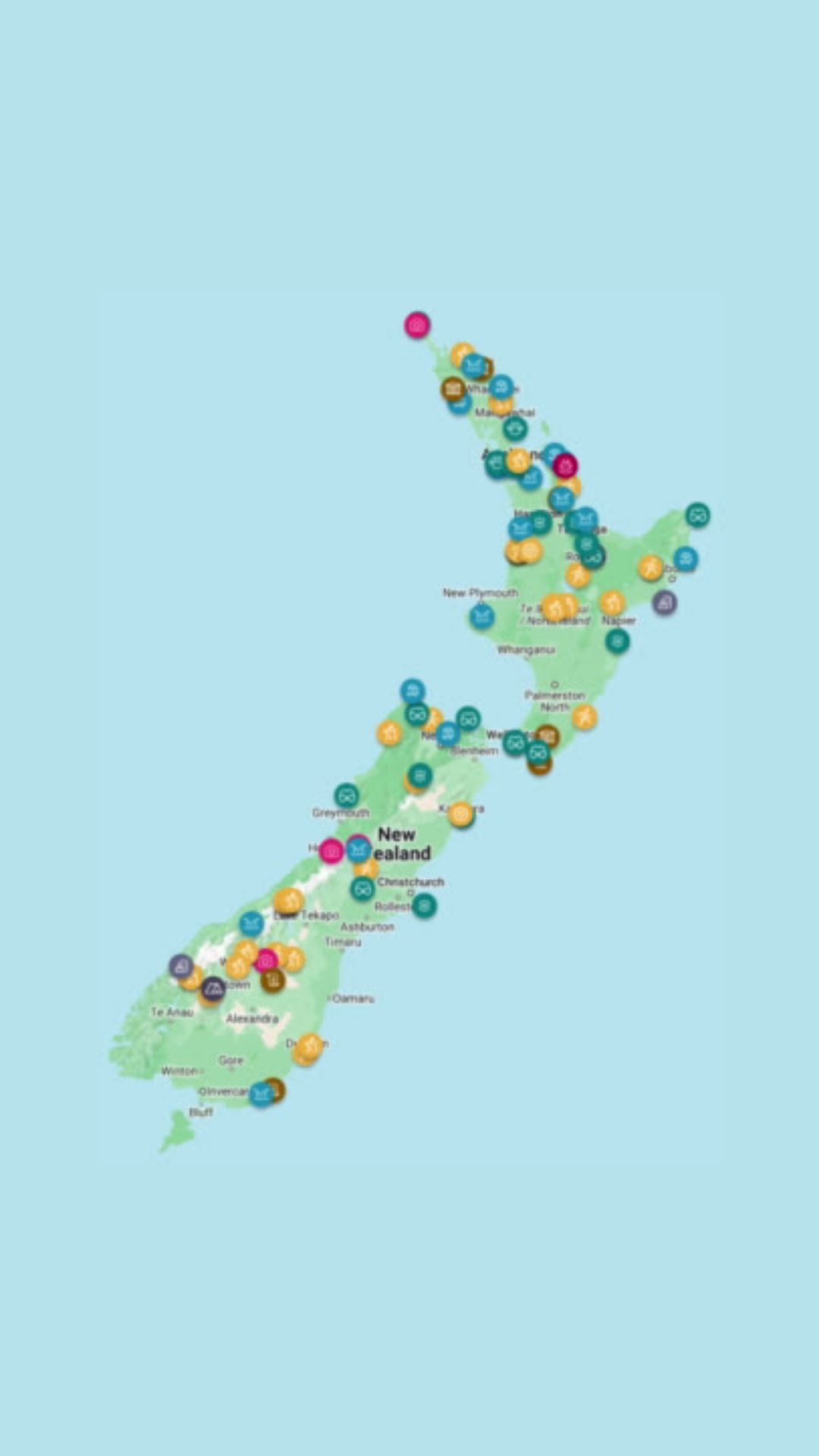
- Wānaka
- Queenstown
- The Remarkables
- Twizel
- Aoraki Mount Cook National Park
- Fox Glacier
- West Coast
- Abel Tasman National Park
- Stewart Island
- Brewster Hut
- Brewster Glacier
- Southern Alps
- Taupō
- Bay of Islands
- Parakai
Follow Anne
Anne writes on Medium, has recently started a Substack, and posts her pictures on Instagram.
Links from this episode
- Follow Anne on Instagram: instagram.com/mydreamofafrica
- Follow Anne on Medium: medium.com/@anne.bonfert
- Follow Abigail on Instagram: instagram.com/abigailhannnah
- Follow Aotearoa Adventures on Instagram: instagram.com/aotearoa_adventures_
More like this
- Exploring the Skies, Paragliding in New Zealand with Josh and Caleb
- Living, Working and Travelling in NZ as an Expat with Justine Jehanno
- Moving to New Zealand and Travelling with Photographer Scott Howes
- Moving to Aotearoa from Chicago and Building a Life in Queenstown with Viktoria De Dominicis
Until then, keep adventuring :)
The ultimate
NZ road trip adventure guide
Packed with insider tips and stunning photography, this is the only resource you need to plan your journey.