Episode 160
Hut Etiquette in DOC Huts and Exploring the Whitcombe Valley with Renee Cadigan

Episode 160
Hut Etiquette in DOC Huts and Exploring the Whitcombe Valley with Renee Cadigan
Spotify Apple Podcasts Everywhere else Download
Renee is back! She first came on the podcast to talk about hiking up to Mount Brown with her boys, and she even remembered the episode number, which I love.
A lot has changed for her since then. Renee used to be known as the mum who hikes, and now her boys don't want to hike anymore, so she's found other ways to keep her love for the outdoors going, mostly solo and mostly close to home on the West Coast. She's also started Voices of the Coast, showing people the Coast through the people who live there.
And she had a story from a night at Rapid Creek Hut that I'd seen on her Instagram and could not stop thinking about. So we talk about the Whitcombe Valley, that night (it's gross, I'm warning you now), and then all the basics of hut etiquette: what to do, what not to do, how to speak up, and what to do when a hut is full.
In this episode
- From hiking mum to solo adventures
- Exploring the Whitcombe Valley
- A night at Rapid Creek Hut
- Hut etiquette basics
- Speaking up and reporting problems in huts
- Making room in huts: bunks, early starts and full huts
- Voices of the Coast and West Coast weather
From hiking mum to solo adventures
Renee grew up on a farm, where if you were inside you'd be given jobs, so you'd get out. Her generation watched the internet come into their lives, but they knew how to play outdoors without wanting to share it. They built heaps of huts and came home when they were hungry.
The idea of her own boys doing the things she did terrifies her. She knows the boys will want to go exploring on their own, but these days society tells parents kids need to be watched all the time. So if they go down to the lake for a swim or out into the bush, she has to be there.
Fitting it all in
Renee works full time and can't sit still. She and her husband work opposite shifts, and he's always said he'd rather take time off so she can go and do the things she loves. When he can see she needs it, he books the time off and looks after the kids.
With the boys back at school, she can do quick day missions, and in the last year she decided to stay closer to home. That means no more six-hour drives to do Mt Fyfe in a day before work the next morning. She backs right onto the bush, and within a 15-minute walk she's in dense bush.
Wherever you are in New Zealand, there's something close by. I spent six hours last Saturday walking around the Hunua Ranges, and from Auckland you've also got the Waitākere Ranges, with more of those tracks opening up. There's something special about exploring the places close to where you live.
Exploring the Whitcombe Valley
Renee had wanted to save the West Coast till last, because it's crazy and really hard work. Then she turned 40 this year and thought, why am I driving away when I have all of this here? Let's do it now.
One area she rates highly is the Whitcombe Valley. She's only just starting to venture up there, and she thinks it's such a beautiful area. From the Whitcombe you can go over to the Rakaia and come out in Canterbury, or do loops all the way around. Right now she's obsessed with it, and kicking herself she didn't start sooner.
Routes and huts
You start from the Hokitika Gorge, walk through some farmland and follow the Hokitika River up to the confluence. From there you can carry on up the Hokitika or head up the Whitcombe, with huts scattered all the way through.
- The seven-hut loop. Renee planned a loop with a friend to bag seven huts, but in winter it was too dangerous, climbing over boulders the size of a house. They've saved it for a warmer month.
- Straight up the valley. She wouldn't call it easy, but it's quite easy to navigate. Past the Whitcombe River you reach Frew Hut, and from there you can climb to Frew Saddle, drop down to Bluff Hut, and loop back out through other valleys.
- Out towards Ross. There are more valleys to pop out through, and Renee calls the whole area a rabbit warren of walks.
Most of them are proper tracks. DOC looks after the main ones, and a lot of work is done through Permolat to reach the bivvies up top. Renee credits a lot of the tracks in that area to one volunteer and his friends, who are out clearing tracks just about every weekend.
A night at Rapid Creek Hut
Renee had heard stories about a man staying in the huts out there who wasn't a desirable person to share a hut with. She and a friend planned a winter trip anyway, thinking surely they'd have the hut to themselves, since not many people hike in winter.
Rapid Creek Hut is two hours from the car park, and it's a cool walk that Renee definitely recommends for people starting out. Right before the hut there's a cableway, and you need two people to wind it across unless you've got really good upper-body strength. She learned that the hard way doing it on her own. It's such a fun, different experience, and her advice is to take a friend.
The hut
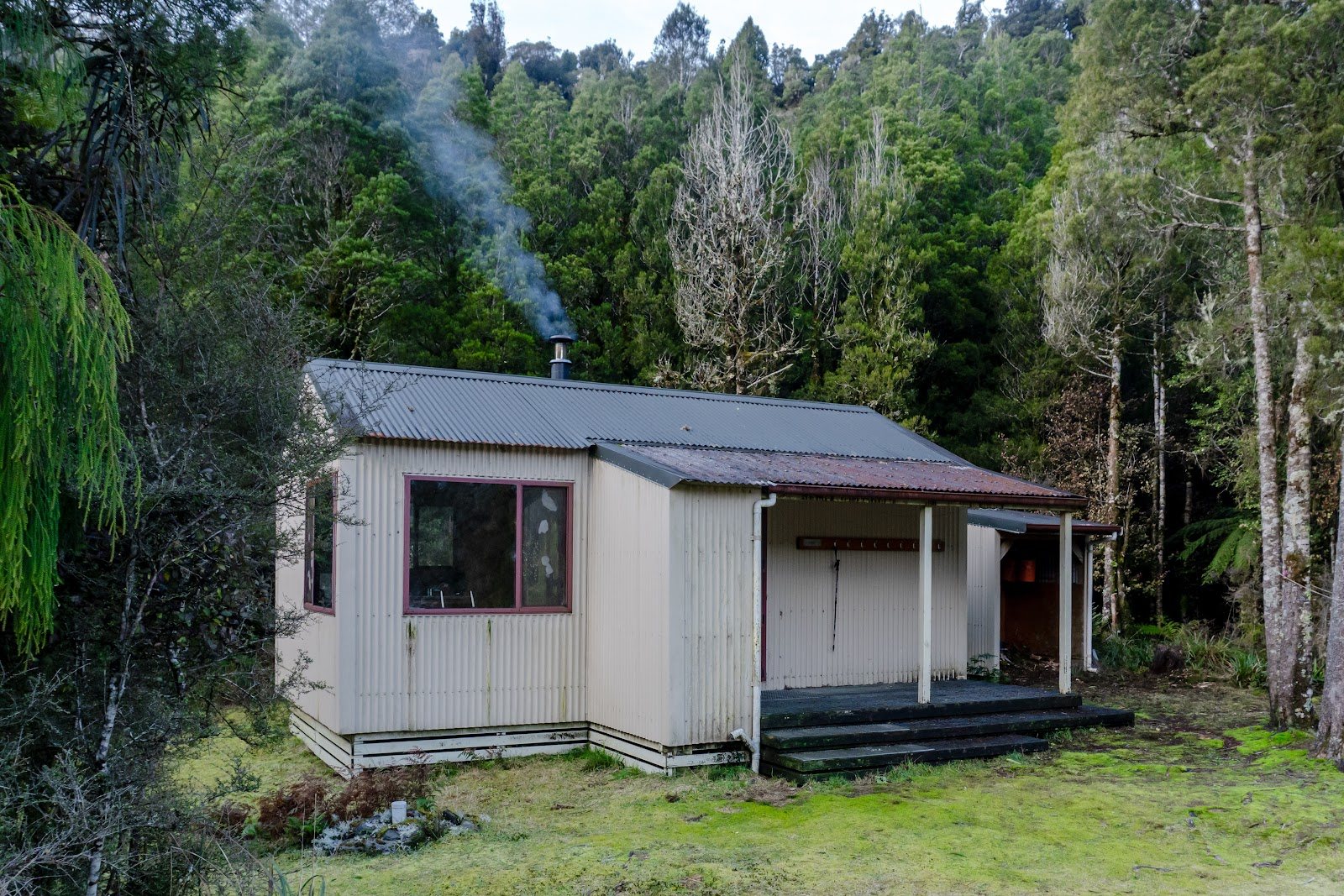
When they arrived, the fire was going. The hut only has four bunks, so their first thought was whether there'd be enough beds, and then whether whoever was there would be okay. Something felt off as soon as they walked in. It was a small hut, the fire had been going a long time, and there was a really pungent smell.
An old man greeted them and looked really put out that they were there. Renee was wearing her hunting gear, which is warmer in winter, and once she said she was a local, his whole demeanour changed a little and he calmed down. Then he put his dirty feet up on the only table, with his socks, dishes and stuff all over the hut.
Frew Hut was another four hours away, and with short winter daylight, they decided to rough it out. Renee moved his stuff to make room:
"when someone shows up, the courtesy thing to do is to clear your stuff out of the way and make room for the people that are coming."
She also went outside to text her husband on her phone's satellite connection, and said so loudly enough for him to hear, so he'd know they could contact people. She points out how hard it is that as a woman you have to think about tactics to keep yourself safe in the bush.
They spent as long as they could outside, gathered firewood, had dinner and planned to leave at first light. As the night went on, they made conversation with him, because when you're sharing a space with someone for the night, you want to be courteous. He shared a little about himself, and everything was fine. Renee took the top bunk, her friend one bottom bunk and the man the other.
The bowl
In the night, Renee heard what she first thought was him pouring a drink. It lasted far too long. Then the smell hit her: he was relieving himself, and that was the smell they'd noticed since they arrived. It happened again at four in the morning. Renee wrote a note on her phone and passed it down to her friend, who was awake too, and who could see he was using a bowl. Then, instead of going back to bed, he made himself a cup of tea, fumbling around with his torch.
What shocked Renee most was that the bowl belonged to the hut, the kind of thing people cook with when they're short of a pot. He left it, full, under the table.
They waited by the river until the sun came up, because it was their first time up the valley and they wanted to see it. They later found out he's been a regular at that hut for years, and that Renee and another friend had used the hut's pots there two weeks earlier.
Renee has always been picky about using anything in a hut that isn't hers. Now she only uses her own gear in the bush.
DOC huts are such a special resource. So many international visitors and Kiwis appreciate them, because they're communal, public assets, and this felt like someone abusing what we all share.
Hut etiquette basics
Renee thinks a lot of it comes down to common sense. Treat the hut like it's yours, be tidy and be respectful. It's a shared space, so it isn't yours to control or overrun:
"you have to be mindful of the people that were there before you as well as the people that are coming after you"
Her basics:
- Top up the firewood, clean the bench and sweep the floor before you leave.
- Take your rubbish out. Food scraps attract rodents, which can destroy the walls, and the huts cost more to maintain.
- Take your muddy shoes off. You wouldn't wear them in your own house. Some people carry hut shoes; Renee rolls around in her socks because weight matters to her.
- Let people sleep. Snoring can't be helped, so if you're a light sleeper bring earplugs or headphones. And don't arrive late and start drinking and cooking loudly. At one popular hut a late group kept everyone awake before a 10-hour hike out.
- Pack the night before if you're leaving early, so you can get out quickly without waking everyone.
- Leave the speaker at home, especially at a popular hut. You're there to enjoy nature. If you've got a hut to yourself, go for it.
- Be kind. Kiwis are pretty chill and love to share, and people will always help you if you need it. But everyone deserves a good sleep too.
I take earplugs even though I'm not a light sleeper. There are no curtains on hut windows, so in summer (or under a full moon) a window bunk is not a good time, and I always put my husband next to the window. I try to keep my gear explosion to my own mattress. And it took me a while to learn: outdoor sinks for brushing your teeth, indoor sinks for dishes.
Some hut intentions books have the rules at the front, but half the time the pages are ripped out or drawn on. Renee finds it disappointing that we need reminding how to be good people in public places at all.
Last winter on the Round the Mountain track on Ruapehu, our first hut had no firewood, so we all went out and stocked it up for the next people. Another group left without wiping down the tables and left rubbish behind, and someone in our group asked them to tidy it up.
Speaking up and reporting problems in huts
When etiquette is bad
At Rapid Creek, Renee and her friend didn't address it at all; they got out. But Renee has asked loud, late groups to be mindful of others sleeping:
"you don't have to be rude and you don't have to be aggressive about it. It's just reminding them like, hey, you're not here by yourself."
Everyone pays for that space, Renee says, so it's within your rights to have that conversation. Most people say sorry, they didn't realise, and if someone does get aggressive, that's their problem.
Reporting to DOC
Renee didn't make a formal complaint, but DOC staff who follow her messaged her, and she passed on the details. They told her they'd had issues with him for a few years and would follow it up. A lot of people have contacted her since to say they've had the same experience. She doesn't know what the resolution looks like, and she can't speak for DOC.
Her general advice: report hut maintenance issues to DOC. If there's abuse happening in a hut, you can alert the police or DOC, and they're usually pretty quick.
Making room in huts: bunks, early starts and full huts
Swapping bunks
A listener shared that they'd swapped their preferred beds on the Paparoa Track so an older lady could get in and out more easily, and others have done the same for their whānau. Renee compares it to giving up your seat on a bus.
Early starts with kids
When Renee hiked with the boys, she knew they could get overexcited in huts, so she'd go for the smaller rooms. On the Paparoa, they needed an early start to beat the wind over to Moonlight Tops. The night before, she gave everyone in the hut a heads-up and apologised in advance. She told the boys there'd be no talking at all when the alarm went off. Their gear was already set up in the boots room, they rolled up their sleeping bags and dressed in silence, and they only spoke once they were outside.
They beat the wind to Moonlight Tops Hut, and when everyone from Ces Clark Hut arrived that night, they said they were blown away. They hadn't heard a thing apart from the door.
Renee's rule for huts is the same as for life in general: before you do something, think about how it would affect someone else.
When a first-come, first-served hut is full
I asked this one because I don't know the answer.
Mt Brown Hut has only four bunks and isn't bookable, and it's incredibly popular. Renee's rule of thumb: if there are more than three cars at the car park, be prepared not to get a bunk. Most people carry a tent. Some only carry a sleeping mat and sleep on the hut floor, and that doesn't worry her, as long as they're warm and safe. If her own kids turned up unprepared on a cold, wet night and got booted out, she'd be devastated.
Once at Mt Brown, her group had the whole hut when a man turned up at 10pm with only a sleeping mat. They told him he could have the floor. If the floor had been full, Renee would have handed over her tent.
My view is that intention matters. Turning up expecting people to be nice is taking advantage, while a genuine mistake is different.
Renee's take: there's so much awareness about being prepared, so read the reviews, and if a popular hut isn't bookable, pack your tent.
Renee loves the experience of staying in huts, but in warmer months you'll often find her in a tent, with all her own space and no one snoring or farting to keep her awake. In winter, especially on the Coast, you're more likely to get a hut to yourself.
Voices of the Coast and West Coast weather
Renee loves seeing visitors on the Coast, but locals know it better and know some awesome spots. So she started Voices of the Coast, to show the rest of the country and the world the Coast through Coasters.
It came from a former local mayor who used to interview locals on his phone and share them on a community page. When he passed away, that stopped, and Renee thought it would be a cool idea to bring back, in her own outdoors style. She's learning about history and new places, and it's pushing her out of her comfort zone, because standing in front of a camera is terrifying. She's loving every minute.
One of her interviews was with Sam the Trap Man, who made the point that a lot of people visit in summer expecting hot weather and get on-and-off rain. When we recorded, winter had been the Coast's best season that year, with some big dumps of rain and then a good two weeks of straight sun. So check the weather seasons, and know that summer won't always give you what you want.
Places from this episode
- West Coast
- Whitcombe Valley
- Hokitika Gorge
- Hokitika River
- Whitcombe River
- Rapid Creek Hut
- Frew Hut
- Frew Saddle
- Bluff Hut
- Rakaia
- Ross
- Mt Brown Hut
- Mt Fyfe
- Paparoa Track
- Moonlight Tops Hut
- Ces Clark Hut
- Round the Mountain, Ruapehu
Follow Renee
- Instagram and other platforms: Renee Cadigan NZ
- YouTube: Renee Cadigan NZ, where the full Voices of the Coast interviews are
Links from this episode
- Follow Renee on Instagram: instagram.com/reneecadigannz/
- Follow Renee on TikTok: tiktok.com/@reneecadigannz
- Subscribe on YouTube
- Follow Abigail on Instagram: instagram.com/abigailhannnah
- Follow Aotearoa Adventures on Instagram: instagram.com/aotearoa_adventures_
More like this
- Hiking to Barker Hut and Ranking NZ's Best DOC Huts with Chris Lierheimer
- Hut Bagging and Visiting Over 500 DOC Huts with Benjamin Pigott
- Tramping an Unmarked Route to Gorge River with Elvisa Van Der Leden
- Tramping the Heaphy Track from Karamea to Collingwood with Jacq Nesbit
Until then, keep adventuring :)
The ultimate
NZ road trip adventure guide
Packed with insider tips and stunning photography, this is the only resource you need to plan your journey.