
Spotify Apple Podcasts Everywhere else Download
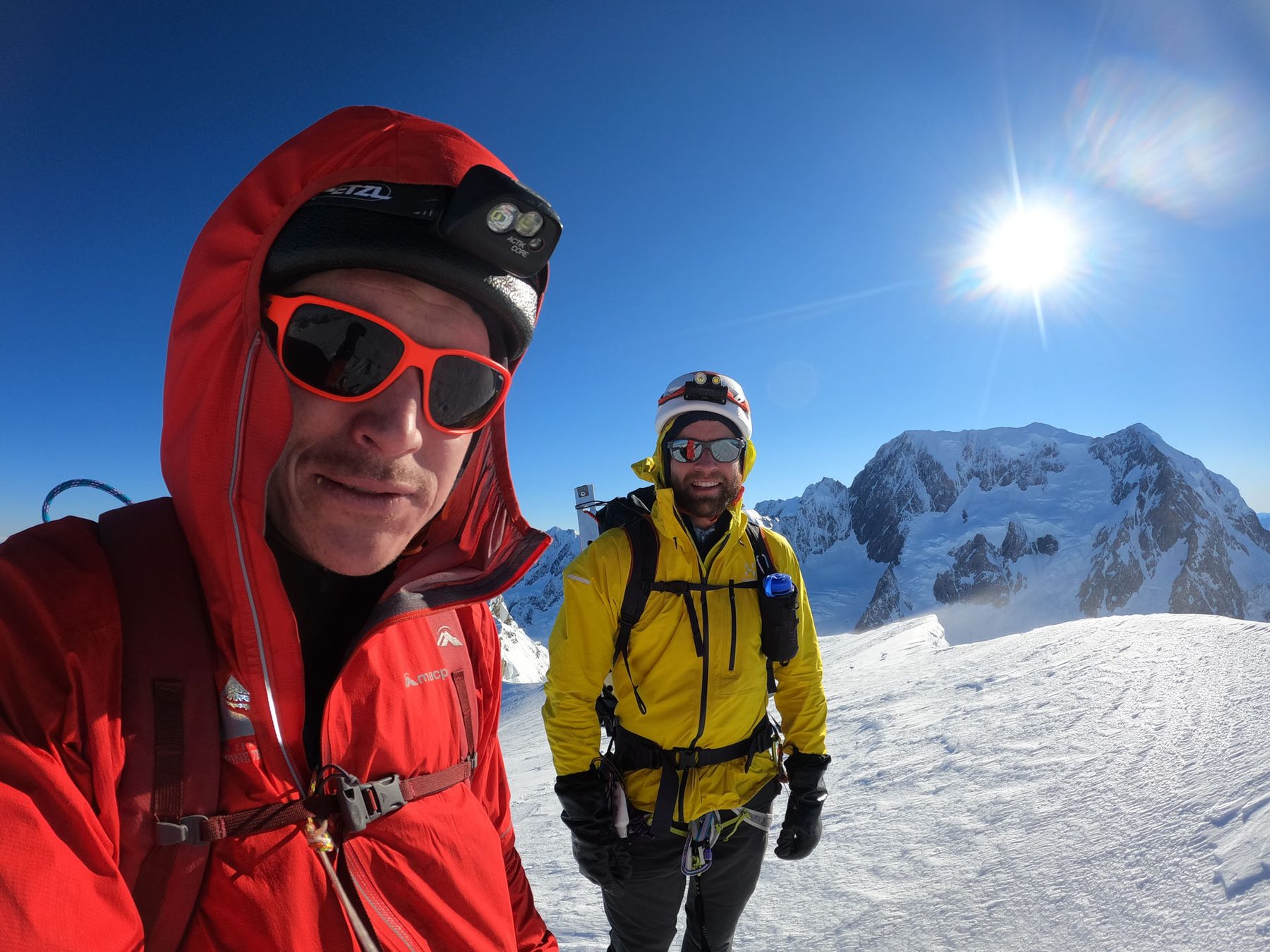
Alastair and Hamish climbed all 24 of New Zealand's 3,000-metre peaks in one trip. One after the other, in 31 days, then got on their bikes and rode to the last one. When I first heard they'd enchained the peaks, I had no idea what that even meant.
Alastair is an engineer in Christchurch who got into mountaineering through university clubs and the New Zealand Alpine Team. Hamish is based in Queenstown, came from adventure racing and multisport, and had climbed exactly one of the peaks before they set off (no pressure).
So we cover how they both got into the mountains, what enchaining means, how you plan a month of linked-up summits, the storms and food drops, the moment above the clouds and the night they were right on the edge. Plus their advice for getting into mountaineering. It's so so impressive.
In this episode
- How Alastair and Hamish got into the mountains
- Learning alpinism from mentors and clubs
- What enchaining the 3,000m peaks means
- Planning all 24 peaks in one push
- Weather windows, storms and food drops
- Highlights and the hairiest night
- Advice for getting into mountaineering
How Alastair and Hamish got into the mountains
Hamish grew up in Taranaki, skiing, tramping and exploring the mountain, and at 13 or 14 he was heading off on overnight trips with a friend. Through his late teens and early 20s he competed seriously in adventure racing and multisport, until he was ready for a change.
Alastair grew up in Auckland, a long way from the big mountains of the South Island. He got into tramping at high school through the Duke of Edinburgh's Award, and into trail running. Combining the physical side of endurance sport with the adventure of remote places is what he and Hamish have in common, with the emphasis, as Alastair puts it, on the adventure.
They met through adventure racing, on similar teams at GODZone, in 2015. Hamish was getting into mountaineering, and at one point asked Alastair to take him and a friend up Aoraki Mount Cook. Alastair said yes, then quickly realised he's not a mountain guide, and that they should go away and get their own experience.
Learning alpinism from mentors and clubs
Lots of people feel drawn to the mountains, but there are lots of barriers to entry, so Hamish was lucky to bump into Alastair. His advice was to start with sport climbing, then move on to trad climbing, where you place your own protection. Both teach rope skills you then use in the mountains. Hamish trained hard on that advice until he could go out climbing with Alastair.
I've done sport climbing, but I'm too scared to try trad yet. I hadn't connected that rock climbing skills transfer to alpinism.
Alastair breaks technical alpinism into parts you can practise separately:
- Rock climbing, in good, dry, warm conditions.
- Ice climbing, going up twenty or thirty metres of a frozen waterfall in winter.
- Trans-alpine trips, more like tramping but over glaciers and snowy passes.
The 3,000-metre peaks trip put all of those together.
Alastair came to the mountains through tramping and trail running, and was introduced to the North Island mountains on Ruapehu and Taranaki. His mentors told him that to go any further, he'd have to learn to rock climb. Then a running injury gave him a whole summer to learn sport and trad climbing, and once he knew pitching, abseiling and building anchors, mountaineering opened up.
Those mentors came through the Auckland University Tramping Club, where people often stay on for years and pass their experience to the keenest newcomers. An older member asked who wanted to climb in the South Island one summer, and took Alastair up Malte Brun, one of the 3,000-metre peaks. They turned around near the summit, almost ten years ago. As Alastair sees it:
"you don't need to be an expert … to be a mentor. You just need to know more than the person you're teaching."
Hamish says that mentoring culture, including what Alastair received through the New Zealand Alpine Team, is one of the special things about mountaineering.
What enchaining the 3,000m peaks means
Enchaining comes from the French enchaînement: linking peaks and chaining them together. As Alastair explains it, the idea came from the European Alps: once climbers had made first ascents, then climbed the steepest faces, then climbed those in winter, they started linking one peak to the next in a single outing, like the north faces of six famous Alpine peaks in one continuous push.
Alastair had heard about this and wondered whether they could do something similar in New Zealand. A friend who was writing a book about the 3,000-metre peaks suggested it at an alpine club meeting. He wanted someone with some technical skills but, above all, fitness, motivation and a positive attitude, so Hamish was the first person he asked.
The timing was perfect: Hamish had just watched a film about Ueli Steck climbing all of Europe's 4,000-metre peaks. He was stoked, and admits he was rather naive about what he was signing up to.
There have been a few lists over the years: the seventeen 10,000-footers in imperial days, then the 3,000-metre peaks. Some mountains, like Aoraki Mount Cook, have high, middle and low peaks, but they chose the 24 named highest peaks. Twenty-three of them are clustered in the Aoraki Mount Cook region. Mount Aspiring is the odd one out, hence the bike ride.
Planning all 24 peaks in one push
Alastair asked Hamish in May, and they started in November. In between, they climbed together around Queenstown and in the Darrans to build their partnership, and dropped food into huts along the way, with help from friends.
They stashed their bikes under the bunks of a hut at Mount Cook Village, which they found almost hilarious: they'd have to climb 23 peaks before they'd need them.
They set off happy to complete any part of it. The first half, from the Copland over Sifton, La Perouse and Empress to the Fox Glacier, went through places neither had been, and would be an epic trip in its own right. They even told people they probably wouldn't climb them all, which took the pressure off.
Alastair had climbed almost half the peaks before, some of them several times. Hamish had climbed only Mount Aspiring, his local mountain. For him, sometimes it was about hanging on for the ride while Alastair carried the master plan in his head.
The list also took them up obscure peaks like Malaspina, which nobody sets out to climb in its own right, with amazing vantage points. Alastair realised a goal can be arbitrary (what's wrong with 2,900 metres?). What matters is that it gets you out the door.
Hamish's partner drove them to the start, ran in from Mount Cook Village to meet them, and supported the bike ride with their gear in the car. After 28 days in the mountains, she had to show them how to get a COVID vaccine pass so they could go to the pub. The whole trip took 31 days.
Weather windows, storms and food drops
The summits came in bursts. Most days they'd climb one or two, then a storm would leave them stuck in a hut for three days. One section ran along a continuous ridge on the Main Divide from the Hooker Valley over to the Fox Glacier: 11 peaks in two days, starting with a 20-hour day and a night camped on the ridge.
Hamish says the sustained endurance was one of the biggest challenges, and their adventure racing backgrounds paid off: they knew how to move fast, fuel themselves, go really hard for a few days and then rest really hard. By the back half they were far fitter than at the start. He remembers waking at midnight for the third night in a row to climb another mountain, then celebrating when the good weather ended. The storms mattered as much as the clear days: without them, the temptation would have been to keep pushing.
Right at the start, the forecast showed five days of bad weather. Hamish spotted a narrow window, and they snagged Mount Sifton in awful weather. Missing it would have thrown everything out, because every link has knock-on effects. They rode the edge of that wave all the way.
The easier peaks, like Hamilton, Dixon and Sifton, came in bad weather, and the harder ones got perfect weather. Many windows were only a few hours, sometimes just clear at dawn. Being at the base of the mountain meant they could go light and fast and grab them, in weather you'd never choose for a one-off climb, and the murky, ominous days showed them the mountains in a different way.
Forecasts by satellite
They carried an inReach satellite messenger. Hamish's partner and a friend who does a lot of paragliding texted them forecasts, and the hut radios filled in the gaps. It was refreshing to hand that decision over: a message would say it looks good from tomorrow for three days, and they'd go.
Seven days of food in every hut
They left about seven days of food in each hut, Empress, Pioneer, Centennial, Tasman Saddle and Plateau, plus food for Mount Aspiring at the end. At Empress Hut they needed all of it: three days stormbound, then a two-day push. They never went hungry, and Alastair heard of people finding a huge bag of their leftover muesli bars at Centennial Hut.
Highlights and the hairiest night
One of Alastair's favourite moments: they'd abseiled off Harper Saddle in a whiteout and hadn't seen anyone for a week, when they reached Empress Hut at the same time as a party of four. They turned out to be friends of his, mountain guides, and they spent three days of storm in the hut chatting and laughing. There are human moments between all the summits.
For Hamish, it was Malte Brun, the peak Alastair had turned back on years before. They climbed up through dubious weather, overcast down low, until:
"eventually we climbed out of the cloud layer and we were greeted to this just amazing, amazing view looking over this cloud base"
All the 3,000-metre peaks stuck up above the cloud, the ones they'd climbed and the ones still to come. Alastair calls it a fortune favours the bold moment: they had no spare days, so they set out and hoped the weather would resolve itself, and it did.
The night on Sifton
The hairiest moment was on Mount Sifton, early on. To catch a clearance forecast for around 3am, they left Douglas Rock Hut at 4pm in sleety rain. They climbed through the bush all afternoon and got soaked, reached the glacier after dark, and the rain turned to snow and froze on their clothes. They wore every piece of clothing they had, down jackets under rain jackets. Stopping two minutes to put the rope on meant ten minutes of shivering afterwards. Alastair thinks it was the most dangerous point of the whole trip, being so exposed and so far from anywhere in the middle of the night, right on the edge of what they could handle temperature-wise. Fortunately the climbing was easy enough to keep moving.
That's the challenge of mountaineering for Alastair: knowing how much risk you're willing to take, which is different for everyone. You can try to outsmart rockfall, icefall, seracs and avalanches, but:
"you are still playing with chaos. You can't control everything"
What surprised them most was that it was possible at all: planning week by week around the weather, it was always close to the wire. Most people pick off the 3,000-metre peaks over a whole climbing career, and Alastair says they're the twelfth and thirteenth people to climb them all.
Advice for getting into mountaineering
If you want to try something similar, Alastair's advice is to climb individual peaks first and piece the puzzle together. He'd done parts of the 11-peak ridge on separate trips, so linking it felt like a string of déjà vu moments.
Then pick your partner wisely. Alastair says you want someone you trust and get along with over a long time, who can laugh in the hard moments, enjoys a bit of suffering and doesn't complain too much. You do go a bit nutty after a while.
His advice for beginners:
- Join a club. Find your local tramping, mountaineering or alpine club. In Christchurch, he says the CMC is the best club around, and there are New Zealand Alpine Club sections across the country.
- Do a basic course, if you haven't done any mountaineering, then get out on club trips and meet people.
- Get super fit. The most important training is physical endurance, so lots of running and hiking. If you can keep up, more experienced people are more likely to take you along, the way Hamish was never tired, and you'll learn far faster.
What's next and fitting it around work
Alastair has climbed in Peru and Europe but never in the Himalaya, and they're planning a trip to Makalu, near Everest, for the following year. Hamish also wants to climb harder routes on the peaks they've already done, and more remote ones.
My husband grew up in Nepal and did Everest base camp when he was five, so he could talk about Nepal all day and all night.
Alastair works remotely as an engineering consultant, and the week before we recorded he took client calls from Empress Hut. Hamish co-owns a bike hire, tours and shuttle company in Queenstown, where time off is a juggling act.
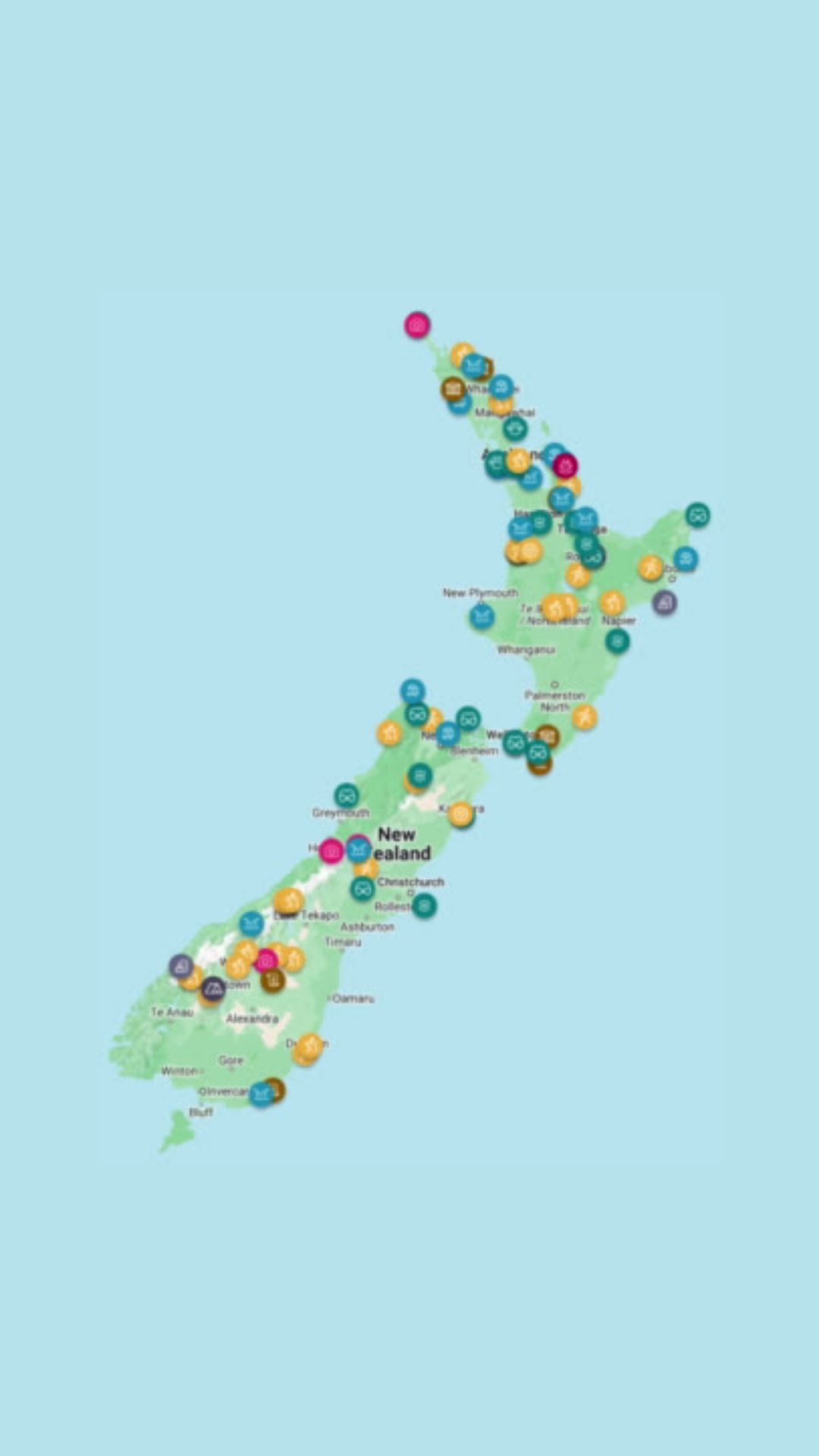
Places from this episode
- Aoraki Mount Cook
- Mount Cook Village
- Mount Aspiring
- Copland
- Douglas Rock Hut
- Mount Sifton
- La Perouse
- Empress Hut
- Harper Saddle
- Hooker Valley
- Fox Glacier
- Malte Brun
- Malaspina
- Pioneer Hut
- Centennial Hut
- Tasman Saddle
- Plateau Hut
- Darrans
- Taranaki
- Ruapehu
Follow Alastair and Hamish
Alastair shares some of his adventures through the New Zealand Alpine Team's channels, and their film about the expedition will be on YouTube.
Links from this episode
- Follow Alastair on Instagram: instagram.com/alastairmcdowell/
- Follow Hamish on Instagram: instagram.com/hamishfleming23/
- Watch the trailer for Enchainment here
- Read about their expedition here
- Follow Abigail on Instagram: instagram.com/abigailhannnah
- Follow Aotearoa Adventures on Instagram: instagram.com/aotearoa_adventures_
More like this
- Five days on the Sladden Glacier climbing Mt Sealy and Mt Jeanette with Kaleb Anderson
- First Ascents on Mount Lindenfeld and Mount Haast with Justin Wimmer
- Summitting Mt Earnslaw and Mountaineering for Beginners with Wiktoria
- Ski-Touring and Camping on Tasman Glacier in a Storm with Helena Sodergren
Until then, keep adventuring :)
The ultimate
NZ road trip adventure guide
Packed with insider tips and stunning photography, this is the only resource you need to plan your journey.