Episode 195
From Everest to NZ Expeditions to Local Microadventures with Tsewang Nuru Sherpa

Episode 195
From Everest to NZ Expeditions to Local Microadventures with Tsewang Nuru Sherpa
Spotify Apple Podcasts Everywhere else Download
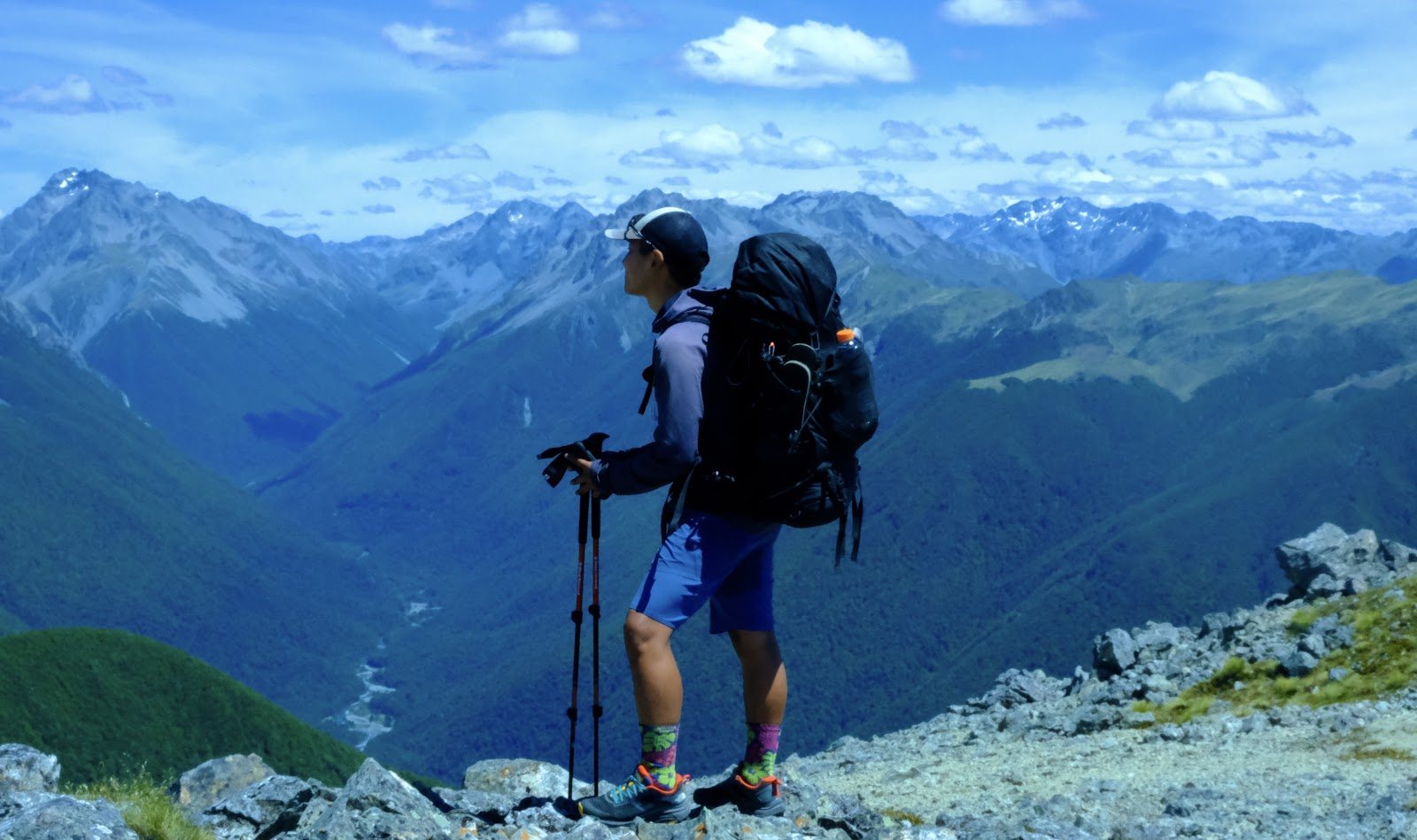
I met Tsewang a few months before we recorded this, and I struggled so much planning this episode, because it's so so hard to pick one adventure from someone who has walked Te Araroa, ridden Tour Aotearoa, tramped all 11 Great Walks and run more than 10 full marathons.
So we didn't pick one. Tsewang grew up in the Everest region of Nepal (which means Nepal has a special place in both our hearts). He's lived in a handful of countries, and now calls Christchurch home, where he works in environmental science and as a freelance travel journalist.
And he does the huge missions and the small weekend ones. So we talk about both: how he found adventure late, the Kepler night that sparked Te Araroa, cycling Tour Aotearoa before he knew it existed, and then the microadventures he fits around work, like the Christchurch 360 Trail. Plus his best tip for finding adventures near you, which is soooo simple.
In this episode
- Growing up in the Everest region
- From India and Germany to Kenya and Colombia
- Oslo, Paraguay and choosing Aotearoa
- Tramping in Arthur's Pass and a night at Luxmore Hut
- Tour Aotearoa without knowing it
- Te Araroa and all the side trips
- Microadventures and the Christchurch 360 Trail
- How to find microadventures near you
Growing up in the Everest region
Tsewang comes from the Everest region of Nepal, and adventure was a late discovery for him. Up there, a lot of people are into mountaineering, and trekking and guiding are a profession. So he never thought of hiking as something to do in his leisure time: his first introduction to it was as work.
He did plenty of day hikes as a kid, and some shorter treks. But a big adventure never crossed his mind. Everest isn't something you can do over a weekend. It needs two or three weeks, and planning well in advance, because you fly in and book your accommodation and guides.
It was only after he'd moved away and lived in other countries that he saw the outdoors in a different light, as a way to relax and reflect, on trails he could reach in a weekend without much planning. That's when he got into adventure in a serious way.
My husband grew up in Nepal, and his favourite fun fact is that he went to Everest Base Camp when he was five (he claims he walked most of it). I've done very little trekking there myself. I'd love to do Annapurna, and the Three Passes in the Everest region one day.
Tsewang rates the Three Passes. The Everest region is very commercialised and touristy, which makes sense with the mountain right there. But the Three Passes connects the famous routes, includes Base Camp as one highlight, and passes through a lot of smaller villages, where you see a bit of the local lifestyle.
"as cliche as it sounds, it's not always about the destination itself as the journey"
From India and Germany to Kenya and Colombia
Tsewang calls his background a bit messy, and none of it was planned. He was born in Nepal, spent the first half of his childhood in Singapore, and grew up in India until high school, where he did his A levels. After a year back in Nepal, he wanted more international exposure, so he transferred his university credits to Germany and finished his degree there.
During his first year of university, he went to New York for a two-week United Nations programme. Meeting people from all walks of life, from places he'd never heard of, got the ball rolling. He wanted to visit them in their own countries, and to make it meaningful, with a larger purpose than ticking off the tourist sights.
Teaching in Kenya
Straight after university, he went to Kenya for three months to volunteer at an orphan school near Kisumu. He was there as a computer teacher. But a lot of teachers didn't turn up, and he became quite the favourite with the students, so whenever a teacher was missing they'd come and ask him to take their class. Tsewang thinks it was partly because the kids weren't used to seeing somebody with Asian features. He ran PE, art and whatever else needed covering, running from class to class, and he found that time very meaningful.
He used the time to travel around Kenya's neighbours, Malawi, Uganda and Tanzania. Then he headed to South America.
Learning Spanish in Colombia
In Colombia, he'd landed an environmental conservation internship with the national parks department. He didn't speak any Spanish, so he spent his first three months on an intensive university course, several hours in a classroom every day. The beauty of learning there was using it straight away, at the supermarket or with his host families. He was conversational within a month and pretty fluent by three months.
He puts it down to a very strong willpower. In Bogotá, English would have been fine. But on the other side of the country, the local language is your gateway, and it opens up a lot of doors and windows.
The parks department sent him to Santiago de Cali, known as the salsa capital of the world, with a mix of Afro-Colombian culture, music and dancing. It's also home to Farallones de Cali, one of Colombia's biggest national parks, with huge biodiversity. He was there for eight months, and felt very lucky to be based in Cali.
Oslo, Paraguay and choosing Aotearoa
Colombia was so rich that Tsewang wanted to stay in South America. While he looked for work, he took a short-term climate change research programme in Oslo, working with the city council in collaboration with the University of Oslo. During those three months, he got a job in Paraguay with WWF.
Paraguay isn't famous for tourism next to Colombia, Argentina or Chile, and that was part of the appeal: somewhere without much exposure to Western culture. Almost every foreigner there worked for an international organisation, and nobody else was from Nepal or anywhere in Asia.
Why New Zealand
If you come from the Everest region, Tsewang says, everybody knows New Zealand, because of the Hillary connection. Every May there are big anniversary celebrations, and New Zealand is still very present in the area through the Himalayan Trust. Alex Hillary, who now runs the organisation, has been on the podcast too.
So deep down, Tsewang always knew he'd end up in New Zealand at some stage. But he only chose places for a larger purpose, and New Zealand fit: he wanted to take environmental science to a deeper level, and he'd heard about the country's emphasis on nature-based jobs. It was between here and Australia, and the smaller size of New Zealand appealed. He won a scholarship and arrived just before COVID.
He only planned to stay for his master's. A few weeks later, the country went into lockdown. He chose the country, he says, but in a way the country chose him too. And after studying here, it made more sense to apply what he'd learned here than in Australia, Europe or North America.
Tramping in Arthur's Pass and a night at Luxmore Hut
Tsewang did his master's at Lincoln University and joined the university tramping club straight away. With Arthur's Pass two hours away, they were doing overnight and two-day trips there almost every weekend.
That was his introduction to New Zealand's wild, rugged terrain. A proper day out in Arthur's Pass National Park means things like river crossings, and those trips gave him a strong foundation for difficult terrain. So did the people, students from all over New Zealand and the world.
His studies came first. But he fitted tramps around them, and one of them stuck with him. In the middle of June, he walked the Kepler Track in winter, with snow on the track. If you're hiking in Fiordland in winter, he says, do your research and take the right gear.
At Luxmore Hut, it was only him and a Belgian man who had just finished Te Araroa. Tsewang, very curious and inquisitive, asked him question after question, and the Belgian was happy to share, because it was such a big achievement in his life. They talked until midnight.
He went on to tramp around Nelson, including the Heaphy and the Abel Tasman, and in Fiordland, meeting other hikers along the way. But the night at Luxmore was what first got him thinking about Te Araroa, at least as something to understand. It's famous now, but back in late 2020 there was far less known about the trail.
COVID-era university breaks helped. Once there was freedom to travel within the country, he used his semester breaks for three- and four-week trips, starting in the South Island. In his second year, when he was doing independent research and setting his own schedule, he headed north. His first was the Tongariro Crossing combined with the Northern Circuit, and he found the North Island hikes so different, from Tongariro to Northland and Te Paki Stream.
Tour Aotearoa without knowing it
Tsewang finished his master's in 2023 and wanted a bigger adventure to celebrate. The catch was a university job starting about a month after he handed in his thesis. So he went cycling.
He hadn't been to the West Coast of the South Island yet, so he came up with his own route: start in Picton, ride the Queen Charlotte Track, go up to Nelson, connect across to Westport, then follow the West Coast down through Charleston and Franz Josef, over Haast Pass to Wānaka and Queenstown, and down to Invercargill.
On his second day, at a campsite on the Queen Charlotte Track, he met an Australian cyclist who's still a very good friend. He showed Tsewang a guidebook for a route called Tour Aotearoa. Surprisingly, the route Tsewang had planned, including the West Coast Wilderness Trail, was mostly the South Island section of Tour Aotearoa. When you share campsites, you meet a lot of other hikers and cyclists, and if you see someone with a bike, a conversation starts straight away. So he rode Tour Aotearoa without realising.
Te Araroa and all the side trips
The university job was a short-term research role, about seven months. It finished in October, and Tsewang decided it was now or never, because once he was back in the workforce, it would be really hard. His last day of work was 20 October. On the 23rd he flew to Auckland, took the bus up to Kaitaia, and on 24 October he started Te Araroa.
He didn't take the preparation too seriously. He already had his tramping gear, he'd done parts of Te Araroa, and he knew he could always go back to Christchurch and give it another go. That lighter expectation worked for him. You take it one day at a time, a day becomes a week, a week becomes a month, and you learn so much about your body and the trail.
I resonate with that from our sea kayak expedition. It wasn't a marked route that heaps of people had done, and on the ocean, weather decides whether it's possible. Have a really big goal and work towards it, but if you're getting signs that you need to stop, listen to them. That's what we had to do.
Tsewang did finish, and he loved it.
"I did not have a single day where I didn't feel like I want to go back home. I think I was just so happy to be on the trail."
He did have tired days, when he only wanted to walk a short distance. But he never wanted to get off the trail. And because he was having so much fun, he took a lot of side trips, using what he knew from living here:
- Whanganui: a detour to Taranaki.
- Tongariro Crossing: the whole Northern Circuit while he was there.
- Nelson: the Abel Tasman and the Heaphy again, because they're such nice tracks.
On Te Araroa you're so focused on getting from one point to the next that you can miss what's around you. On the Northern Circuit, a friend from the Netherlands who was walking with him was so happy to be off the main trail. The Tongariro Crossing gets so busy with Te Araroa walkers and day hikers, and once you're off it, the volcanic landscape feels like a different planet. Tsewang had nothing planned after Te Araroa, so the longer days didn't matter.
I'm such a lazy tramper in comparison. On the Milford Track I skipped the Sutherland Falls side trip because I could see it from where I was. Now I have to go back.
Microadventures and the Christchurch 360 Trail
The term microadventure was popularised by the English adventurer Alastair Humphreys. Tsewang writes a lot for Adventure.com, an Australian and UK-based publication, and for him a microadventure is short, simple, local and cheap: close to home, and doable in 24 to 48 hours. Alastair's version is that you can leave work at five, camp somewhere, and be back at work for nine the next morning.
After Te Araroa, Tsewang's list only got longer. Mount Aspiring National Park was one gap, and with work taking him to the Mackenzie area, he's been there quite a few times. Over the summer it easily became one of his favourite national parks, because there are so many good tracks around. Your list gets longer and longer, he says, and you want to go further, in whatever way is possible for you.
Back in Christchurch, he realised he'd overlooked the city itself. He'd always targeted places far away: Arthur's Pass, Abel Tasman, Kahurangi, Fiordland or the Paparoa. So he joined cycling groups that plan weekend rides up the Port Hills or into the red zone, and several run clubs that put on weekend and overnight runs.
Groups make microadventures much easier. On your own you can lose motivation, with no accountability, and run out of ideas. And Tsewang works full time as a researcher, then writes in his mornings, evenings and weekends, so by Saturday he sometimes wants to do nothing. Then a friend says they're doing a long ride to Lyttelton, maybe staying overnight, maybe going on to Akaroa, and it's automatically yes. It saves the decision fatigue.
The Christchurch 360 Trail
The Christchurch 360 Trail is a loop around the city, split into eight sections averaging about 18 kilometres, so each can be done in a day. It's an urban walkway with forest sections, the Port Hills, wetlands and the red zone. Christchurch was historically a swampy area, so there are waterways everywhere, and the red zone still has remnants of the earthquakes, which is interesting if you're new to the city.
Some sections are bikeable. Others, like the Port Hills and the Godley Head section, aren't very bike-friendly, so you might have to push. Tsewang has hiked and biked it in sections, and it gave him an understanding of the city he hadn't had before. He's written about it for Wilderness magazine.
A microadventure doesn't have to be 18 kilometres either. If you live in Christchurch, you can finish work on Friday, walk up to Packhorse Hut, stay the night, do a nice day on Saturday and be home that evening with all of Sunday to yourself. Not everyone has two whole days to spare. You define it, Tsewang says, by what works for you:
"you define how you want it to be defined and how it works out for you and things that you like doing"
Microadventures are how I started exploring too. For me, it started with going down to the beach for an evening. That was fun, so we went a bit further, and a bit further, and it turned into day trips, then weekend trips, and escalated from there. More recently, Isaac and I have done lots of little kayaking trips in the harbour.
How to find microadventures near you
Tsewang found a lot of his through friends, including locals who'd plan the weekend rides. Travel journalism pushed him too: flying to Australia, Southland or the North Island for stories was getting hard to schedule around a full-time job, so he started digging into Christchurch, and the 360 Trail was one of those stories. He's also covered the Te Ara Pātaka walkway, with Packhorse Hut and Rod Donald Hut.
His best tip: every New Zealand city has a tramping club, and there are local hiking groups on Facebook. He's in groups for Auckland, Wānaka, Christchurch and Wellington, and they're great for little questions. When he walked Waikaremoana, he had a day in Wairoa, so he posted in a Wairoa community group asking what he could do, and ideas came flowing in from locals.
So just ask. Not every answer will match your interests or fitness, but tramping is such a big thing in New Zealand that someone will have the experience.
My own go-tos are the AllTrails app and Topo maps for seeing what's out there. There aren't many DOC campsites or huts near some cities, but there are regional parks you can stay in, plus private campgrounds and cabins.
Places from this episode
- Christchurch
- Christchurch 360 Trail
- Port Hills
- Godley Head
- Packhorse Hut
- Te Ara Pātaka walkway
- Rod Donald Hut
- Lyttelton
- Akaroa
- Arthur's Pass National Park
- Kepler Track
- Luxmore Hut
- Heaphy Track
- Abel Tasman
- Queen Charlotte Track
- Picton
- Westport
- Charleston
- Franz Josef
- Haast Pass
- Wānaka
- Invercargill
- Kaitaia
- Northern Circuit (Tongariro)
- Te Paki Stream
- Whanganui
- Taranaki
- Mount Aspiring National Park
- Waikaremoana
- Wairoa
Follow Tsewang
Tsewang has started sharing more on Instagram, under his first and last name, and if you search his name you'll find the stories he's written for different publications.
Links from this episode
- Follow Tsewang on Instagram: https://instagram.com/tsewang.sherpa/
- Follow Abigail on Instagram: instagram.com/abigailhannnah
- Follow Aotearoa Adventures on Instagram: instagram.com/aotearoa_adventures_
More like this
- Quitting his Corporate Job and Preparing for Five Months of Thru-Hiking Te Araroa with Anurag Sharma
- Nine Months of Solitude Walking Northbound on Te Araroa with Naomi Arnold
- Thru-hiking the Te Araroa Trail with Zoe
- House Sitting across New Zealand with Travel Writer Jessica Lockhart
Until then, keep adventuring :)
The ultimate
NZ road trip adventure guide
Packed with insider tips and stunning photography, this is the only resource you need to plan your journey.