
Spotify Apple Podcasts Everywhere else Download
I love following Kemi and Niko on social media, the art AND the messy bits in between, so I'm so glad we finally locked this one in.
If you haven't come across them, they're the two Aotearoa artists who turn the country's backcountry huts into art. Tiny ones. They fit in your hand. They also live in a tiny home they built themselves, and they're raising their two girls to love the bush as much as they do by taking them tramping. I sat down with Niko, one half of the duo.
So we talk about how the mini huts started (a deck in a Wellington villa and a lot of tin cans), the hut history they love digging into, and a rainy dash to Old Cedar Flat Hut that got a bit more exciting than planned. Plus tramping with kids, how we can all look after our huts, and building a tiny home from salvaged materials. There are so many sides to huts, I didn't even know which tangent to go down first.
In this episode
- Mini backcountry huts you can hold in your hand
- Growing up in the bush and urban Wellington adventures
- From huts in the park to Hut of the Month
- Hut history, from Field Hut to the S70s
- Old Cedar Flat Hut after the rain
- Hut books, strangers and huts to yourself
- Tramping with kids and bush safety
- Looking after New Zealand's backcountry huts
- A tiny home built from salvaged materials
- Moving south and advice for artists
Mini backcountry huts you can hold in your hand
Most of Kemi and Niko's mini huts fit in your hand. For the past few years they've chosen one real backcountry hut a month, researched its history and design, and picked a certain era of it, when it was a certain colour or still had its original chimney. Then they make a batch.
Niko calls them caricatures of the huts: minimalist designs made from real materials, timber salvaged from building waste and tin cans from a local cafe. They're sturdy objects, made in a very similar way to the real huts, that live in your home as a memory of your trips.
They realised after the fact that they'd created a physical object for hut bagging. It came about accidentally, and it's been quite a good business model.
Growing up in the bush and urban Wellington adventures
Niko grew up on the West Coast near Punakaiki for the first nine years of her life, the real formative years. On the Coast, the bush is constantly encroaching on your living spaces. Kemi grew up in Nelson and the Tasman area, and went on lots of adventures as a kid.
They met in Wellington, at Massey University, working at the same movie theatre. Their first conversation was over the break table: Kemi was going down south to live in the bush for a month over the summer, and Niko thought, that's what I want to do.
They didn't drive back then, so they'd get out into whatever green space they could find: camping, urban hikes and bike trips, with whatever gear they had as students. It got further afield once they finally got a car and could get into the Tararuas more.
One of their best was taking the bus out to Red Rocks, hiking along the beach and up to the bunkers, and sleeping in a bunker for a couple of nights. There's no water up there, so they had to carry it all in. Niko calls it the most chaotic adventure, and really fun.
I had a whole episode with Shanti about adventures by public transport and bike. She'd lived in Auckland, Wellington and Christchurch, and had some really good tips for getting to trailheads without a car.
From huts in the park to Hut of the Month
At the same time, they were making stuff from cafe tin cans and random materials off skips, on a one-metre-deep deck on an old Wellington villa. They started putting random interventions in parks to surprise and delight people, with logbooks for notes, and the feedback told them people really loved it.
Then came a council-funded project on the Courtenay Place light boxes. The plan was creations made from junk, photographed in the bush. Their arts facilitator asked what if they were really in the bush, for people to go and find. For a central idea, they used the book Shelter from the Storm, which had just come out. They designed seven quirky huts, each based on a different chapter: New Zealand Forest Service huts, mountaineering huts, mining huts and more. With maps in hand, people went and found them and wrote in the logbooks. That was 2014, their first ever hut project.
More projects followed over the years. The biggest was for the New Zealand Festival of the Arts in 2020, properly funded, with five huts up the Kāpiti Coast. Their last event was on the last day before lockdown.
That's when they knew they had to pivot. They'd been making little batches of mini huts for people's homes for years, so they cleaned up a workshop in the Waikato, gathered materials and started the Hut of the Month format, and they've made connecting art and huts their income.
Hut history, from Field Hut to the S70s
Field Hut in the Tararuas
One of their favourite huts is Field Hut in the Tararuas, one of the first tramping huts Niko stayed in as a teenager. For its 100th anniversary, they made what they call a bigature: a big miniature with the full range of detail, recreated as the hut was originally.
It was built in 1924, and they worked from two black and white photos from the early '50s. All the materials were carried up on people's backs, so the corrugated iron was cut to a standard size, and the cladding is a real patchwork.
That's what they love: the original hut builders, the lengths they went to and the characters behind the huts.
The S70 New Zealand Forest Service huts
Their exhibition when we recorded was about the many faces of the S70 New Zealand Forest Service hut. In the '50s and '60s, the Forest Service dotted them through the bush around the country to help with deer control, because until then the hunters were sleeping in bivvies. It was a standardised six-bunk design, and the exhibition shows the colourways and adaptations from the volunteers who couldn't help putting their stamp on them.
Old Cedar Flat Hut after the rain
Old Cedar Flat Hut is out the back of Hokitika, up a river to the Cedar Flats, a pretty iconic area, and a fairly easy hut to get to.
Their approach to tramping is the same as their approach to art: use the time and gear you've got, and have as much fun as you can. With kids, most of their tramps are to easy huts close to the road.
This trip was on a West Coast road trip in 2024, just before New Year's, when they had one night without the kids. People often ask whether they make a mini hut after visiting the real one. They make the hut first, then take it to the real hut. Old Cedar Flat was in the collection they had with them.
The old original hut is tiny, a four-bunk, and there's a flash new hut next to it. They love old huts, but they do like to sleep in the new ones.
The flood route and the stream crossings
They didn't get on the track until 3:30, after dropping off the kids and getting their gear together. It had been raining, which in hindsight probably wasn't the smartest time to head in on that track. They saw there was a flood route and took it to avoid the stretch along the river, not realising it would add quite a significant length to the walk.
There are quite a few stream crossings, and Niko says they fell victim to the sunk cost fallacy. You cross a few, this isn't so bad, then you reach a bigger one and wonder whether to turn back. They kept going. The last one before the stretch to the hut was quite big, and that's where the fear kicked in. They braced themselves, hooked their arms under their packs and took it step by step, and got through.
They reached the hut just as it was getting dark, fully prepared and cracking up at themselves. Walking out the next day, the water had completely dropped, and it was a beautiful sunny day.
A full hut and a honeymoon
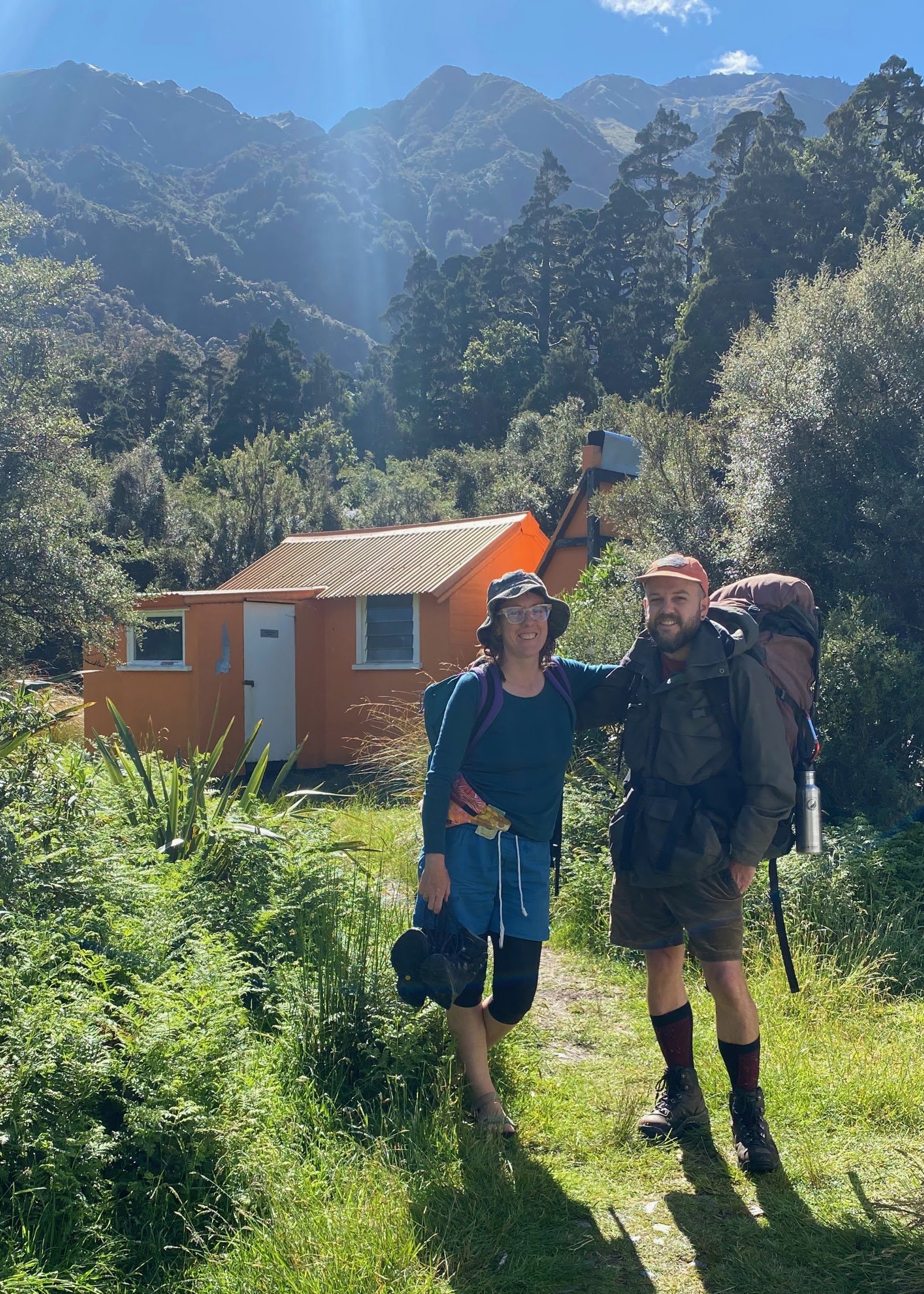
They were so excited to see the bright orange hut they'd been making for years. They crossed the swing bridge, saw smoke coming out of the chimney, and barged in on a couple on their honeymoon.
The new hut was full of people who'd been stuck there all day because of the weather, though there were still bunks left, and everyone was happy to chat. For dinner, they sat by the fire in the old hut with the honeymooners, because they wanted to experience it.
In the end they didn't leave the mini hut there. They like the idea of someone finding one randomly, so they left a little card, and showed the mini hut to everyone, who loved it.
Hut books, strangers and huts to yourself
Niko loves chatting to people in huts. For her, it's one of the most amazing things about the hut network in Aotearoa:
"it's the one place where you have to share shelter with someone, you know, with a complete random person. And that really puts you on like equal footing, especially because like everyone has put the effort in to get out there."
She loves the yarns over the table, and reading the hut books is always a highlight: the comments, the little drawings, the tips people leave about how to get to the hot pools.
They also love a hut to themselves, so they often go midweek or in the off-season, including winter. In the older huts especially, you feel the history of everyone who's shared that shelter before you.
Tramping with kids and bush safety
With the girls, they're much more careful. They haven't camped in the backcountry with them. They always go for huts close to the road end, and as the girls get older they're about to open that up.
One of the girls had her first tramp at six months, up to Old Waihohonu Hut, another spot where you can stay in the new hut and see the old one.
Their bush safety basics:
- Always be able to see each other. Niko reminds the girls even when they're walking around town.
- Don't go off track.
- Really good layers. She reinforces it every day, checking for merino base layers and dry feet on winter school mornings.
- Good rain jackets.
- Tell people where you are and when you're expected out.
- Carry a PLB, even on safe short tramps.
Even a short tramp is so much harder with kids. Chaffey Hut in the Cobb Valley, up behind Tākaka, is really short and flat, a perfectly restored three-bunk that's a work of art in itself, and they'd made it, so they had to go. Niko was still carrying one of the girls, on the cusp of being too heavy, and by the hut she was done carrying.
Looking after New Zealand's backcountry huts
I have a lot of international guests who are mind-blown that we have public huts anyone can stay in, some free and some booked. It's such a special thing to have here in Aotearoa.
Niko's ways to help keep them for the next 100 years:
- Join in. Get involved with your tramping club, the Federated Mountain Clubs (FMC) or Permolat. Many organisations are asking for volunteers to maintain huts and tracks, even taking a machete on your tramp to clear a track.
- Love Our Huts. FMC runs this campaign over summer: you choose a hut, go out and give it a deep clean, and work through a checklist so any maintenance gets recorded.
- Take responsibility. They're public huts on public land, so we all need to chip in.
Her reason: a lot of remote huts aren't maintained by DOC, and with low funding these days she says DOC would rather get rid of them, because they're a cost. She has nothing against the Great Walk huts or private companies using them, because people need access to high-end experiences too. Her worry is over-commercialisation of the backcountry, and she wants to make sure the public huts stay.
Her example is on Ruapehu: an old lodge, once a big fancy place with an indoor swimming pool up on the mountain. The club that owned it folded, and now it's down to DOC to pull down the concrete and steel, which Niko finds unacceptable.
A tiny home built from salvaged materials
Their tiny house sits next to the workshop, built mainly from salvaged materials. They started at the end of 2020, have lived in it for almost four years, and when we recorded, had given themselves the summer to finally finish it.
The huts were part of the inspiration. The outside is all corrugated iron, and the colours are orange and green, a callback to the old huts. But mostly they wanted what a hut gives you, the basic human need for shelter: somewhere warm, dry and insulated to sleep. After years in mouldy old flats, that was the top priority. The rest of their living happens outdoors, with an outdoor kitchen, a fire bath, a long drop and an outdoor shower:
"we quite like having, you know, nature as our walls instead of actual walls."
There's also Roaming Hut, a home-built, caravan-style hut on a trailer with walls that open up, a great breakout space for the girls.
Niko's tips if you're thinking about a tiny house:
- It's accessible. You can build one yourself or buy one, and lots of people make beautiful designs.
- The hard part is land. Niko thinks the trouble now is finding land to put it on. For the next place they'll try to negotiate a long-term rental of at least three years, for stability, especially for the kids' schooling.
- Look into steel framing. They designed their own frame, and a lightweight steel framing company engineered it. It arrived like a big 3D puzzle, they put it together in one day, then did the cladding and lining themselves.
- Salvage. Try the dump shop, or ask builders if you can go through their skip. There's often so much good wood that's under a certain length but still usable.
Our first couple of van setups were banged together from whatever we had lying around. One we built at a community workshop full of odds and ends. If something isn't long enough for a house, it'll be enough for a van or a tiny house.
Moving south and advice for artists
When we recorded, they were about to move south at the end of the year. They'd planned to head to the South Island back in 2019, until COVID meant they needed stability, fast. Now Niko is excited to get back to the original dream: whether it's the West Coast or Canterbury, they'll be closer to the mountains and more tramping.
Wherever they go, they get involved in the community, from nights at the local hall to the school, and online is where Niko finds a lot of community too. With AI everywhere, she thinks it's so important to show up as messy, beautiful humans.
She's grateful for the resilience they've built, with climate change and the instability of the world, because now they know they can handle a shock. She reckons a lot of people like tramping for the same reason: reducing what you have on hand and seeing how you get by.
I practised that on our sea kayaking trip down the East Coast: two sets of clothes, simple food, a tent and a flat patch of land. Life really is that simple, and we tend to overcomplicate it.
Advice for artists
Niko's advice for artists:
"Do not ask for permission. You know, like, that was a big one for us, is just start making. You do not need someone to pick you."
Create and share your journey. They didn't wait for the right materials: they found stuff and made stuff. And it's not art if you don't share it, whether that's on social media or in a park for people to find. Since art school, they've chosen to live their life as an artwork, with creativity in every part of it.
What's next
In the South Island, Niko is excited to visit more of the huts they've made, like Bealey Spur Hut, which they've made quite a few times, and lots of others in the Arthur's Pass area.
For now, finishing the tiny house is the top priority, so mini hut production is paused for a little while.
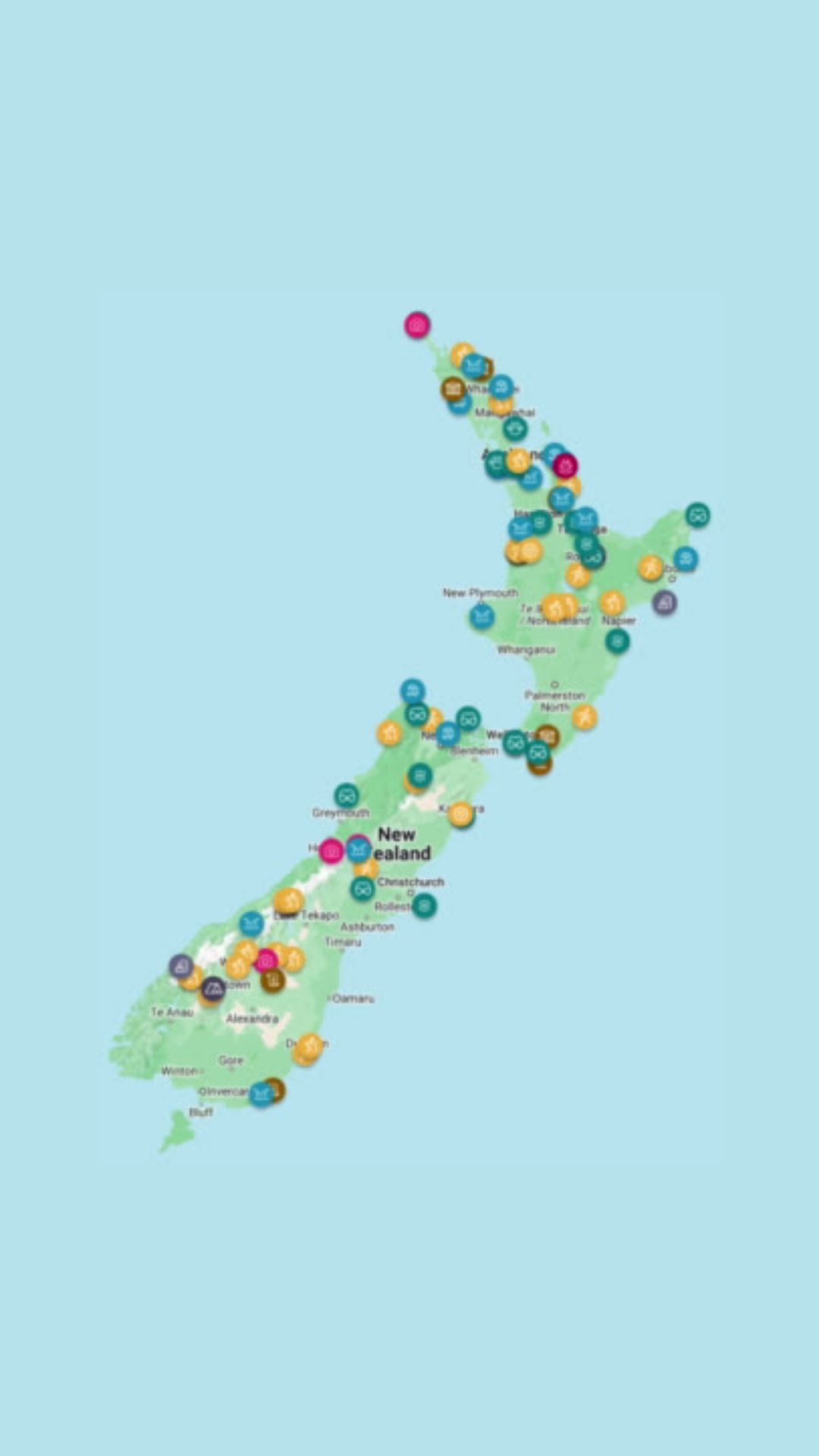
Places from this episode
- Old Cedar Flat Hut
- Cedar Flats
- Hokitika
- West Coast
- Punakaiki
- Field Hut
- Tararuas
- Chaffey Hut
- Cobb Valley
- Tākaka
- Old Waihohonu Hut
- Ruapehu
- Bealey Spur Hut
- Arthur's Pass
- Red Rocks
- Wellington
- Courtenay Place
- Kāpiti Coast
- Waikato
- Nelson
- Tasman
- Canterbury
- Queenstown
Follow Kemi and Niko
Kemi and Niko share their mini huts on Instagram, and they have a monthly mailing list, which is the main way to collect their small batches before they sell out. Niko also has a personal account, where she shares her own journey and growing the business.
Links from this episode
- Follow Niko on Instagram: https://instagram.com/kemi_niko/
- Niko's personal account: https://www.instagram.com/niko_n0thing/
- Kemi & Niko: https://keminiko.com
- Follow Abigail on Instagram: instagram.com/abigailhannnah
- Follow Aotearoa Adventures on Instagram: instagram.com/aotearoa_adventures_
More like this
- Hiking to Barker Hut and Ranking NZ's Best DOC Huts with Chris Lierheimer
- Hut Etiquette in DOC Huts and Exploring the Whitcombe Valley with Renee Cadigan
- Angelus Hut and Tramping Guiding with Dylan Arthur
- Caravan Living as a Family and Writing Music on the Road with Emily & Charles
Until then, keep adventuring :)
The ultimate
NZ road trip adventure guide
Packed with insider tips and stunning photography, this is the only resource you need to plan your journey.