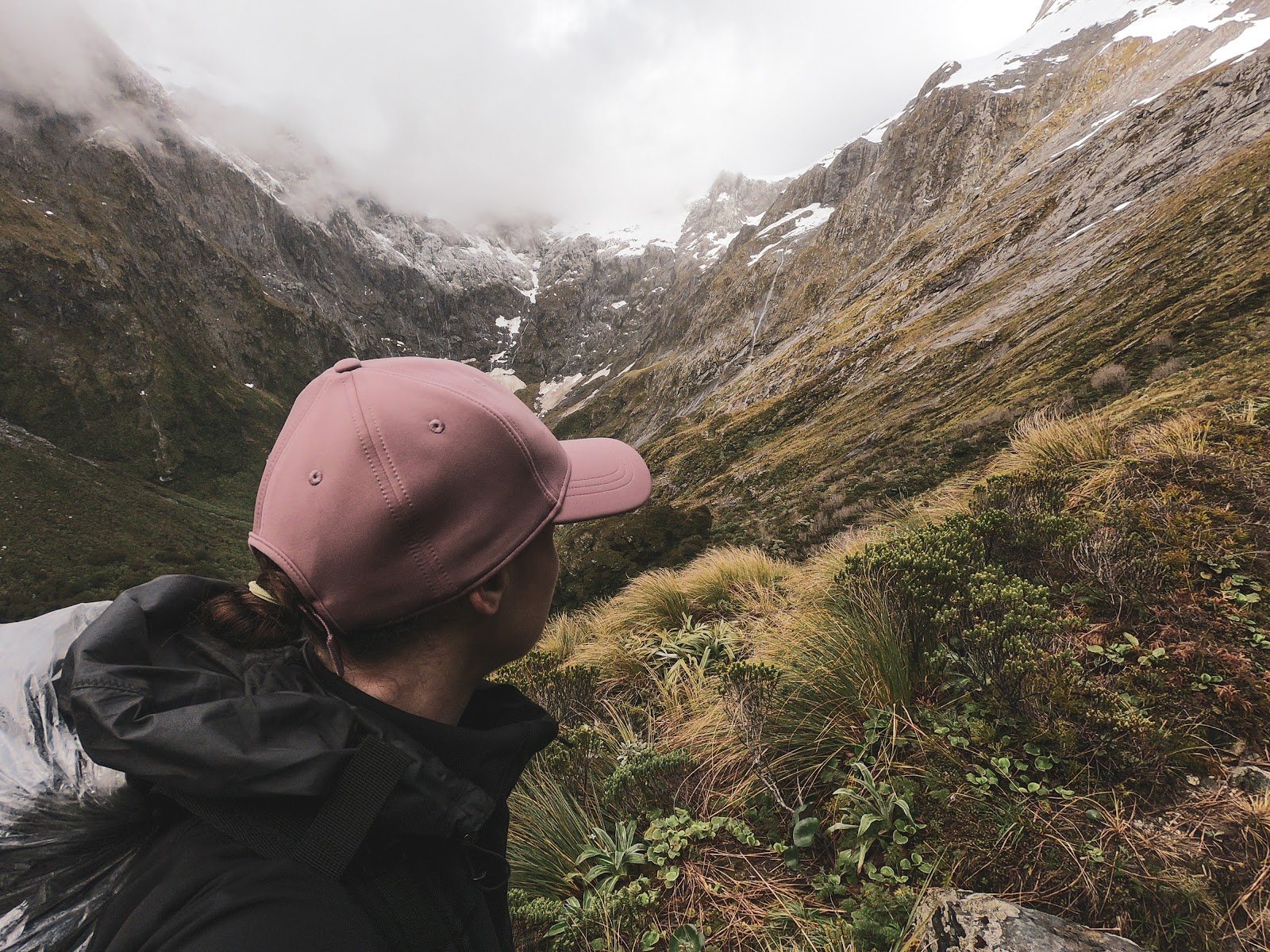
Episode 102
Having an Accident on the Routeburn and a Five Year Recovery Journey with Sarah Heffron

Episode 102
Having an Accident on the Routeburn and a Five Year Recovery Journey with Sarah Heffron
Spotify Apple Podcasts Everywhere else Download
I'd seen Sarah's video from the Routeburn Track on socials before we recorded. You can tell watching it that she's not fully there, and I wanted to hear the whole story, start to finish.
Sarah is originally from Ireland, a trail runner and a self-confessed introvert who would happily spend 12 hours on a track without seeing another human. And she was flying, running the Routeburn in a day, alone, chasing her own time. Then one patch of mud changed everything. So we talk about the fall, the 17 kilometres she still had to cover afterwards, and the five years of concussion recovery that followed.
And I'll be real with you. I knew very very little about concussion before this chat, and I learned soooo much. It's a heavy one in places, but Sarah tells it with so much warmth (and a Maltesers bunny). This post covers her Irish childhood, how she ended up in Queenstown, a sleepless first night in a hut on the Milford Track, the run and the fall, the recovery, and the gratitude practice she now swears by.
In this episode
- Growing up by the Atlantic in Ireland
- From Ireland to Queenstown
- Solo day adventures and why she skips huts
- A first night in a hut on the Milford Track
- Trail running the Routeburn Track in a day
- The fall on the Routeburn
- Five years of concussion recovery
- Gratitude and the lessons she kept
- Side paths, secret waterfalls and wild swimming
Growing up by the Atlantic in Ireland
Sarah is so grateful she grew up in Ireland in the 80s and 90s. There were no mobile phones and no internet. You went outside, played with your friends, came home covered in dirt, and that was your whole life.
The place they played, at the top of her road, was a fairy fort. It seemed completely normal at the time, and looking back, she can see it was pretty magical. If you've never seen one, she describes it as a bit like an egg cup made of soil and grass: you go up and over, and you're in a hollow. She spent her whole childhood playing in it, which might be why she's always looking for magic everywhere.
When the grass around it was left to grow really long, the kids loved it. They'd play lions and tigers, hiding in the long grass. Sarah reckons the less you have, the more you need to use your imagination.
Later came a little holiday spot down by the beach, so most of her childhood memories are of the Atlantic Ocean. To this day it's the most beautiful, powerful thing she's ever seen. Standing at the edge of it on a stormy day, with the waves crashing in, she can feel it in her soul. Even talking about it on the podcast, her heart was beating faster. She always thought she'd live by the ocean.
From Ireland to Queenstown
Sarah didn't have much of a travel bug at first. She studied English and psychology at uni, and in a summer break she went with friends to California for four months. It was her first proper taste of integrating into a completely different life, and they had a really great time.
She has always known what she wants to do with her life: write novels. She also knew it wasn't time yet, because she didn't have any stories. So she kept buying time with one adventure after another, building up stories to write about.
Next came Canada, living by the ocean in Vancouver. That opened her mind. She likes to get into a place and work out how it works there and what she needs to do to fit in, so she can experience it the way it should be experienced.
Back home in Ireland, she soon knew she needed to go again. This time it was Australia, by herself. She landed in the biggest heat wave, walked out of the airport, and walked straight back in again. In Darwin, she met her husband.
Her husband wanted to come to New Zealand, because his friends had gone over, so that was the next move. Sarah knew nothing about New Zealand, to the point that when people asked which island she was going to, she said "New Zealand". She flew into Queenstown in winter, straight from Darwin's 40 degrees, in shorts and a singlet, without a single jumper.
The plan was to stay six months. That was 12 years ago. Everyone knows Queenstown is a bit of a bubble, she says: it pulls you in, and you forget the rest of the world exists. These days she lives in Clyde, and she runs a timber flooring business with her husband.
Solo day adventures and why she skips huts
Sarah's Instagram is Hikes and Huts NZ, so I had to ask how many huts she's been to. She felt like a huge imposter answering. She's all about day adventures, and the name is there because she likes a bit of alliteration.
She's happy to be out from sunrise to sunset, and at the end of the day she wants a shower, a home-made meal and a warm, cosy house. When she lived in Arrowtown, she was out all day every day in the mountains and the hills, and swimming in the rivers, then home again at night. She calls it exploring your backyard.
The other reason is that she loves being by herself in nature. If she can go on a track and not see another human for 12 hours, that's her dream day. In huts you're surrounded by strangers, there's always someone snoring, and as the most typical introvert you'll ever meet, she can't relax with strangers around.
For Sarah, nature is emotional. There are times she's walking on a trail, touches her face and realises she's crying, because she can feel the nature all around her. That's a solo experience. Walking with friends is lovely, and it's a completely different thing: when she's talking to someone, she's focused on them, and she's not listening for birdsong or a distant waterfall or noticing the light in the trees.
A first night in a hut on the Milford Track
About six months before the Routeburn, Sarah walked the Milford Track "like a normal person should", with a backpack and a group of friends. She loved it. She also found it frustrating to walk for only a few hours and then have to stop, sitting at the hut while the forest was out there.
That first night was her first ever overnight in a hut, and it was so far out of her comfort zone. Everyone else rushed in to get a good bed. They'd all been soaked that day, and since everyone was going to snore anyway, she didn't care where she slept. She grabbed the last bed, a top bunk.
Lying there that night, she found out why nobody else had wanted it. It was under a skylight, and the moon was like a floodlight, perfectly framed so she was lit up like a Christmas tree. She can't sleep with light like that. With people snoring all around her, and the boat that has to pick you up meaning there was no walking out early, she had a little panic attack.
I always think of the Milford as a bit of a conveyor belt. You have to stay every single night in the right order and get to the right places at the right time, so there's not much wiggle room.
Even while she was hating it, Sarah told herself it's good to be out of your comfort zone. Then she tried something. She pretended she'd swapped places with the moon, and looked down from the sky at a tiny dot in a giant forest on a giant planet. It worked:
"I always remember that moment because it just completely calmed me down it just gave me such perspective so anytime I'm kind of freaking out I just try and swap places with the moon and just remember what a tiny little dot I am"
She highly recommends the Milford Track. She also wanted her next one on her own terms.
Trail running the Routeburn Track in a day
Sarah doesn't enter races, because she's so competitive. Her favourite person to compete with is herself. So she asked around about running the Routeburn Track in a day, and someone told her their friend had done it in seven hours. Right, she thought. Six it is.
The plan was to start at sunrise, run hard, and be in Glenorchy by lunchtime, driving home to a shower and a nice meal. That was her idea of a fun day out. She'd swap keys with someone doing it in a day from the other end: each parks a car at one end, and you swap keys in the middle.
The first half was better than good. It was magical. She saw the sunrise on the first peak with no one around, and it was completely silent, in the nature way: trees and birds and all the noises you should be hearing all the time.
Her phone beeps every kilometre, and when it beeped to say she was halfway, she was thrilled. She was going to smash her time. So she let herself stop focusing for a second, without stopping moving, to look up, take it all in and be proud of herself.
The fall on the Routeburn
As soon as she took her eyes off the track, she hit a patch of mud she hadn't seen, and slipped.
It probably took two seconds. It felt like 15 minutes. Sarah is really interested in psychology, and it fascinates her how many thoughts she had time for. At first it felt like she was standing still and the ground was coming at her. Then her brain worked out she was falling, told her to put her hands out, then decided there wasn't time. Her brain told her not to worry, they'd sort it out afterwards. Then everything went black.
I've only had time slow down like that once, in PE class at high school, running across the field without looking and colliding with my best friend. We both fell back on our bums and cracked up laughing. That was the first time I'd felt time slow down, realising the mistake and realising there was nothing I could do.
For Sarah, the next thing she remembers is opening her eyes and finding she was still walking, holding her nose, panic breathing, covered in mud and tasting blood. Her nose didn't feel right. Then everything went black again. When she came to, still walking, she made herself stop and sit down. With no mirror, she used her phone's camera to look at herself, which is how the video exists. Watching it now, she wants to reach into the phone and hug that person, who doesn't even feel like her.
From that day, she says, her brain stopped being something in the back of her mind and came right to the front. It felt like she broke in half: an adult voice in her head talking to a child, taking care of her step by step. And she still had 17 kilometres to go, completely alone in the mountains.
So that's what she did. The adult voice told her to clean her face up and put one foot in front of the other. She knew she was in shock, and she was grateful for it, because she couldn't feel the pain. She had a little chocolate Maltesers bunny in her bag as a treat for the end, and decided it was time for a treat right then.
When she met the person she was swapping keys with, someone she knows quite well, she introduced herself to him and all his friends, offered everyone all her food, laughed, took the key and skipped off. She has no memory of it. She was purely in survival mode.
She got herself off the track, drove from Glenorchy back to Queenstown and went to the hospital. As Sarah tells it, they didn't take it seriously, didn't mention concussion, said she was wasting their time and sent her home. That was the start of a five-year recovery, with an injury nobody could see.
Five years of concussion recovery
In the days after the fall, Sarah couldn't speak properly. Her speech was slurred, she couldn't work a light switch, and she couldn't remember her dogs' names.
Before the accident, she had no idea how to ask for help, or how to accept it when it was offered. She describes herself as fiercely independent. Being sent home from the hospital made her feel like an imposition for asking at all. Her husband pushed her to keep going, and took her to a new doctor. As soon as they saw her, they said she was in a bad way, and she burst into tears, so grateful someone had acknowledged it. By then it had been four days of pushing herself to be normal, and she says that did so much more damage.
Learning to rest
For six months, she says, she gaslit herself every second of every day. She has a runner's brain: when you hit your limit, the voice in your head tells you to push past it. That's how she had approached everything in life, and with concussion, she learned, it's the opposite of what you need. You need empathy for yourself, and you need to learn how to rest. Asking for help was a million times further out of her comfort zone than that night on the Milford. She had to let her husband help her, and things started to get better.
When nature was too much
Her brain was so overstimulated that she couldn't sleep, and she couldn't handle light or sound. She developed anxiety straight away, with constant panic attacks. Running and nature had always been her therapy, so she went out on the river track by her house.
The sun came through the leaves like a disco ball, the breeze touched her face, she could hear the rocks crunching under her feet and the river. She couldn't walk in a straight line. Barely five minutes from home, she ended up on the ground, crying, and had to find her way back. She couldn't read, sleep, run or walk: she couldn't do anything she loved about life.
Reading together
Her husband isn't a reader, but he knows reading is her favourite thing. So he lay down beside her with a coffee table book of New Zealand photography and huts, read her the paragraphs and showed her the pictures. Listening to his voice, she could sleep. He read to her every night until they finished the book, then bought a Roald Dahl box set: James and the Giant Peach, Charlie and the Chocolate Factory. It became her favourite time of day.
Sarah recommends finding a way to connect with someone, whether it's concussion, anxiety or depression, because depression whispers to you to pull away from everyone. Even when she couldn't remember his name, she could listen when he read to her.
A glimmer of hope
Sarah became deeply depressed, because she had lost so much of herself. Her husband never gave up: anything that mentioned concussion, he'd want to try. Through his work, he met an osteopath who told him to send Sarah in.
She went in with no expectations, lying there listening to the clock tick and thinking it was all pointless. In Sarah's account, the osteopath found a blockage where she'd taken the impact and cleared it on the spot. Suddenly she could open her eyes to the light, and the clock stopped echoing through her brain. She lay there and cried her eyes out. Afterwards she could walk in a straight line and focus again, and it gave her a glimmer of hope.
From there, she started helping herself, with meditation and a gratitude practice: little things that are so easy and change the way you see the world. With concussion, you only have a certain amount of energy in a day, and one of her favourite lessons is that focusing on the negative takes so much more of it. So she spends it on the good things, and she has rebuilt her life with all the things she loves in it. She still has a lot of limits, and she's grateful for those too.
She has now made a whole concussion course, for people with a concussion and the people around them, because she's been through the highs and the lows and wants to help.
Gratitude and the lessons she kept
Five years on, Sarah says something she never thought she'd say: she's so glad it happened. She believes there are no bad things in life, only good things and lessons. If a genie offered to take away all the concussion, the pain and the limits, but she had to hand back the lessons too, she'd keep them.
The biggest lesson is gratitude for the life you have now. When someone's having a bad day, she asks them for three things they're grateful for, right now. Did you have breakfast? Is there food in your fridge? Were you warm under your blankets? Do your limbs work? Are you wearing shoes?
She asked me if I'd ever had concussion. I haven't, and her instruction was to add a fully functional brain to my gratitude list every day for the rest of my life. It is going on the list.
Sarah puts it simply:
"They're not little. We are so surrounded by all these blessings and it's not until things get taken away."
Your whole life can change in two seconds, she says, and once you realise that, you notice how much you've got right now.
The other lessons:
- Kindness. Everyone has something going on. The person beeping their horn in traffic might have had horrible news, or be rushing to the hospital. If they want to pass you, let them pass, and think the best of people.
- Letting go of perfectionism. Before the accident, she was scared to try things in case she wasn't good at them. Now she's going to try everything, fail, and take a lesson from every failure.
And she has nothing negative to say about nature. She's glad, in the end, for the lessons the accident gave her. And obviously, don't try that at home.
Side paths, secret waterfalls and wild swimming
Sarah's big goals for the year were getting her concussion course filmed (done) and finishing a novel. In the outdoors, she doesn't feel the need for giant goals anymore. She wants to get out every single day.
Instead of running all the time, she goes on a lot of walks now, and she's noticed that nature keeps pointing out little paths she never saw when she was running. She's wandered down so many of them, and found her way to a secret waterfall or a swimming spot. Even the dam she walks past in Clyde, sometimes open and sometimes closed, has felt like a lesson.
"every time I go on a walk though, nature just has a new lesson for me. … nature is there to just teach us."
She's very much a summer person, so as soon as the sun kicks in, she'll be swimming. Cold water swimming is her prescription for depression and anxiety: get out in the wild, wear no makeup, get sweaty and jump in the water.
Places from this episode
- Routeburn Track
- Glenorchy
- Queenstown
- Milford Track
- Arrowtown
- Clyde
Follow Sarah
Sarah shares her walks, her gratitude practice and time in nature on Instagram as Hikes and Huts NZ, and the link to her concussion course is in her bio.
Links from this episode
- Follow Sarah on Instagram: instagram.com/hikes_and_huts_nz/
- Healing From Concussion Course
- Follow Abigail on Instagram: instagram.com/abigailhannnah
- Follow Aotearoa Adventures on Instagram: instagram.com/aotearoa_adventures_
More like this
- Mountain Biking, Towel Ponchos and a Brain Injury with Debs Brockelsby
- Avalanche-Bealey Traverse and Pursuing Adventures with Neurological Disorders with Nick Allen
- Accidents and Beauty Found in Solo Hiking Whirinaki Conservation Park with Kurt Fenton
- White Water Kayaking and a Harrowing Accident with Ryan Lucas
- Getting Outdoors, Walking and Wellbeing with Kaelyn Kingi
Until then, keep adventuring :)
The ultimate
NZ road trip adventure guide
Packed with insider tips and stunning photography, this is the only resource you need to plan your journey.