Episode 042
From Corporate Hustle to Outdoor Social Enterprise with Robert Bruce

Episode 042
From Corporate Hustle to Outdoor Social Enterprise with Robert Bruce
Spotify Apple Podcasts Everywhere else Download
This one is for anyone who has ever sat in a meeting and thought, I really need to get outside. Because that was Robert Bruce, and he did something about it.
Rob spent his 20s running a marketing company. Long hours, meetings, spreadsheets, the lot. Then he was made redundant. So he flew to Nepal, went hiking in the Himalayas, and came home with one big idea: getting out was good for him, and he wanted more people to do it too.
That idea became Got to Get Out, a community of group trips that started with one Facebook post. And so many of them are in the North Island, which I loooved, because most of my guests adventure down south.
We cover how it started, two trips that are now Got to Get Out folklore (one involves a ledge), Rob's favourite places, who comes along and why, and his advice for taking that first step.
In this episode
- From corporate life to Got to Get Out
- Rob's early years and the business hustle
- Growing Got to Get Out and two trips gone wrong
- Rob's favourite places to get out
- Guiding concessions and the Great Walks
- Who comes on Got to Get Out trips
- Circles of names and aroha, and choosing coffee over the pub
- Rob's advice for getting started
From corporate life to Got to Get Out
Rob started his first company at 21 and has been self-employed most of his life. The marketing company he'd built from scratch merged into a much bigger machine, and the new owners decided they didn't need the original founder anymore. He'd expected a longer romance, so being made redundant was sad. At that point he wasn't outdoorsy, he wasn't hiking, his fitness was bad and his mental health wasn't great.
So he bought a ticket to Nepal and went hiking in the Himalayas. Out there, he had a massive epiphany:
"Something about turning off your phone, putting down your laptop, disconnecting and walking all day. There's something about that combination, especially with the fresh air … you can just come up with some amazing stuff."
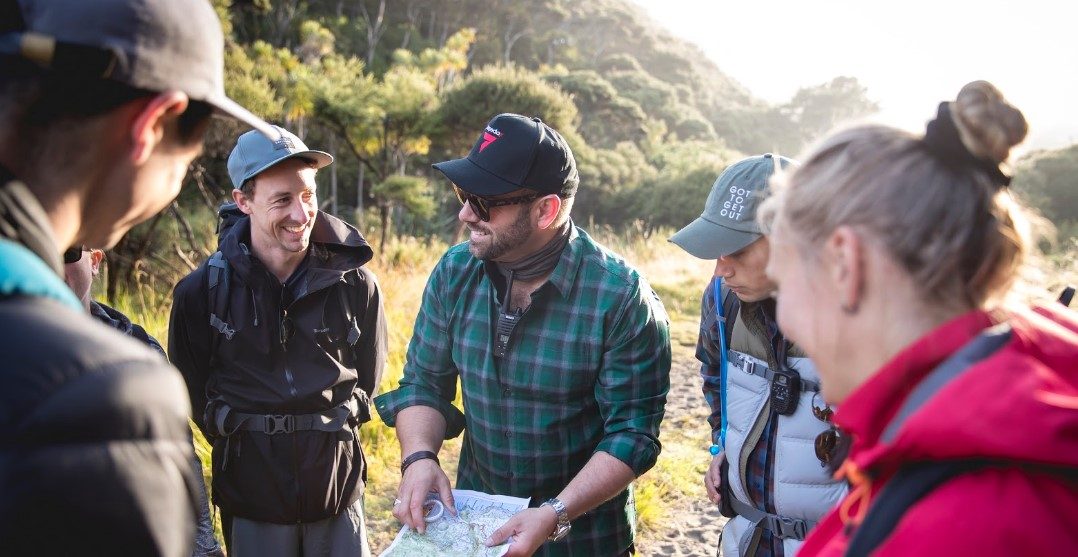
He came back to New Zealand in 2015 and put a post on Facebook to his friends and family: who's got to get out with me this weekend? Surprisingly, a whole bunch of people turned up. One trip a month became two, all free, like a hike in the Waitākere Ranges or a mountain bike ride at Woodhill. Then he chartered a bus to the Waitomo Caves, organised the guiding and accommodation, and charged for it: his first ticketed event.
Rob's early years and the business hustle
The outdoors was around Rob growing up, mostly in photos. In his grandparents' living room there were photographs of family members climbing Everest, and at home there were photos of the generation before him hunting deep in the bush.
Rob did sport the traditional way, and to a high level. He represented Wellington at hockey and was really competitive at downhill mountain biking. But he wasn't an explorer at all.
At university his whole thing was business: the hustle, the networking, the socialising, and all the unhealthy stuff that came with it. That sums up his 20s. At the Rugby World Cup in 2011 he had 120 brand ambassadors and promo staff working the festival, and he was behind the scenes at every game. He wasn't thinking about hiking. He was thinking about making money.
He doesn't see it as wasted time, because he wouldn't be where he is without those yards.
Growing Got to Get Out and two trips gone wrong
In the early days, Rob grew Got to Get Out by always showing up, even in torrential rain with nobody coming. Then he'd film himself on his phone: it's Rob here, I'm in the Waitākere Ranges, there's no one here with me, but get out with me next time. Cheap marketing.
For a while he let other people lead trips too. Rob counts about ten disasters over the years, and about half happened when he wasn't there.
The ski trip and the Bruce Road
Got to Get Out has run ski trips from the beginning, driving from Auckland to Ruapehu to go skiing and snowboarding, normally with a group of inexperienced people. On one trip, Rob let someone else drive the van. After a late start and bad traffic, they reached the Bruce Road up to Whakapapa at 11 o'clock at night, long after the graders had stopped. Halfway up, they had to put snow chains on in the dark, which none of them had done before. The chains weren't latched properly, so they fell off, and putting them back on tore out the brake lines. By 1am they'd called 111. A tow truck got them to the top, where they left the van in the buses' turning bay and went to bed, exhausted. In the morning the buses couldn't turn, and the van had Got to Get Out written all over it.
A ledge, not a lodge
The other one was a canyoning trip, outsourced to a canyoning company in the Coromandel, where you're lowered down Sleeping God Canyon on ropes in thick wetsuits. Rob was at home.
At 6pm, 13 hours after the group left Auckland, the company rang to say there'd been a flash flood they couldn't cross, but it was okay: they were staying in a lodge. Rob went to bed. The next day the truth came out. The water had risen so fast that they'd had to clip onto a ledge about four inches wide, huddled together until the water dropped and they could get out. A ledge, not a lodge.
Rob says they got cold and it was inconvenient. Both stories happened in the first couple of years, and after that he decided to be at the front of every trip, making the calls and driving the bus. He's been on about 95% of them.
Safety is something my husband goes over a lot in his outdoor education study: safety first, put your precautions in place and follow systems so people aren't at risk.
Rob agrees. Got to Get Out either runs activities itself (it's qualified for hiking, mountain biking, paddle boarding and bus driving) or outsources to a registered adventure activities company.
Rob's favourite places to get out
Rob finds favourite places a hard question, because there are categories. For mountain biking, he loves the redwoods. For a special hike, it's the time his partner took him up to French Ridge Hut in Mount Aspiring National Park. It was really hard and it was fantastic.
With a group, you can't go much past the Pinnacles in the Coromandel. It's a hearty day trip to the summit and back, or you can spend the night in the Pinnacles Hut with up to 80 people, 65% of whom will be snoring (his numbers).
He's walked sections of Te Araroa, too:
- Pirongia in the Waikato, up and over on the Pirongia traverse, which he rates as really lovely.
- Ninety Mile Beach, the first section of the trail. They drove up to the start and walked down, stopping at campgrounds and finishing after about four days. It was amazing, and everyone got the worst blisters you've ever seen, because your feet aren't hardened for beach walking.
He's ridden the Timber Trail in the middle of the North Island as well, and calls it amazing.
Guiding concessions and the Great Walks
What Rob hasn't done a lot of is the Great Walks. In the eyes of the Department of Conservation, guiding people for money is commercial guiding, whatever the outcome, and a Great Walks concession is really expensive and difficult to get.
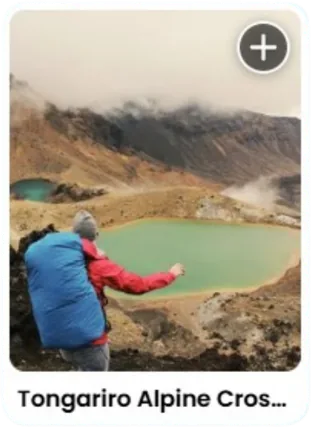
When we recorded, Rob held guiding concessions for the next tier down, the forest parks around New Zealand. So he could guide in the Coromandel Forest Park, for example, but not in the Abel Tasman, and definitely not on the Tongariro Crossing. For a guided Tongariro trip with ice axes and crampons, or the Ruapehu crater, he outsources to operators with the right concession.
Who comes on Got to Get Out trips
Rob keeps a record of everything. When we recorded:
- Event number 831.
- About 18,000 individual participants.
- 58,000 hours of guided activity.
- About 23 million calories burnt, averaged at 400 calories an hour.
- 73% of events free for the participant.
His preference has always been to charge someone else. One fund, from Sport New Zealand, gets young people who are underrepresented in sport outdoors, often rangatahi of about 15 or 16 who have fallen out of the school system. They all want to vape at lunchtime. Nope: he wants them to have fresh air and turn off their phones for one day, and by the end they're having such a good time. That's his Monday to Friday, in the Waikato and Tāmaki Auckland.
Auckland Council also funds him to showcase regional parks for free, like Shakespear Regional Park. Coming out of the corporate world, though, he knows you have to make money to advance your mission.
Then there are the weekend trips people pay for, like overnight ski trips and horse trekking. Those people tend to be 25 to 45, urban and typically single. In Rob's surveys, they want physical health, mental health, something meaningful, a friend, and some want to find love.
There's a female skew of about 75%, which Rob hasn't figured out. Outdoor rock climbing and mountain biking draw slightly more men. Group hiking draws a lot more women.
I wondered if Got to Get Out is giving women a safe space to explore.
Rob says it's certainly a safe space, with camaraderie. A lot of the women are settled in their second or third job, and some have come out of a relationship with someone who wasn't interested in the outdoors.
He's worked hard to keep it from becoming a dating service, but he's seen a few couples meet on the bus. His theory:
"if you can like someone when they're stinking and sweating after a day hiking up to the nearest hut … if you still like that person because of who they are … wonderful human, wonderful personality. Then you know you've got to keep it."
There's no swiping in the outdoors, either. In a group of ten or twenty you get to know everyone, and all sorts of unusual friendships come out of it.
I've met some of my best friends through the outdoors. When you're stuck with people for a day or two, there's no room for facades, and some of the best conversations happen around a campfire.
Circles of names and aroha, and choosing coffee over the pub
Every Got to Get Out trip starts with whanaungatanga, a circle of names. And whether it's a two-hour trip or a 20-day one, it ends with a circle of aroha. Everyone shares what they liked or learned, and sends aroha to someone who made an impact on them: thanks for helping me up when I fell. It grounds a group, especially after an injury or bad weather.
In the early days, when Rob was still transitioning from corporate Rob to outdoor Rob, trips started with a coffee and ended with a beer in Ponsonby. He didn't like it. After a circle of aroha on the side of Mount Taranaki, phones off, ending up in a bar shattered the magic. Now he'd rather tell everyone to go home and enjoy their night.
Rob stopped drinking around the time he started Got to Get Out in earnest. In marketing and events, he'd been conditioned to think you do business over a glass of wine. He had one last New Year's Eve with his mates, and the next day he stopped. It was hard, and he hasn't looked back.
If people bring a bottle of wine up to a hut, at Pirongia, the Pinnacles or Crosbies Hut, that's totally cool. He'd rather be sober and responsible driving the tour bus. When he looks in the rear-view mirror after a big trip, everyone's asleep, and he's got their lives in his hands.
Rob's advice for getting started
Rob's advice is simple:
"you just got to start by starting. … if you are not in shape you know which is fine. It happens to us all then start small."
- Walk in your local area. Walk your dog, or someone else's dog. There's always a dog that needs walking.
- Find a park. There are parks in almost every part of the country.
- Find your people. Got to Get Out has Facebook groups in almost every city. If yours is quiet, post in it and ask who wants to get out this weekend. That's how it all begins.
- Use the resources. The Mountain Safety Council and DOC have really good tips: wear the right stuff and bring the right food.
- Get good footwear, because there's nothing worse than blisters.
On that, I got a blister on day one of the Milford Track. Another walker looked at my feet in the hut and told me I had very soft feet. It had been ages since I'd last worn my hiking boots.
Rob says I need more feet conditioning. Fair.
And for a next-level adventure, when we recorded Rob was leading a trip to Everest base camp after Christmas, about ten days of walking up to 5,300 metres. It might be the turnaround for someone else that Nepal was for him.
Places from this episode
- Waitākere Ranges
- Woodhill
- Waitomo Caves
- Ruapehu
- Bruce Road
- Whakapapa
- Coromandel
- Sleeping God Canyon
- Mount Aspiring National Park
- French Ridge Hut
- The Pinnacles
- Pirongia
- Ninety Mile Beach
- Timber Trail
- Abel Tasman
- Tongariro Crossing
- Shakespear Regional Park
- Ponsonby
- Mount Taranaki
- Crosbies Hut
- Milford Track
Follow Rob
- Facebook: Got to Get Out, plus local groups like Got to Get Out Auckland and Got to Get Out Wellington
- Instagram: @gottogetout_adventures
- Website: gottogetout.com, where events are ticketed through Eventbrite
Links from this episode
- Follow Rob on Instagram: instagram.com/robertbrucenz/
- Follow Got to Get Out on Instagram: instagram.com/gottogetout_adventures/
- Follow Got to Get Out on Facebook: facebook.com/gottogetout
- gottogetout.com
- Follow Abigail on Instagram: instagram.com/abigailhannnah
- Follow Aotearoa Adventures on Instagram: instagram.com/aotearoa_adventures_
More like this
- A Passion for Camping, Community and Knowledge Sharing with Jono Collins
- Quitting his Corporate Job and Preparing for Five Months of Thru-Hiking Te Araroa with Anurag Sharma
- Best Auckland Adventures for Kids with Outdoorsy Hijabi Mum Veronika Edali
- A Local's Guide to Northland and Building Hiking Communities with Hannah Whittaker
Until then, keep adventuring :)
The ultimate
NZ road trip adventure guide
Packed with insider tips and stunning photography, this is the only resource you need to plan your journey.