
Spotify Apple Podcasts Everywhere else Download
Germaine ends this chat with a challenge for all of us, and I'm taking it on board. She walked the South Island section of Te Araroa on her own, and somewhere along the way it became a healing journey. Quite literally, a journey both ways.
Germaine works on the ambulance as an EMT, she grew up in Ashburton, and she's done a lot of tramping (plus the Coast to Coast, twice). She's also very open about why the trail mattered so much to her, and I'm really really grateful she shared it.
So we go from her first tramp at 11, clagged in and hating the climb, to the Coast to Coast and the night she first heard about Te Araroa. Then her southbound walk: the hardest physical day, why walking solo was one of the best things about it, the profound day she walked to the Mavora Lakes, and the highlights that had her in tears of gratitude. Plus her advice if Te Araroa is bugging you and won't go away, and what's next for her.
In this episode
- Germaine's first tramp at Woolshed Creek Hut
- The Coast to Coast, kayak and all
- Hearing about Te Araroa on the St James Walkway
- Why she walked the South Island southbound
- The hardest day: Mid Wairoa to Top Wairoa
- Walking Te Araroa solo and finding space to heal
- Te Araroa highlights: Mount Rintoul, Waiau Pass and Stag Saddle
- Going back, her advice and what's next
Germaine's first tramp at Woolshed Creek Hut
Germaine grew up in Ashburton, and she's lived in Australia and in Christchurch off and on. Her family weren't big into tramping. It was a primary school teacher who took a group of the senior kids up to Woolshed Creek Hut, back when it was still the old hut and there was still a sauna up there.
They went twice: once up to the hut, then a second time on the whole back half of the circuit. At first she thought it was all pain. She especially hated the climb to the saddle from the hut, which feels never-ending when you're 11, it's clagged in and you can't see anything. But it sparked an interest in what's out there, and a bit of a thrill, especially in being out on your own and relying on your own senses.
She got more into it in her teens and early 20s.
The Coast to Coast, kayak and all
I'd never had anyone on the podcast who'd done the Coast to Coast, so I asked Germaine to walk us through it.
Back when she first set her sights on it, she thought it was a crazy thing that crazy fit people did, like full-time athletes.
The course, as she describes it:
- Kumara Beach on the West Coast, where you dip your toes in the water (a bit of a tradition), then run a couple of kilometres.
- A 55 kilometre cycle to Aickens Corner.
- The run over Goat Pass to Klondyke Corner, where you stay the night if you're doing the two-day event.
- A 15 kilometre cycle the next morning to Mount White Bridge.
- A 70 kilometre kayak down the Waimakariri Gorge, which is wicked country, out at the Gorge Bridge on the road to Oxford.
- The final cycle to New Brighton.
It's a big couple of days, and so well run. Germaine says the camaraderie at her level is phenomenal: if you're struggling, everybody rallies around with cramp stop or painkillers to get you over the hill. Nobody starts with the fitness, and it takes a good year to build up.
The second time she did the tandem with a really good friend, which was a lot more fun, with a waterproof speaker jammed into the boat that kept playing even when they tipped out.
Hearing about Te Araroa on the St James Walkway
Germaine hadn't heard of Te Araroa until 2016, when she walked the St James Walkway with a friend. It was her first real multi-night tramp.
They were settled in at Anne Hut in February, ready for bed as it was getting dark, when a figure came out of the darkness wearing a head torch, with a tiny pack and trail runners. He was German, he'd come over Waiau Pass from Blue Lake Hut, a 42 kilometre day, and he was planning to walk out to Boyle the next day, another 32 kilometres. They dubbed him the Germinator. Inspired, they walked out to Boyle the next day too, and were delirious by the end.
That's when Te Araroa got into her head, the same way the Coast to Coast had. The more she looked into it, the crazier it seemed that someone could walk that distance down the spine of New Zealand, through some incredibly challenging terrain. It seemed almost too big to grasp, and that's exactly the kind of thing that gets her going.
Why she walked the South Island southbound
The idea hummed away in the back of her head until an opportunity came up the year before we recorded. She could wrangle the time off work (her boss was really accommodating), and she'd heard about the road walking in the North Island, so she decided to walk the South Island. To Germaine, it's everything she loves about tramping: mountains, vistas, heights, valleys and isolation.
She'd known for a long time that mountains are where she finds her peace, and where she can pit herself against the elements and a really big day. With the friend from the St James, she'd started peak bagging, and every time they went out they had to do a bigger hill or go further. She found she could picture the day ahead, be scared by the size of it, then go out and do it anyway. Each time, she felt herself finding her confidence again, and knowing she was capable of really hard things.
She'd been due to do the Coast to Coast two-day event again as a team that year, until it was cancelled because of COVID, so she had a solid base of fitness. That mattered, because she wanted to go southbound, starting with the Richmond Ranges. That's a huge section with massive days and big mountains, and most people have the North Island under their belt by then.
There was a deeper reason too. Germaine had been in therapy for two years, working through trauma from a past relationship, and she knew that a few days in the hills, decompressing and getting away from people, was really good for her. She didn't fully acknowledge it when she started, but the further she walked, the clearer it became that she needed that space and time to process everything. It didn't become apparent until she was about two-thirds of the way down the island.
Everybody's healing journey is different, and nature is my therapy too. A good sunrise, hearing the waves on the beach or going for a hike does something to your soul.
The hardest day: Mid Wairoa to Top Wairoa
Germaine took the water taxi out to Ship Cove with her clean little pack, and told everyone who asked that she was walking to Bluff. At that stage she didn't think her body would hold out, so the plan was to keep walking until she couldn't anymore.
Physically, the hardest day was between Mid Wairoa and Top Wairoa huts. She'd planned to reach Hunters Hut, 19 kilometres, and she'd been clicking over 20 kilometre days. She'd read the comments on FarOut and knew it was a tough section, but she didn't realise how tough. The river gorges out, so for those four kilometres you're sidling along bluffs, monkeying along tiny beaches and hanging onto roots, with the river directly below you.
By the time she reached the top of the gorge and got back into the riverbed, she was absolutely drained. She still had Hunters Hut in her head when she got to Top Wairoa Hut. Then a huge thunderstorm rolled in. Sitting in the hut watching the lightning, she knew she'd have been way up on the ridge, and was glad she'd stopped.
Day to day, her feet were the biggest battle. They really hurt, more than blisters. The mentally tough days came further down the island, when she was physically and mentally tired and the trauma-related stuff started coming up.
Walking Te Araroa solo and finding space to heal
Being on her own turned out to be one of the best things about it. With the kind of things she was working through, not many people are comfortable talking about them, and on the trail she didn't have to worry about how to word things, or shield anyone from her emotions. Anger, she says, is a secondary emotion, and to deal with hers she had to process the grief underneath it.
Te Araroa gave her the space to do that. Some days she spent hours crying, screaming and slamming her poles into the ground. She didn't have to be anywhere in particular, and she could let it go:
"It felt like the trail just kind of waited for me to do my thing and when I was ready I could get up and keep going."
I think I'd have been exactly the same. Nature doesn't judge you. There might be a bird flying past, but it doesn't care.
That was a bit of a juxtaposition for Germaine, because the question she got asked all the time, as a woman doing Te Araroa on her own, was whether she felt safe. She knows her capabilities and what she's putting herself up against, and she felt safer out there than she has in many places in public.
The day to the Mavora Lakes
Staying with a friend in Queenstown, Germaine was asked whether she'd had any really hard days emotionally. She hadn't: she'd had so much joy and gratitude, and felt like she was living her dream. Her friend told her that whatever she was holding onto, she should let it go, because that's what the trail is for.
The next day she walked out from Greenstone Hut towards the Mavora Lakes. Not long out of the hut, she knew she was on her own. She'd woken with a huge knot in her chest and a song on loop in her head, and everything came out. Then she walked and walked until she was absolutely exhausted, and camped on the shores of North Mavora Lake. Looking back, it was one of the most profound days of her healing journey, one of her hardest days and by far one of her favourites.
Te Araroa highlights: Mount Rintoul, Waiau Pass and Stag Saddle
Gratitude became a huge part of Te Araroa for Germaine, far beyond anything she'd felt before. Her highlights:
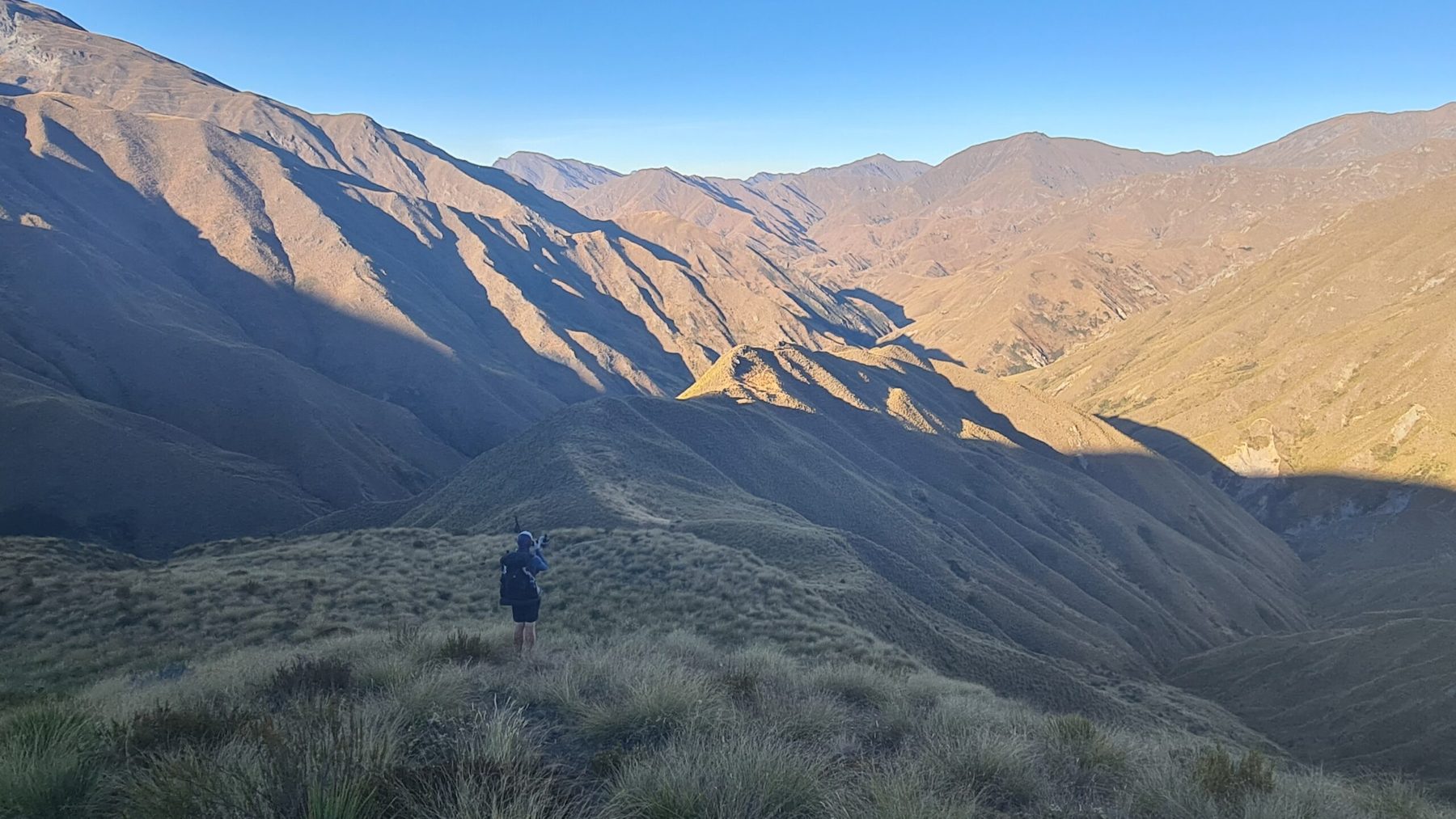
- Slaty Hut to Mount Rintoul. The first day she really felt that gratitude. Popping up on the ridge early in the morning, in golden light, she could see back to the Seaward Kaikōura Range, the Southern Alps and up towards the Marlborough Sounds. With her earbuds in and one of the playlists she'd made for the trail, she was in tears, wondering how this was her life, and grateful to every person who'd helped her get there.
- Waiau Pass. She was terrified coming into it, on her own, after everything she'd heard. It was nowhere near as scary as she'd thought, and a lot of fun.
- Stag Saddle. The next day was forecast to be clagged in, and she didn't want to miss the view, so she kept going past Royal Hut, where she'd planned to stay, up to the saddle. Her legs had had it, and then she reached the top and completely forgot about them. She dropped down out of the freezing wind, camped by a wee tarn, got her freeze-dried meal ready and sat on a rock staring out over Tekapo. The same gratitude, magnified all over again.
- The Longwood Forest, a really cool section that was a lot of fun.
Of Waiau Pass, she says:
"It was like being in a huge playground"
Going back, her advice and what's next
Germaine has been back to some of these places. She walked the St James again with her son, and on the walk up to Anne Hut she was in tears to be back. Te Araroa was crazy busy that season, after the closed borders of the year before.
On a road trip around the bottom of the South Island with her partner, he made a point of driving all the way out to the Mavora Lakes. They sat in the car for ten minutes without saying anything, while she gave thanks for that day. He also drove her straight round to Stirling Point in Bluff, and she cried all over again to be back. Closer to home, Te Araroa passes through the high country out the back of where she lives, and she loves going up Mount Barrosa to see where it comes out.
She skipped a stretch of Canterbury, from Boyle to the Rangitata, because she'd walked it two years earlier and the weather was really bad. The only part of the South Island she hasn't done is the second half of Harper Pass. Skipping it gave her time up her sleeve for rest days, which her knees and feet appreciated, and an extra day off to stuff her face in Queenstown (you get so hungry).
Her advice
On her first day, Germaine was overwhelmed. She'd elected to walk 1,300 kilometres, over mountains and through rivers. Her advice:
- Make the decision and commit. Then find ways to make it work, the same as with the Coast to Coast.
- Break it into bite-sized chunks. Aim for a campsite, and if you can't get there, the one before it. You've got your tent on your back.
- Plan in chunks too. Gear, food, how you'll afford it, getting fit and organising time off work all feel huge at the start, until you break them down.
- If it's bugging you and won't go away, decide to do it.
When we recorded, she had trips planned with her friend: up the back of the high country near home to Upper Potts and Cameron Hut, then over Whitcombe Pass, crossing the Rakaia River to the West Coast.
And her challenge to all of us: if mountains are your medicine, where you find joy, peace or healing, then do something like Te Araroa, or solo travel, something that gets you out of your comfort zone. She thinks it would make the world a better, more compassionate place, because it did that for her:
"that changed the way that I see people and it changed the way that I see myself"
I've got nothing to add to that, and I'm going to take that challenge on board too.
Places from this episode
- Ashburton
- Woolshed Creek Hut
- Kumara Beach
- Goat Pass
- Waimakariri Gorge
- St James Walkway
- Anne Hut
- Waiau Pass
- Boyle
- Ship Cove
- Richmond Ranges
- Slaty Hut
- Mount Rintoul
- Mid Wairoa Hut
- Top Wairoa Hut
- Stag Saddle
- Tekapo
- Queenstown
- Greenstone Hut
- Mavora Lakes
- Longwood Forest
- Stirling Point, Bluff
- Harper Pass
- Whitcombe Pass
Follow Germaine
- Instagram: @mountain_mumma_nz
Links from this episode
- Follow Germaine on Instagram: instagram.com/mountain_mumma_nz/
- Follow Abigail on Instagram: instagram.com/abigailhannnah
- Follow Aotearoa Adventures on Instagram: instagram.com/aotearoa_adventures_
More like this
- Section Walking Te Araroa over Multiple Seasons and Battling Cancer with Te Aroha Hohaia
- Nine Months of Solitude Walking Northbound on Te Araroa with Naomi Arnold
- Thru-Hiking New Zealand Before Te Araroa Opened with Shalane Hopkins
- Finishing Te Araroa as a Family Two Years Later with Deanna Gerlach
Until then, keep adventuring :)
The ultimate
NZ road trip adventure guide
Packed with insider tips and stunning photography, this is the only resource you need to plan your journey.