Episode 184
Turning New Zealand Work Trips into Solo Great Walk Adventures with Nick Thompson

Episode 184
Turning New Zealand Work Trips into Solo Great Walk Adventures with Nick Thompson
Spotify Apple Podcasts Everywhere else Download
Some people get a day off on a work trip and go to the movies. Nick walks a Great Walk. In a day. On his own.
Nick is from the UK, and he's a squash court engineer (he swears it's a real job). He travels the world building all-glass squash courts for major international events, including the New Zealand Open, which has brought him here almost every year since 2022. The work only lasts a handful of days, which leaves him small pockets of time, and he's filled them with some seriously big days out.
So we go through each one: the Tongariro Northern Circuit that ended in Taupō Hospital, the Kepler in two days, the whole Abel Tasman in a day, and the Hump Ridge Track, where a missed signpost turned 60 kilometres into 78. Plus his pace, his food (brownies feature heavily), what he thinks about when the tank is empty, and why his mind goes quiet in New Zealand. I would never. But I loved hearing it.
In this episode
- Building squash courts around the world
- From Dartmoor to a month in New Zealand
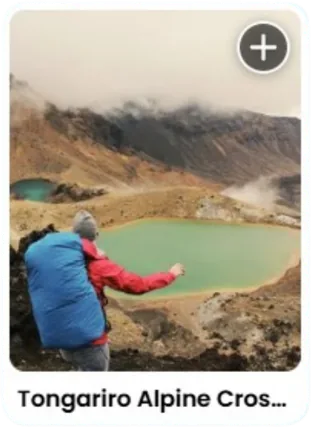
- Tongariro Northern Circuit in a day
- The Kepler Track in two days
- Abel Tasman Coast Track in a day
- A slower family trip to Queenstown
- The Hump Ridge Track: 78 km in a day
- Pace, food and hitting the ultra wall
- Why New Zealand, and what's next
Building squash courts around the world
Nick played squash as a reasonable junior. Then he discovered other things. At 18, while still at school, he started working for someone building squash courts, and kept at it on and off through university. The week he graduated, he started his own business building all types of squash courts. He's since sold it, and now works for the Professional Squash Association.
I had to Google a squash court to understand what he builds. It's basically an all-glass box, so the crowd can see the game from all sides, which makes sense when the courts at school were a closed-in room with a tiny balcony. Nick's part of each event goes like this:
- The build. Several days of work putting the court up.
- The event. A week of squash, which leaves him free days in the middle.
- The pack-down. A few days taking it down and shipping it to the next event.
The New Zealand Open runs every year, and the Australian Open always follows it, so the crew and players don't have to come to the far side of the world twice. When we recorded, the next New Zealand Open was in February 2027.
From Dartmoor to a month in New Zealand
Growing up, Nick was encouraged to play lots of sports, but the outdoors came from him. He went to university in Devon, in south-west England, which is fairly outdoorsy, and spent pretty much his whole first year on his road bike on Dartmoor, relatively remote and very hilly.
His first New Zealand job was in 2022, in Tauranga, with the New Zealand Open followed by the world teams event. He was working for himself, so he extended the trip by a month and did a classic tour, because he didn't know if he'd be back: the Coromandel, Rotorua, Taupō, Hobbiton, Hamilton, then lots in the South Island.
Driving around the Coromandel, which is very beautiful, he found himself (it sounds really bad) a bit bored of driving to another amazing viewpoint. So he did some research and found the Great Walks, which he hadn't known about before he came.
Tongariro Northern Circuit in a day
The first one he found was the Tongariro Northern Circuit. He thought it was an hour south of Rotorua. It turned out to be an hour south of Taupō. He'd got the two mixed up.
All the huts were booked, and it was 45 kilometres. Nick had done some Ironmans, big cycles and big sportives, though never a marathon on its own, and he'd run a half marathon a few weeks earlier. He figured 45 kilometres was doable in a day, even with the elevation, and if he was absolutely spent, he could probably stop at a hut and someone would let him stay. So he got up really early in Rotorua and drove to the start, with a small bag of brownies and water.
It was really cold and grey in the morning, but going up the volcano he was working so hard he didn't feel it. The way down is not that gentle, but it eases off, and the weather improved. By the time things calmed down, the sun was out and it wasn't too hot. He says it was beautiful, and the weather was perfect for it.
The Tongariro Northern Circuit was my first Great Walk, over three days. Every evening the hut warden gave us the next day's forecast, and every single day it was fine with a chance of thunderstorms. So, no idea at all.
The cheeseburger and Taupō Hospital
Nick finished feeling really strong and pleased with himself, and stopped for a massive cheeseburger on the drive back. About 20 minutes later, sitting in the car, his fingertips, nose and lips started tingling and going numb. His watch said his heart rate was over 130. Then his fingers, toes and hands started cramping, and he could feel his jaw locking up.
He pulled over and pretty much fell out of the car. A few kind people stopped, and someone drove him to Taupō Hospital in his own car. Blood tests showed a severe electrolyte imbalance. All he'd had all day was brownies (you can buy big slabs of brownie in New Zealand, and they're great) and plain water, with no salt at all. It was so stupid, he says, because he'd done loads of endurance stuff before. Lesson learned. It was an easy fix once he knew why it happened, and he really enjoyed the walk despite the hospital trip. The track was so well signposted you almost couldn't go wrong.
The Kepler Track in two days
Back on the DOC website, Nick picked the Kepler next. He loved Te Anau: serene, peaceful and quiet. This time he'd been persuaded to book huts, reluctantly.
Someone gave him a ride to the start, and he reached the first hut in two and a half hours. Then he had the whole rest of the day to wait around until he could go to sleep and start again. It drove him absolutely insane. He loves the scenery and the remoteness, which is a massive part of it for him, but sitting still just isn't him.
Those are my favourite days. A short stroll, then a beautiful hut in the bush and the whole afternoon to relax.
So the next day, Nick did the rest of the track: 56 kilometres. He was much better prepared with electrolytes this time. He says the Kepler is absolutely beautiful, and it wasn't easy, but there were no issues. He got back to his hostel stiff and sore, and proud of himself.
Soon after, in Queenstown, he ran the Queenstown Marathon. He wasn't trained for it at all and it was very, very hard, but he got through it.
The only running event I've done was in Auckland. Usually you have to run the half marathon to cross the Harbour Bridge, and I wanted to walk across it because you normally can't. The year I signed up, the 11K went over the bridge instead. Score. An expensive walk across the Harbour Bridge, but a win.
Abel Tasman Coast Track in a day
A calendar change at the Professional Squash Association moved the next New Zealand Open into 2024, so that was Nick's next visit. He'd never been to the Abel Tasman region, so he walked the whole Abel Tasman Coast Track in a day. It was beautiful in a different way to the Kepler. He camped on his own in a minuscule tent at the far end, walked back 10 kilometres the next day, and took a water taxi to the start.
People often think it's one of the easier Great Walks. Nick found it really challenging, more than the Tongariro Northern Circuit, because it's nonstop up and down. There are no massive climbs, but lots of short, sharp uphills, it was quite warm, and that long on your feet always hurts. He can see why people find it easier when they split it over a few days. There are also lots of side tracks off the main track, short loops and out-and-backs, so it's well worth taking your time.
Don't underestimate the Abel Tasman. It's not all steep uphills or passes, but it's a lot of up and down, it's usually hot, and you have to time the tides for some crossings. I love the short days and lunchtime swims if you take it at a cruisy pace. But it does rain there, too. Over the New Year before we recorded, we planned an overnight kayak trip there, and it was so wet we kayaked in and walked out the next morning.
He didn't have time for the Heaphy too, and physically he needed a few days' rest anyway. One-way tracks are a big challenge when you're walking solo in a day, because the logistics of getting back to your car are hard. The circular ones are easier.
A slower family trip to Queenstown
In 2025, Nick brought his family. They spent a few days together in Queenstown at a much slower, more relaxed pace, doing the usual Queenstown things like the luge. He'd already done the bungy and the Shotover Jet on earlier trips, so he didn't feel he was missing out, and he was ready for family time. That year's event was in Christchurch, then he flew straight to Brisbane for the next one.
The Hump Ridge Track: 78 km in a day
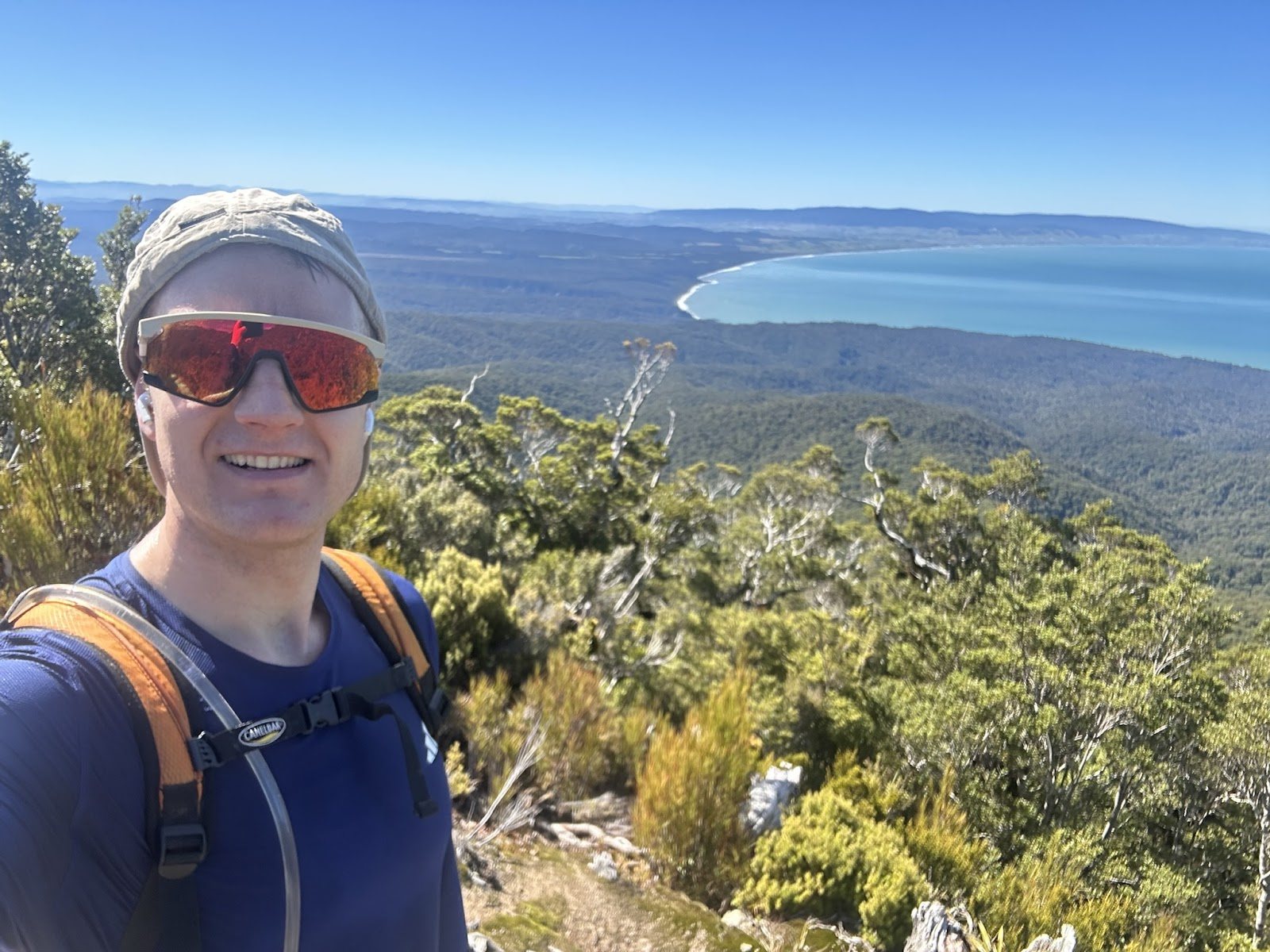
In 2026, Nick was back on his own, now working for an employer, which means far less spare time. He took one day off during the event, and used it for the Hump Ridge Track, mainly because he'd never been to that part of the South Island.
Some reviews say it's not quite as beautiful as the Kepler or the Abel Tasman. Nick thinks that's possibly slightly true, and also very harsh, because it's still very beautiful. Everywhere you drive here looks like a postcard.
That's the tricky thing about New Zealand. Every beach I've been to is amazing. They're all so beautiful you get used to it, and we've got such high standards over here.
It's the newest Great Walk, and you can tell. The signposts are a lot less clear, and you can go wrong. Nick did.
A wrong turn in the dark
He started early, in the dark, and missed a signpost. He saw one saying track entrance, with a big track in front of him, and went down it. He hadn't downloaded a map on any app, because the other Great Walks had been so well signposted, and there was no internet. He calls it such an error on his part, one he should never have made. All he had was a screenshot of the route from the DOC website.
The route follows the coast, then you either turn up the mountain first or carry on along the coast and climb on the way back. This track went straight inland. When he could just about get a GPS fix on Google, he was miles from the coast. He kept going, and the track eventually brought him back to the coast, after 21 kilometres.
So he had a decision: go back to the car and call it a day, or go for it. He didn't have the next day free, so he went for it. As Nick puts it:
"that was the right decision, but I absolutely would not tell people to make the same decision"
He'd packed food and water for roughly 12 hours, which he thought was more than he needed. He walked 78 kilometres in total, and the last 20 were absolutely brutal, even though the terrain was easy going, because he'd run out of everything. The last stretch was in the dark. The coast was fine, but the final bit to the car park goes through the bush, and he had no real torch, only his phone.
Back at the car
Nick sat on the ground against the car tyre for about 10 minutes with his head back and didn't move. He was absolutely ruined. That night he slept dreadfully, pouring with sweat, as his body recovered.
He was never worried for his life. It wasn't really cold, and there are no snakes here. The one thing that concerned him was that on a new, less well signposted track, he passed very few people. If he'd twisted an ankle, the only person who knew where he was would have been his host where he was staying.
When we recorded, I told him a PLB is super easy to hire in New Zealand, and that's your speed dial to the helicopter if you break your ankle. He hadn't known that, and said it sounds exactly like what he needs. Snakes won't get you here, but the weather might.
Pace, food and hitting the ultra wall
Apart from a few skips here and there, Nick walks the whole way, aiming for 10 minutes per kilometre whatever the terrain. On the flat that's a quick but sustainable walk. Uphill he's working really hard. Downhill is absolutely brutal, because it's about how much your legs can take, more than how fit you are.
He's learned to stop and eat proper food every few hours, for 10 minutes or so, which really helps. He takes rice, electrolytes, and still a lot of brownies.
The ultra wall
When he ran out of food on the Hump Ridge, his mind started playing tricks on him, and the last 20 kilometres were mentally tough as well. Nick says it has a name: the ultra wall. Lots of people hit it on ultramarathons or very long walks and runs. Your body is completely out of glycogen, your brain is searching for fuel, and you're left in a raw state. Some people even chase it.
"It's an emotional place to be, but it can be almost quite freeing because you've got no filter in your mind."
You're feeling the sore feet, knees and hips and the heavy bag, and you're also thinking about your family and the things that truly matter. It's different every time, though the pain is always the same. Some people feel anger at getting themselves there, some feel overwhelmed, and a lot of people cry, sometimes at a sad song. Nick says there's nothing wrong with that: some of the toughest people on the planet cry while they do this stuff, and the body keeps going. And to be clear, the plan for the Hump Ridge was to get back to the car nice and tired, with nothing extreme.
I'd be the one crying at the sad song. I like to live inside my comfort zone. Our slow paddle from Cape Reinga to Auckland was 500 kilometres, and the days were long and tough, but we never hit a wall like that, because the whole point was to take it slow and appreciate the coast. The hard parts for us were emotional: the logistics, and deciding every day whether to go out in the conditions or wait again.
Why New Zealand, and what's next
At home, Nick has responsibilities, people who depend on him and a house to look after. Being away is relaxing in itself, and New Zealand in particular gives him space to think:
"Even flying into New Zealand, you can feel how remote it is, which is very attractive to me. It's perfectly set up for the outdoors."
He thinks it's the remoteness, the scenery, and a culture that's relatable to home, so you don't feel too far out of place. He looked at bike rides here too, and there's loads of mountain biking, and the kayaking, which amazingly is one of the Great Walks, but walking is what he's chosen for this phase of his life.
Next on his list:
- The Heaphy Track, because it's the longest. He has no idea yet how he'll do the logistics, so he might need a friend to help.
- The Routeburn, because of where it is. He's thought about doing it as an out-and-back.
- The Milford, because of where that is too.
- Climbing Mount Cook. He's done some mountain climbing before, and it's very much on his list.
I haven't walked the whole Routeburn either. I've gone up from the Glenorchy end to the halfway point and back, and done the other side to Key Summit, so I've done sections. I need to get back and do the whole thing. That's the burden for all of us who live here: the more of New Zealand you see, the more you find you haven't seen, and the bucket list just gets longer.
Places from this episode
- Tauranga
- Coromandel
- Rotorua
- Taupō
- Hobbiton
- Tongariro Northern Circuit
- Te Anau
- Kepler Track
- Queenstown
- Abel Tasman Coast Track
- Heaphy Track
- Christchurch
- Hump Ridge Track
- Routeburn Track
- Key Summit
- Milford Track
- Mount Cook (Aoraki)
Links from this episode
- Follow Abigail on Instagram: instagram.com/abigailhannnah
- Follow Aotearoa Adventures on Instagram: instagram.com/aotearoa_adventures_
More like this
- Southland's Five Great Walks in Five Days with Simon Patton
- Hitchhiking and New Zealand's Great Walks with Howie McFadyen
- From First Tramp to Paparoa and all the Great Walks with Nicola Harvie
- From Beginner Trail Running to Setting Course Records with David Haunschmidt
Until then, keep adventuring :)
The ultimate
NZ road trip adventure guide
Packed with insider tips and stunning photography, this is the only resource you need to plan your journey.