
Spotify Apple Podcasts Everywhere else Download
I was really excited about this one, because I'd been wanting someone to properly talk about whitewater on the show. And it's close to home: my husband has been getting into whitewater, and so far he hasn't convinced me to get on a river (I find the water here so cold).
Ryan Lucas grew up sporty in Hamilton, and kayaking was his chosen sport for almost ten years. It took over his life, to say the least. These days he's based in Queenstown, skis more than he paddles, and works as a videographer and photographer.
So we start on his home river, the Kaituna, and how a wobbly, intimidating first year turned into a passion. Then Ryan tells the story of his accident at Tauranga-Taupō Falls, and what it took to run a big waterfall again. Plus his favourite rivers around the country, rafting and packrafting, how he keeps a camera dry on the river, and his advice if you're starting out.
In this episode
- How Ryan got into whitewater kayaking
- The accident at Tauranga-Taupō Falls
- Running big waterfalls again
- Kayaking now, from Queenstown
- Best whitewater rivers in New Zealand
- Rafting and packrafting
- Filming and photography on the river
- Getting started in whitewater kayaking
How Ryan got into whitewater kayaking
Ryan has been into sport since he could walk. He thanks his dad, a runner and a pretty athletic person, for the outdoorsy side. He did athletics through school and a bit of mountaineering at a very young age, and as a very high-energy kid, sport was his outlet.
He remembers his first time in a kayak pretty clearly. A childhood friend took him down his home river, the Kaituna, in a tandem kayak, over the Okere Falls. Ryan wasn't in control whatsoever, but it was his first true taste of whitewater, and an awesome experience. Tandem trips like that run commercially on the Kaituna too, alongside the rafting.
About a year later, at an adventure school he went to through high school, he paddled a single whitewater kayak for the first time.
The hard first year
Ryan admits the start was hard. A whitewater kayak feels very unstable the first time, nothing like a sea kayak or a sit-on-top, so it was quite intimidating, and he didn't enjoy it as much as he'd thought he would. Being upside down is a different thing too.
He spent about a year dabbling, going on trips with high school friends to rivers around the North Island, before any of them had their licences. He had a few beat downs. But he was set on trying the sport, so he kept persevering, paddling a few days a week over summer at Okere Falls.
Then it clicked. He could get down the river confidently without flipping, and it took over his life. He remembers sitting at the bottom of the Kaituna and deciding to give it a proper shot:
"I found this sport I have never had. Feeling like this or being this passionate about something"
I love that click. Not everyone gets one: sometimes a thing grows on you slowly, and suddenly you look up ten years later.
The accident at Tauranga-Taupō Falls
Ryan calls it a very, very heavy day, and one he's very grateful for, given the overall outcome. It was February, and you don't forget the date.
He and a paddling friend from Quebec had been on a good roll, paddling back-to-back days and chasing the recent rainfall through the flooded rivers. So the two of them spontaneously drove from Okere Falls to run the Tauranga-Taupō waterfall, near Tūrangi and Lake Taupō. They hiked in for a couple of hours, a pretty full-on, physical hike, dragging their kayaks through dense native bush.
They got there in the nick of time for daylight. His friend decided to save it for another day. It looked so good, so glorious, and they'd worked so hard to get there, that Ryan went for it.
What went wrong
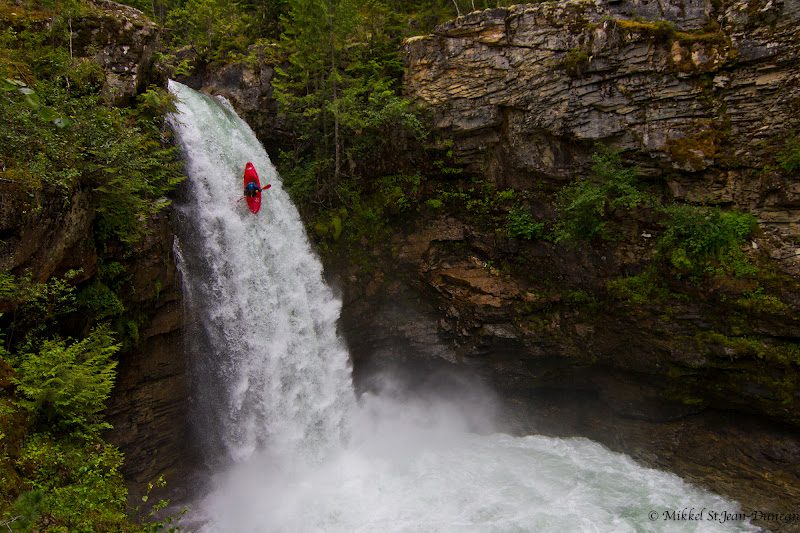
On a waterfall that size, you want to stay vertical in the kayak the whole time, so you penetrate the aerated water at the bottom and it breaks your fall. If you land dead flat, you take the impact on your back, and that's when accidents like broken vertebrae happen.
Ryan went flat very early on, pancake flat, and it felt horrible. He braced for impact, and his head took the brunt of the hit on the cockpit of his kayak. He was knocked unconscious.
He was under the water for three minutes, held up against a wall by strong water. His friend managed to get him out of that hard position, pulled him from the water completely unconscious, with no life in him, and revived him.
When Ryan came round, he had no idea where he was or what had happened. They still had to get out of the gorge and off the river. They'd made mistakes: neither had a PLB or a Garmin inReach, which Ryan now carries every time. So they paddled down as far as they could until dark, his friend went and called for help, and they got a little fire going. In the morning, a helicopter dropped a line and towed him out.
Years on, his friend's actions still move him:
"Completely saved my life I wouldn't be here if it wasn't for him"
It was just the two of them, and his friend kept enough composure to do everything right.
I could hear the emotion in Ryan's voice as he told it. In hindsight you can look at what went wrong and how to do it better. In the moment, all you've got is your instincts and your decision making.
For Ryan, that's kayaking. It's a risky sport, so you train, you spend time on the water together, and above all:
"you got to have each other's backs out there and accidents do happen"
The whole thing was caught on their GoPros, and after some mixed feelings about using the footage, they agreed to it being part of a National Geographic survival series. The episode is on YouTube. Ryan's warning: it's a heavy watch, very visual, and you see everything unfold.
Running big waterfalls again
Ryan spent a few days in hospital and, considering, had nothing broken. He felt physically able to paddle within three weeks, left it a month to let his head settle, then got back on the Kaituna. He wanted to keep paddling.
The hardest hurdle was running a big waterfall again. That's what had gone wrong, so it was a complete head game, with flashes of it happening again.
He wanted to get that fear out of the way, so later that year he went to California, one of the best places in the world to kayak, in the High Sierra and the Sacramento Valley. He paddled a river with a number of big waterfalls, building into it. On the first one, he had a perfect line and was yelling at the bottom.
That broke the cycle. He'd studied the footage of what he did that day, and he knew he'd made a mistake. Doing it again the right way was a bloody good feeling. He knows that might sound a little hectic, since in a way he cheated death. But back then, kayaking was his identity, and he didn't want to stop.
Kayaking now, from Queenstown
Now in his thirties, Ryan has eased off the big waterfalls. They took a toll on his body.
He still tries to get out a few days a week over summer, because it feels wrong not to. He calls it the medicine he needs. It's his roots, and when he's paddling with his mates he can forget about everything else. He's put the time in, so he's probably better at kayaking than anything else, which makes it all the more enjoyable.
He used to avoid other sports in case he got hurt and couldn't kayak, even mountain biking. These days he enjoys simply paddling. He's a lot more open-minded too, and in Queenstown you have to be, with so many epic things to do: mountain biking, skiing (he skis more than he kayaks now) and good kayaking on the doorstep.
I love that self-awareness. Everything's for a season.
Best whitewater rivers in New Zealand
My husband Isaac is a kayaker who has got into whitewater in the last year or two, and he was heading to Murchison over New Year when we recorded.
Ryan's picks:
- Kaituna River and Okere Falls. His home river, and the best all-round river to learn on and build your skills.
- Hokitika. The hotspot for something more hardcore, along with the whole West Coast region.
- Nevis River. Near Queenstown, and in the spring months one of New Zealand's very best whitewater runs.
- Fiordland. Very rain dependent, but when the rain is pouring it's a good place to be if you're into whitewater.
- Murchison. Home to what Ryan calls the main kayaking school in New Zealand, with surrounding rivers that are ideal for learning.
I'd never have thought of Fiordland as a whitewater spot, because I picture all mountains and lakes.
A taste of the river for visitors
If you want to try whitewater before committing, Ryan's answer is his home river. The Kaituna is something special: short, sharp and exciting, with water that gets extremely warm over the summer months. Murchison is the other spot for learning.
Around Queenstown, the Shotover is the big commercial rafting river, and the Kawarau is a good river from intermediate onwards. They're both free flowing, which means they flow every day of the year.
The Kaituna sounds like the taster I need, since the cold is my excuse at the moment.
Rafting and packrafting
To me, rafting and kayaking go hand in hand, with packrafting as another sport right alongside.
Ryan tries to stick to kayaking and wouldn't call himself a raft guide. But his childhood friend started a rafting company on the Kaituna over ten years ago, and as it got busier, Ryan fell into working there: running safety boat, taking photos and doing the jobs in between.
Coming round to packrafting
Coming from a whitewater background, Ryan and his mates always made jokes about packrafts. They look so funny.
Then, within the last few years, he tried packrafting on a big, pretty savage film mission with a friend on the West Coast. They were self-supported the whole way, and they couldn't have hiked that distance to that location with whitewater boats (you could in a heli). He does content for a packrafting company in Queenstown now. But if he can whitewater boat down a river, that's still the cream of the crop for him.
Filming and photography on the river
Ryan's background in film and photography is whitewater: that's how he got into documenting their journeys. Cameras aren't cheap, and they're not supposed to get wet, but it can be done.
His setup:
- A dry bag between his legs. He uses really good, military-grade dry bags, with a duffel bag inside. Watershed dry bags are his recommendation, and he says every kayaker uses them.
- Fewer lenses. Try not to bring them all. Maybe one favourite.
- Something to dry your hands.
- Shoot from the shore. He has shot from the boat, but tries not to, because it's sketchier. Even in an eddy, the water is moving, so you almost need one hand on the shoreline and one on the camera. If he knows the river, he'll lead first, jump ahead of the crew and get out in certain spots to film.
On a multi-day trip, with your gear loaded in the back and the camera between your legs, it gets quite heavy, and trying to capture content on top of that is a different thing again.
That's reassuring, because Isaac wants to get into photography on the river, and I'm very nervous about our expensive camera gear going in the boat with him. Getting out to shoot sounds like a better idea.
Getting started in whitewater kayaking
The beginning is the hardest part, Ryan says. It's a bit scary paddling down a rapid when you don't know whether you'll flip, and you have very little control at first. Whitewater boat designs have got better since he started, and it helps hugely if you're a water person, into swimming or surfing. Otherwise, it's a matter of mustering through those early times, as with life in general.
His best tips:
- Don't rush into things. It's an awesome sport, and it can be dangerous.
- Know your safety.
- Surround yourself with good people. He got to where he did in kayaking because of the people around him.
- Find a mentor. Someone with more skills who can take you under their wing.
- Join a whitewater club. They have mentors, good setups and facilities to get you into the sport.
Isaac is in a university whitewater club, and they're out almost every weekend over summer. It's awesome to see the community he's found. Being able to rent the club's boats and gear and chip in for petrol makes it so much more accessible.
Ryan agrees it's ideal. Whitewater clubs are so key, and it's awesome that New Zealand has those setups, because boats aren't cheap these days, and he can't count how many times he's seen university clubs on the Kaituna.
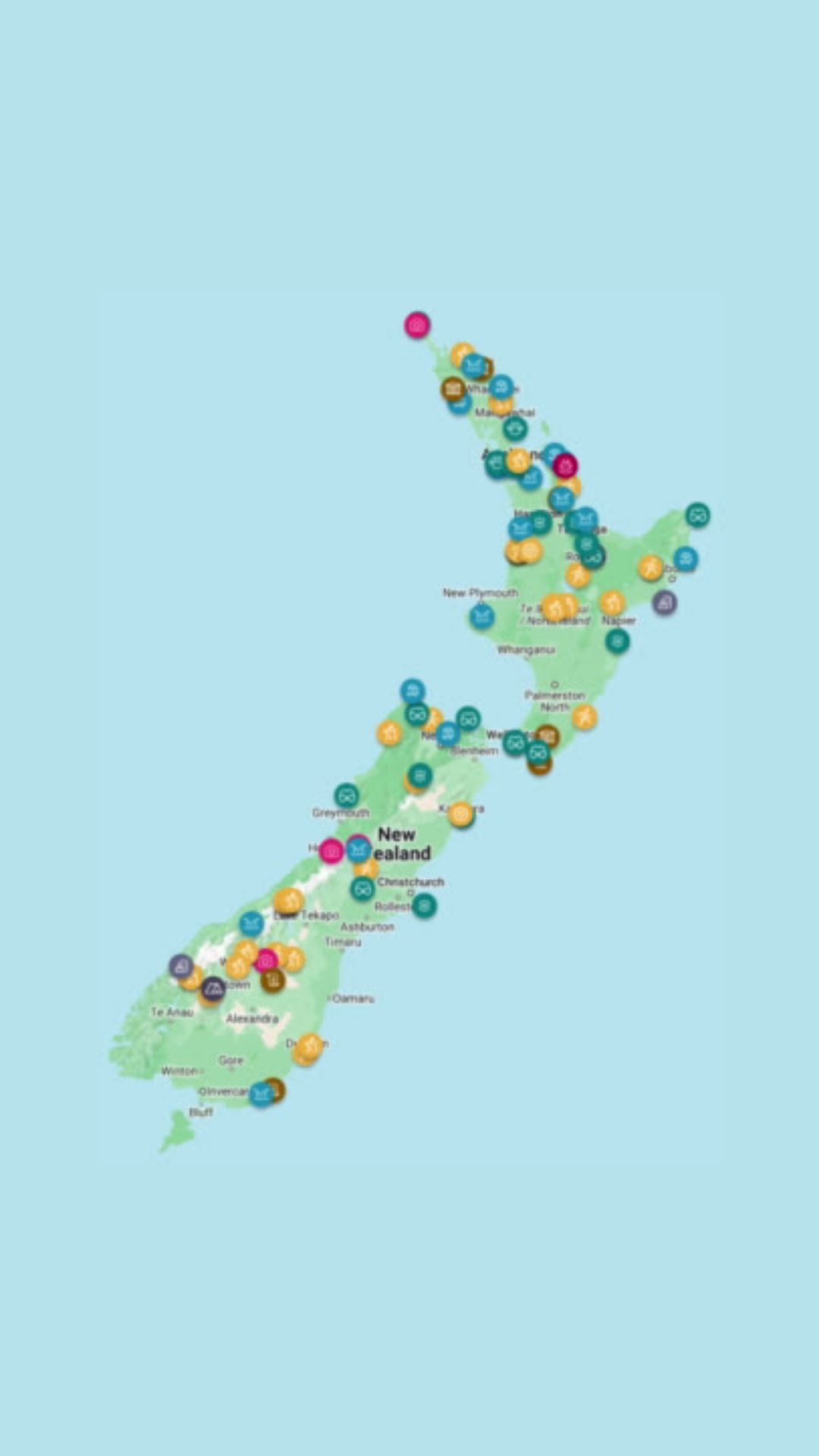
Places from this episode
- Kaituna River
- Okere Falls
- Hamilton
- Tauranga-Taupō Falls
- Tūrangi
- Lake Taupō
- Queenstown
- West Coast
- Hokitika
- Nevis River
- Fiordland
- Murchison
- Shotover River
- Kawarau River
Follow Ryan
Ryan shares his whitewater adventures on Instagram, and his film and photography business, Social Focus, is on Instagram too.
Links from this episode
- Follow Ryan on Instagram: instagram.com/ryanbabybirdlucas/
- Follow Abigail on Instagram: instagram.com/abigailhannnah
- Follow Aotearoa Adventures on Instagram: instagram.com/aotearoa_adventures_
More like this
- First-Time Packraft Adventures and Hiking to Lake Crucible with Charlotte
- Packrafting and Tramping 48 Days Through Fiordland with Penzy Dinsdale
- A Ski-Packraft-Tramping Expedition from Mt Aspiring to Waiatoto with Nick Pascoe
- Having an Accident on the Routeburn and a Five Year Recovery Journey with Sarah Heffron
Until then, keep adventuring :)
The ultimate
NZ road trip adventure guide
Packed with insider tips and stunning photography, this is the only resource you need to plan your journey.