Episode 090
A Solo Kayak Circumnavigation of New Zealand Over 5800km with Red Paterson

Episode 090
A Solo Kayak Circumnavigation of New Zealand Over 5800km with Red Paterson
Spotify Apple Podcasts Everywhere else Download
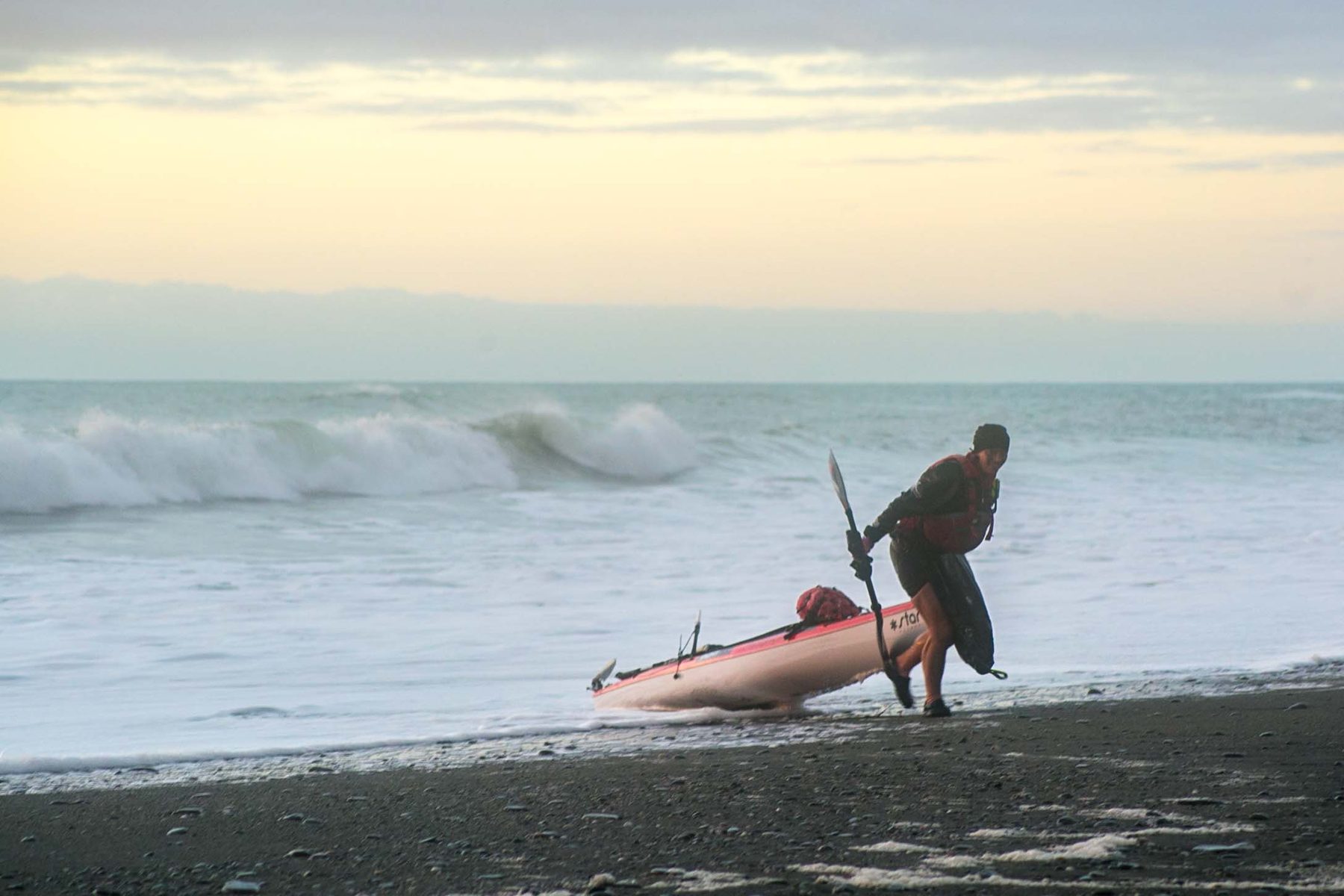
Red kayaked around the whole coastline of Aotearoa, Stewart Island included, on her own. It took her 432 days. And her claim to fame, in her words, is that she didn't go home until she'd finished the whole entire thing.
What I love about Red is how the idea started. One nice morning paddle in the Coromandel, a throwaway comment in the car, and then years of everyone around her saying she was mad, crazy and would die trying. Which, of course, only made her want it more. She calls it driven and determined. Her family had other words for it.
I got really really into this one. We go back to her childhood fishing trips, then how a kayaker who'd barely paddled found a mentor, set a date and pushed off from Takapuna. She talks me through the plan, the scariest moments (a rip north of Māhia and a very bad landing on the Heaphy Track), the dolphins, Stewart Island and Fiordland, and her advice for anyone with an idea that won't go away.
In this episode
- Red's story, from the Waikato to the ocean
- Where the kayak around New Zealand idea came from
- Learning to sea kayak and finding a mentor
- Planning a kayak around New Zealand
- The hardest moments of the circumnavigation
- Favourite moments: dolphins, Stewart Island and Fiordland
- Red's advice for chasing a big idea
Red's story, from the Waikato to the ocean
Most people in the adventure world know her as Red, and some know her as Lynn. She was born and raised in the Waikato, so the only water around was the Waikato River, where they'd jump in for a swim once in a while or go eeling.
Her family was sporty, and their holidays were always in the North Island. After haymaking season, they'd go camping in the Coromandel, at Papa Aroha on the Thames side.
Fishing was a big part of it. If you went out in the dinghy with her dad, you were out before the sun rose and stayed until he was ready to go in, so they were made to love it. And the ocean was always Red's happy place. On her trip, lighting fires or fishing on her own, she'd wonder where she'd learned that, then remember it was from when she was little.
As a kid, she says, she was driven and determined. Her family would have called it pigheaded and very stubborn. If someone said she couldn't swim ten lengths, she'd swim a hundred, and she can still feel that bubbling underneath when someone says she can't do something.
I'm with her. In high school, I was told not to apply for the grade five music theory exam because I'd fail. I put in all the work, and passed.
Where the kayak around New Zealand idea came from
Red still spent her summers in the Coromandel, at Hahei Beach, and one year she did the kayaking trip from the end of the beach around to Cathedral Cove, in a tandem. It was a wonderful morning.
A few days later she was driving with her partner, stuck behind a group of touring cyclists with panniers and their whole world strapped to their bikes. (She smiles about it now, thinking of Duncan.) She said it would be great to bike around New Zealand, then agreed with her partner that it was ridiculous: far too many hills. Then she looked down at the blue ocean below and said you could kayak around New Zealand instead. That would be far nicer. Her partner told her she was mad and would die trying. It was that "you can't" again, and the idea stuck.
A couple of years later, at a New Year barbecue, she said it again and the whole barbecue burst out laughing. You're mad, you're insane, you're going to die. She couldn't get it out of her head, so she stored it away, said she'd do it when she turned 50, and channelled her energy into marathons and triathlons.
Learning to sea kayak and finding a mentor
Red wasn't an experienced kayaker. She did long-distance ocean swim races, so the ocean didn't scare her, but she'd mostly floated around on the water because she found it relaxing.
Her partner bought her kayaking lessons, and she started paddling with a local Auckland kayaking group, though she never dared tell anyone there what she wanted to do. She worked in hospitality and events, so her busy days were everyone else's days off, and she became more of a solo paddler, on borrowed kayaks.
I had a chat to Jordan a few episodes ago, who ran all the Great Walks in ten days, and he asked what would happen if every single person acted on the crazy idea people tell them they have.
Red learned something along the way that changed how she heard all those doubters:
"if you tell anybody you want to do something and they find it really scary. They're always going to come back. Their first answer is going to be their fears."
The more people said she couldn't, the more energy it gave her.
The chicken soup story
A close friend's dad was a kayaker Red really looked up to, with a map on his garage wall pinned with the sections of coast he'd paddled, from Cape Reinga down to Gisborne. After hours of winter Eskimo rolling, over chicken soup, she told him she wanted to kayak around New Zealand. She hoped he'd say it was so cool and he'd come with her. Instead, he slowly looked up from his soup, said he wouldn't even do that, and looked back down.
At the end of the soup, he gave her two books by Paul Caffyn, the first person to kayak around New Zealand, and said to read them first because they might put her off. She skimmed the hard, tough bits, gave the books back a few weeks later and said she still wanted to do it.
Then life got tougher at home, and she needed space and a purpose. In the January, her mentor asked if she still wanted to do it. More than ever, she said, and she'd leave at Labour Weekend that year, at the start of daylight saving, for the longer paddling hours. He told her she had a whole lot of work to do. When she told her partner, she said not to worry: she'd be away for 180 days.
I think putting a date on something makes it so much more real. It's a hard deadline to work towards.
Planning a kayak around New Zealand
Red's philosophy was the same as running a marathon: paddle every day, and don't think about the next one. Looking at six thousand kilometres all at once is a mind fry. So she broke it down. On Google Maps the coastline came out at about 5,000 kilometres. At 30 kilometres a day, that's about 180 days. Ten kilometres in the morning, lunch and dinner, and you're there.
A campervan instead of a tent
Other paddlers had always taken tents. Red planned a small campervan with a support person driving it, meeting her at the end of each day wherever there was a road, and she'd camp where there wasn't. Days lost to weather, she'd make up with a double.
She'd trained for about 18 months. She pushed off from Takapuna and paddled 16 days in a row, all the way round to Gisborne. They were flying.
What changed on the water
Then the coastline got more challenging and the weather started to flex her muscles, and Red slowed down. The plan of landing for lunch went out the window, because most damage happens when you're launching or landing. Coming in on a big wave could break something. So she'd float around on the water, eat her lunch and keep going. And rather than land on a gnarly surf beach, she'd paddle another three hours to find a calm one.
I asked about Castle Point, because the waves there are huge. Red says the beaches there are unforgiving, not sand, and make Muriwai and Auckland's west coast look easy to land on.
On days she couldn't paddle, the campervan made it possible to scope out the coastline 50 kilometres ahead, talk to the locals and check and recheck where she'd land. They always had a plan A, B and C, and as long as Red stuck to them, it worked. She became quite spiritual out there. Mother Nature teaches you lessons, and if you don't learn from them, she gives you a good slap with a couple of waves.
The hardest moments of the circumnavigation
Red never let herself say she'd succeed until she was round the top of Cape Reinga. But you start to think you've got this, and that's when the lessons come.
A rip north of Māhia Peninsula
Coming in north of Māhia Peninsula, there were a couple of errors, hers and the support crew's, about where she should land. She came out of her kayak in a big set of waves and made the number one error: she let her kayak go, thinking she was a really good swimmer and would swim in. She got caught in a horrific rip and was in the water for at least 45 minutes as the sun went down.
By the time she reached the beach, her body temperature was lower than it should be. She couldn't stand or speak, and her support crew had called an ambulance, which horrified her. She signed herself out of hospital, walked out in her gown and took the next day off to have a good chat to herself. She kept it quiet until the book was written, though her partner found out when the ambulance bill arrived.
There were other bad days: a kayak flying off the campervan roof just after 30 days, and a number of black eyes from waves throwing the kayak into her head.
Wiped out near Heaphy Hut
The worst moment came on the West Coast of the South Island, at the start of June. Red planned to land on a beach on the Heaphy Track, 15 kilometres in, just before Heaphy Hut. Her partner hiked in with all his gear so they could stay overnight, and she'd launch again the next day in a good weather window.
Out the back of the waves, she had two voices on her shoulders: Red, and a meek, mild one called Marjorie (her middle name, which she really hates). Marjorie whispered that it was going to be really bad. Red said don't be stupid, you came all this way.
So she surfed in on a big wave. About ten metres from the sand, the wave sucked back and she couldn't paddle forward, and she could hear a really loud wave building behind her. It drove her to the bottom of the ocean and blew her out of the cockpit, and she couldn't roll. When she got out, the kayak was on the beach with its back end completely exploded off.
She burst into tears and threw big tantrums (she's glad there's no video footage). They walked 15 kilometres back along the Heaphy at sunset, leaving the kayak, then hiked back in the next day and carried it out on their shoulders. It was make or break, she says. She had to dig deep: Marjorie needed to be listened to, and Red needed to shut up.
I think the outdoors brings out every human emotion, from pure joy and awe to rage and frustration, especially when you're solo. Day to day, we don't have the space to feel it all.
Red agrees. Out there you lose your rag, there's no one to see it, and it's cathartic:
"Once you drag yourself out of the emotion and you've got no more tears left. It's a great feeling because it's as though you've cleaned it out and it's gone. And you can refocus and you reset."
Thelma and Louise
She'd killed that kayak. The spare on the campervan roof was its twin (she'd named them Thelma and Louise), and Louise was the White Witch: the one she didn't like paddling, and the one that gave her her first impressive black eye. The White Witch finished the whole journey. Red still has her, and the kayak she disliked the most became her bestie.
Favourite moments: dolphins, Stewart Island and Fiordland
Red has three.
- Dolphins into Gore Bay. Seeing dolphins was always one of her favourite things. On New Year's Day she pushed off from Kaikōura, and dolphins followed her for three hours down the coast to Gore Bay. As she went in to surf onto the beach, they turned and bid her farewell. She still gets goosebumps.
- Stewart Island. Pushing off from Bluff, everyone except four people thought she was heading into Fiordland. She was actually going to Stewart Island. Her mentor had told her not to, that it could end her whole trip, so she didn't tell him. She went round Stewart Island and nailed it in eleven days, and loved every moment. She still goes back.
- Fiordland. Everybody said she'd be scared there and it would be horrible. She spent 45 days paddling Fiordland solo, and it was epically extraordinary.
I asked Red about Mark Jones, who had just done three or four weeks kayaking Fiordland when we recorded. It sounds like it can get quite gnarly in there, with not many beaches to land on.
Red's tips for that coast: know where you're going. Stick to plan A, and have a plan B, in case Google Maps has the beach wrong: it makes beaches look better than they are. And wait for your weather windows, because the weather is unkind if you get hit by it.
Red's advice for chasing a big idea
Red's advice, for a kayak expedition or any idea that won't go away, is not to listen to the doubters, the naysayers and the keyboard warriors. Go for what feels good in your stomach. When she talks to kids at schools, she tells them this:
"if someone says you can't do something just look over your shoulder and say yes I can just watch me"
If something makes you smile and makes you want to do it, within reason and within the law, only you can tell whether you can achieve it.
A school teacher once told Red she was physically lazy and would never achieve anything. She was doing 80 and 90 kilometre days.
I think there will always be people who doubt you, and you've got to block them out at the end of the day.
Red's book and the Mental Health Foundation
Red has written a book about the journey, and there's an audiobook too. You can find copies at local libraries or buy one through her website, and every time someone buys a book, she donates to the Mental Health Foundation of New Zealand. When she gives talks she doesn't charge a fee. She asks people to buy a book or make a donation instead.
Mental health was part of what pushed her out there. Red believes we all need fresh air, exercise and time away from our screens and social media, to listen to nature and breathe. When someone is struggling, she says, it's like a grenade going off in your lap, and everyone around them needs that too.
These days she also helps mentor others to kayak.
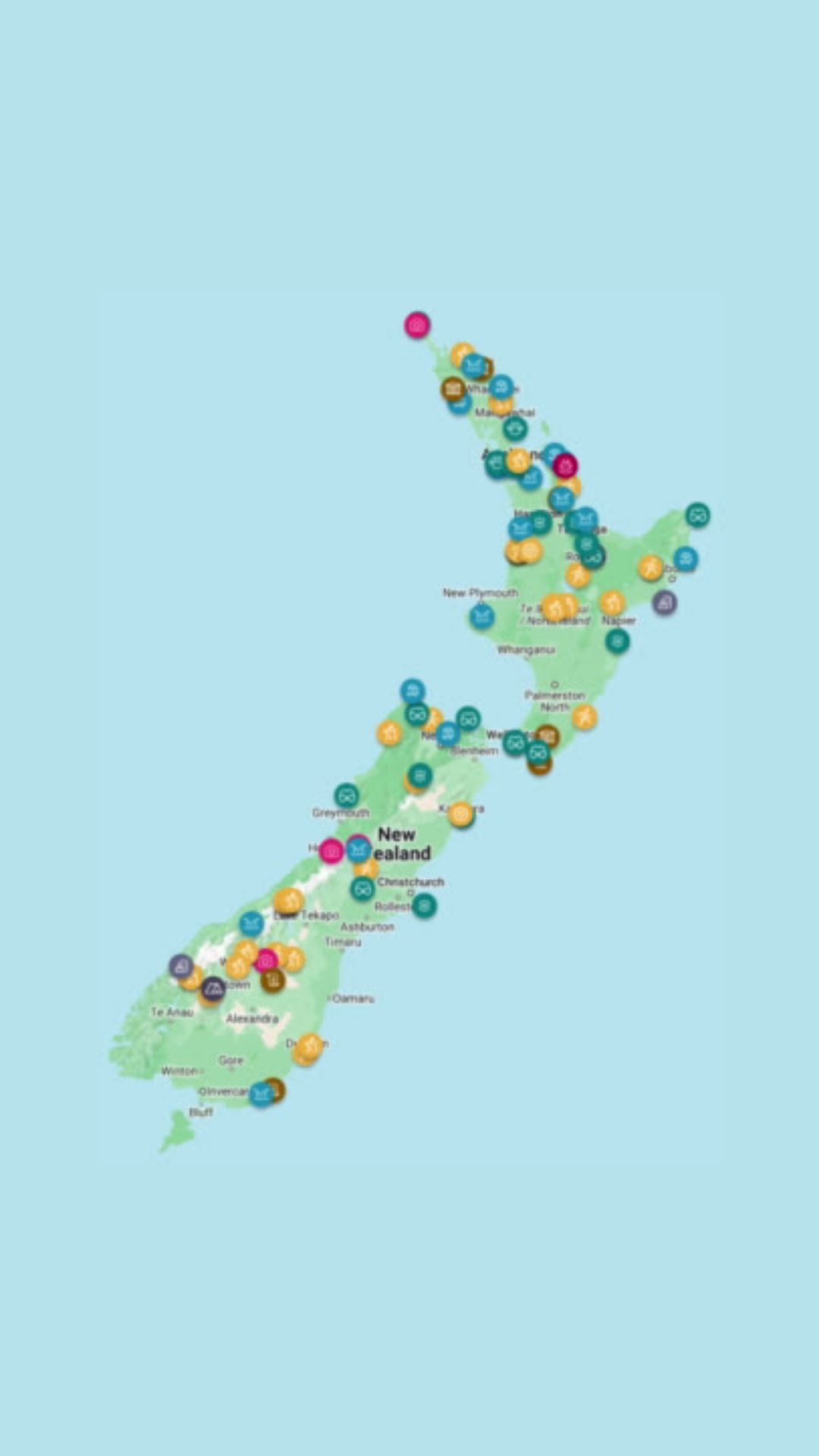
Places from this episode
- Waikato River
- Coromandel
- Papa Aroha
- Hahei Beach
- Cathedral Cove
- Takapuna
- Gisborne
- Castle Point
- Muriwai
- Cape Reinga
- Māhia Peninsula
- West Coast
- Heaphy Track
- Heaphy Hut
- Kaikōura
- Gore Bay
- Bluff
- Stewart Island
- Fiordland
More like this
- 122-Day Self-Supported North Island Sea Kayak Expedition with Joel Buckley
- A Team Effort to Sea Kayak the North Island of New Zealand with Paddle for Purpose
- Finishing a Two Month Slow Paddle Sea Kayak Expedition with Isaac and Abigail
- Sea Kayaking for Beginners and the Best of the Hauraki Gulf with Bennett Lim
Until then, keep adventuring :)
The ultimate
NZ road trip adventure guide
Packed with insider tips and stunning photography, this is the only resource you need to plan your journey.