
Episode 127
Tramping an Unmarked Route to Gorge River with Elvisa Van Der Leden
Spotify Apple Podcasts Everywhere else Download
Gorge River has been on my mind ever since I had Chris Long on the show, so I was really excited when Elvisa told me she'd tramped there. On an unmarked route. With a map she'd laminated herself (more on that map later).
Elvisa grew up in Tokoroa, a forestry and farming town, then found her way into marine science, diving and conservation. And she's packed a lot in: the sub-Antarctic islands on a scholarship, and a 30th birthday at Gorge River (yes, really).
So we cover how she got into conservation, those 13 days in the sub-Antarctic, and then the Gorge River trip day by day: the four-wheel drive track in, the bluff, the river crossing that went wrong and the very lovely welcome at the end. Plus her advice for going off track, and why conservation matters so so much in Aotearoa.
In this episode
- How Elvisa got into conservation
- The sub-Antarctic islands on a scholarship
- The unmarked route to Gorge River
- A river crossing that went wrong
- Arriving at Gorge River
- Advice for going off track
- Why conservation matters in Aotearoa
How Elvisa got into conservation
Elvisa grew up in Tokoroa. She's Filipino European, and she often felt like a floater between communities. Because it's a forestry and farming town, she grew up thinking every tree was a pine tree.
Then she moved to Wellington to study media, saw Zealandia and discovered that people walk in nature for fun. There she met her now husband, who introduced her to science and ignited her curiosity about conservation.
They decided to study marine science together, at Toi Ohomai in Tauranga. The course has a scuba diving side, so there's lots of fieldwork to go with the theory.
After graduating with her marine studies diploma, Elvisa started volunteering in conservation with the Department of Conservation and the Western Bay Wildlife Trust. One of her first jobs was weighing penguins after the Rena accident.
The sub-Antarctic islands on a scholarship
Elvisa went to the sub-Antarctic islands on a Heritage Expeditions scholarship, which when we recorded was open to 18 to 30 year olds. She was 30 and figured her age would rule her out, but during COVID they opened up more berths, so she got one. She turned 31 in the middle of the sub-Antarctic ocean.
The trip was 13 days. Between islands, specialists gave lectures on the ship about each island's history, and with her conservation background, Elvisa was most interested in the predator control.
The other scholars ranged from doctors and vets to students and an albatross scientist. The Bounty Islands, she says, were not very bountiful, except with birds and guano. A very stinky place.
The unmarked route to Gorge River
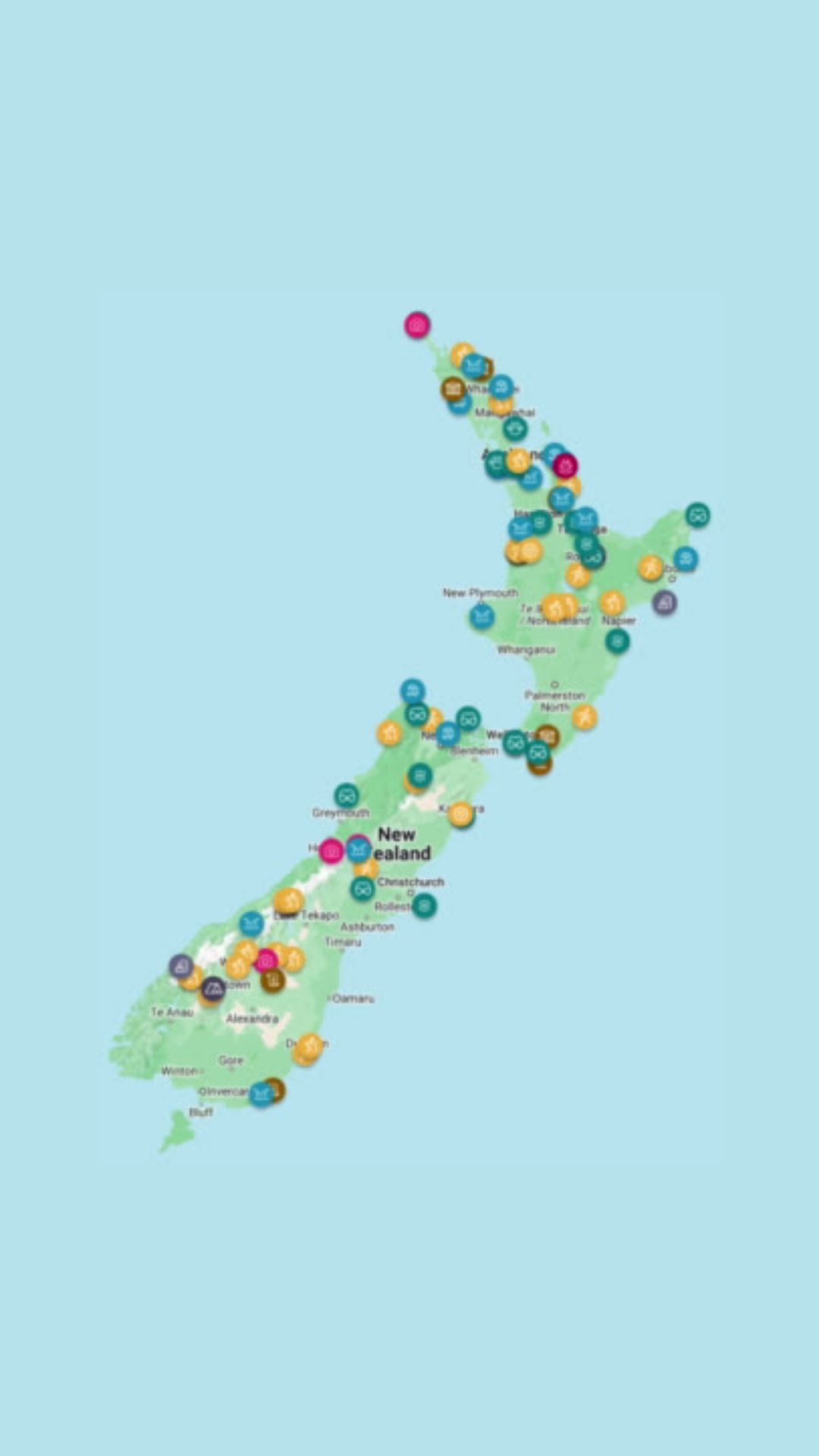
Gorge River is on the West Coast, between Haast and the fiords, about 40 kilometres from the nearest road end. Elvisa walked it the year before the sub-Antarctic trip, with her now husband and another couple.
It started with Chris Long's YouTube channel. The off-grid Long family can seem mysterious, but Chris's videos and interviews with his dad, Robert, show very outgoing, chatty people, and Chris even had a video on how to get to their cabin.
Then Elvisa met Catherine Long, Chris's mum, at the International Penguin Conference. They talked penguins, and Catherine was so down to earth and humble, and she said to come and visit. So Elvisa did.
When I had Chris on, he told me about growing up there, jumping over those boulders as a little kid.
Planning with a laminated map
Chris's sister told her she'd be fine: follow the track at the bluff, and there's a ford at the Cascade River. She sent a link to a map online, and Elvisa printed it on two sides of one sheet and laminated it.
Elvisa hadn't done any homework on river crossings and forgot her PLB, but the other couple had one.
Day one: Cascade River to the Hope River hut
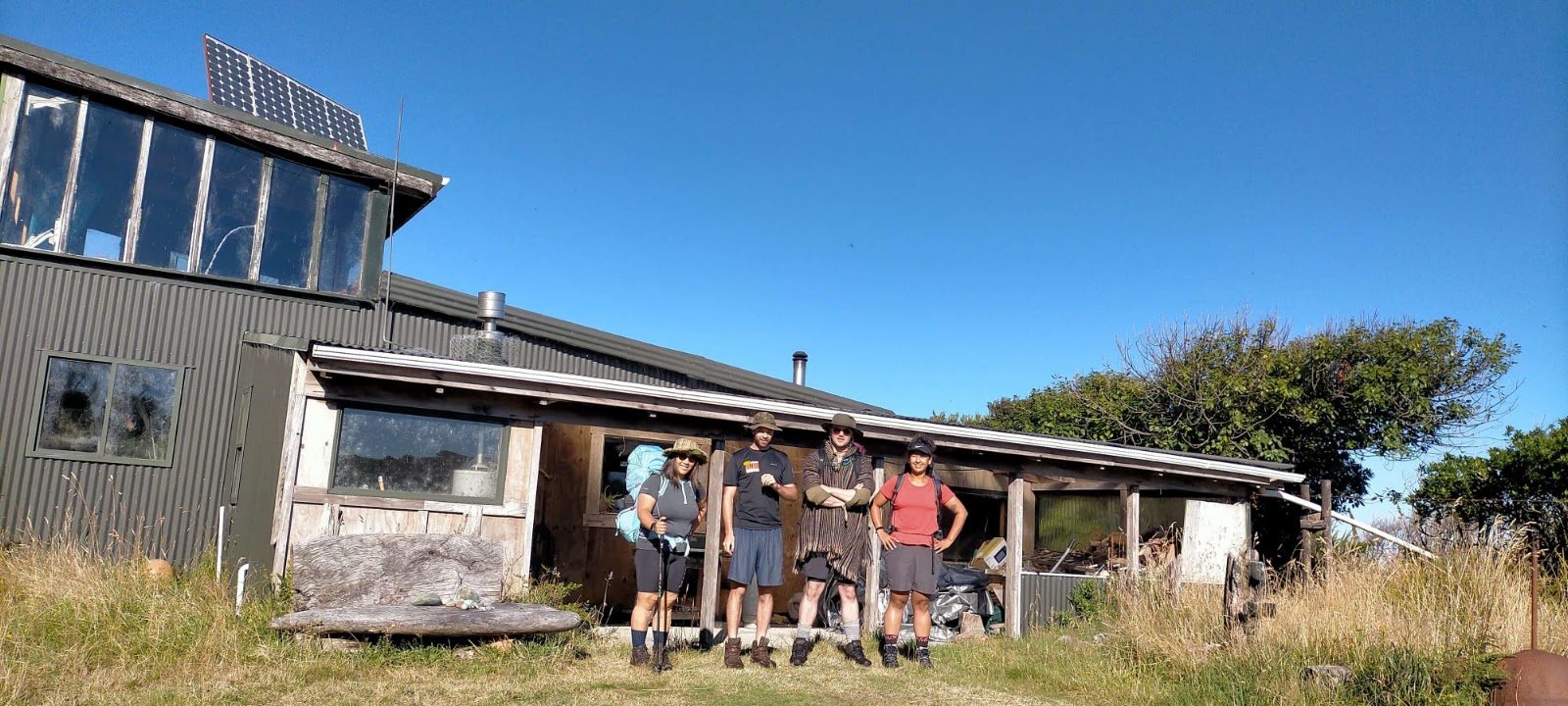
You park up and walk about 20 kilometres from the Cascade River inland, then out to the coast, where there's a hut you can rent. That's where they stayed the first night.
The track starts as an unmaintained four-wheel drive track. People do drive it from the Cascade River to the Hope River, as a big team effort, with chainsaws and spades for the sticky situations.
It didn't go to plan. They crossed the Cascade at the wrong place, then walked past a turnoff and spent a while disagreeing about it (very respectfully and very tiredly) before backtracking to find the track.
Then they all felt they should have reached the Hope River by now. Elvisa asked her friends to check both sides of the map lined up, and they pointed out she'd cropped a chunk of the route off it. Her boo-boo, she says.
Day two: rock hopping down the coast
Day two is another 20 kilometres, all the way down the coastline, right on the beach, with no track. For some of it you're rock hopping, which can be treacherous if you've got weak ankles. Elvisa loves rock hopping, so she really enjoyed it.
You see a bay and think Gorge River might be behind it, walk for a couple of hours, and it's not that bay. Maybe the next one.
Then comes the bluff, where you have to follow a track over the top, or you can get trapped by the tide. A very clear set of buoys shows the way up a pretty good track. You're meant to go along the ridge and down the other side, but nobody had cleared the bush for a while, so they couldn't find the track down. They went back along the ridge and followed deer tracks down, trying not to go over the ledge.
Her friend's partner, a trail runner, was their scout and mountain goat, running ahead and coming back to tell them they were still in the same spot. For the rest of them, it was very, very tiring:
"I thought I was fit. And then I did that track. And I was like, I am not as fit as I thought I was."
A river crossing that went wrong
After the map mix-up, backtracking to the river, they couldn't find the ford (they found it on the way back out). So they crossed where the river was narrow, linking arms, with the smallest in the middle, as her friend told them.
The water came up to Elvisa's chest, packs on. The force of the stream swept her feet out from under her, and the other three held on for dear life so she didn't float off down the river. She can hear the river people cringing.
Her lessons from the crossings:
- Stay calm. Elvisa was a competitive swimmer growing up, and she's confident in the water. In that moment she was terrified they'd let go, and she screamed in her friend's ear, which made them nervous and afraid. If you do get let go, try to get to the edge of the river.
- Slow down in the water. She had her poles, but on the shallower bits (still up to her thighs or knees) she powered through. A few hours later, her legs hurt.
"slow down in the water because even though you think that you're being efficient by being fast, the force of the river is actually really exhausting and you don't realize it at the time"
Elvisa had only ever done managed tracks before, so this was one of the most intrepid hikes she's ever done.
20 kilometres a day on a normal trail is a lot, at least for me. When it isn't an easy DOC track, you have to be there mentally so much more.
Arriving at Gorge River
Reaching Gorge River was Elvisa's favourite moment. She called out as they'd been told to, then stood there, mentally drained, waiting for the little ferry dinghy. It turns out there's a shallow bar at the river mouth, and they could have walked over.
A 30th birthday cake
They'd planned to stay two nights. The next morning was Elvisa's 30th birthday, and they caught up with Catherine and Robert in their hut. Catherine made her a birthday cake. Elvisa didn't expect any gifts: the gift was being there with good people, and the weather was beautiful.
Then Chris's sister and her colleague, surveying the area by helicopter for DOC, dropped in to say happy birthday. Elvisa already knew them both.
One of the group, who isn't much of a rock hopper, asked if the pilot could drop them back at the other hut. Part of Elvisa wanted the second night, but the exhausted part thought that sounded like a really nice idea. So the pilot flew them back 20 kilometres up the coast, and they paid back at Haast.
From there they walked out. The only things they came across on the whole trip were deer, lots of deer, and cows.
All my best tramps have ended in a boat ride. When I walked in to Lake Tarawera with a couple of friends, carrying all our water because there's no safe drinking water at the campsite, we hopped on the water taxi to finish.
Advice for going off track
If you're like Elvisa was, and not experienced on less maintained, non-DOC tracks, her advice for going off track:
- Bring a fit scout, someone who can run ahead and run for help if you need it.
- Carry a personal locator beacon, no matter where you are.
- Go with people you love and know well. That love will withstand any challenges you come across as a group. Even with her boo-boos, her friends recognised she was the reason they got to experience it, and she was very grateful for the friend who did her homework on river crossings.
"Bring people who are happy to put in a bit of work, who bring some skill and knowledge and that you love."
Elvisa calls herself really overconfident, so she's grateful her friends feel safe enough to challenge her.
I'm usually the more conservative one in a group, asking what happens if the weather comes in sooner. It's really important to know who's good at river crossings, who's good at maps, and who'll ask whether you should really do this.
Why conservation matters in Aotearoa
Pathways into conservation
Elvisa sucked at science in high school and signed up for the diving. There are lots of pathways in, and the field needs different skills:
- Field work. A technical diver friend of hers collects data for NIWA, while some marine biologists who analyse the data hate the water.
- Physical work. People who'd rather skip the thinky parts can volunteer for predator trapping or maintenance.
- Trades. Builders often move into maintaining tracks.
Protecting what's left
Most New Zealanders consider themselves conservationists, Elvisa says, yet a lot of people struggle with managing feral cats. The main thing about conservation, as she puts it, is protecting what is left and avoiding extinction.
She once met an older man who'd handled three now-extinct species in his conservation career, and it gave her a lot more motivation. Native species here are very unlikely to survive in other ecosystems, because of Aotearoa's unique evolution. Birds are pollinators, and they spread the seeds of kai for themselves and for Māori communities and others who live off the land.
As an environmental educator, she taught children the ethics of predator control. Hedgehogs, Elvisa says, are the main predator of ground-nesting birds' eggs. In England they're protected, because that's their natural habitat, with predators of their own. Here nothing controls them, and humans brought them over, so their numbers need to come down to give the birds a chance.
Predator-free places to visit
Elvisa's list of predator-free places: Tiritiri Matangi Island, Rotokare, and Maungatautari in the Waikato. On her one visit to Tiritiri Matangi, she met Suzy Cato, who put on her Suzy Cato glasses for a photo.
My own eureka moment came on Tiritiri Matangi too. I didn't realise how loud the bush is supposed to be: a constant chorus of birdsong. I was there with a friend who's great at identifying birds, and we saw a kōkako and heard it call, a bit like a squeaky door, a bit like a ghost. When I go tramping, the bush is so quiet. It's supposed to be really loud.
Places from this episode
- Gorge River
- Haast
- Cascade River
- Hope River
- West Coast
- Tokoroa
- Wellington
- Zealandia
- Tauranga
- Sub-Antarctic islands
- Bounty Islands
- Tiritiri Matangi Island
- Rotokare
- Maungatautari
Follow Elvisa
- Instagram: @amiable_elvie
- LinkedIn, for anyone who wants to talk conservation mahi and getting a foot in the door
Links from this episode
- Follow Elvisa on Instagram: instagram.com/amiable_elvie
- Tramping to Gorge River
- Follow Abigail on Instagram: instagram.com/abigailhannnah
- Follow Aotearoa Adventures on Instagram: instagram.com/aotearoa_adventures_
More like this
- Packrafting the Landsborough River from the West Coast with Tom Waters
- Packrafting and Tramping 48 Days Through Fiordland with Penzy Dinsdale
- Hiking the Three Passes Route from Arthur's Pass to Hokitika with Pat Nolan
- A Sea Kayaking Expedition Along the Fiordland Coast with Mark Jones
Until then, keep adventuring :)
The ultimate
NZ road trip adventure guide
Packed with insider tips and stunning photography, this is the only resource you need to plan your journey.