Episode 130
Full Time Vanlife and Staying Off-Grid in Fiordland with Jord and Tom

Episode 130
Full Time Vanlife and Staying Off-Grid in Fiordland with Jord and Tom
Spotify Apple Podcasts Everywhere else Download
This one came at such good timing for us. We've been kitting out our van for what feels like forever (you think it's a five-minute job and it takes an hour, you think it's a week and it takes three), and when we recorded, we were hoping to be living on the road by the end of the month.
So who better to talk to than Jord and Tom? Together they're Tasman Travels, and they travel New Zealand full-time in their caravan. They'd been on the road on and off for about seven years when we recorded, and only sharing it for about a year.
This post covers how they went from fancy European holidays to a van in Australia, living in a small space as a couple, their four setups and why they landed on a caravan, why they keep going back to Fiordland, how they stay off-grid there for weeks at a time, and their tips for a first van life trip here.
In this episode
- From European holidays to a van in Australia
- Living in a small space as a couple
- Four setups, from a Ford Transit to a caravan
- Why Fiordland keeps calling them back
- Staying off-grid in Fiordland for weeks
- Tips for a first van life trip in New Zealand
- What's next for Tasman Travels
From European holidays to a van in Australia
The travel bug didn't start in childhood. Living in the UK, Jord and Tom had busy jobs and busy lives, with nice cars and two or three week holidays to fancy hotels in Europe.
Then in 2016 they went to Australia for three weeks, a once-in-a-lifetime holiday to Sydney, Melbourne and Perth. They fell in love with the bush, the wildlife and the weather. Standing at a lookout in the Blue Mountains, they turned to each other and said they needed to live there.
Back home, they researched how to make it work, took secondments from work as a fallback, and moved for a year. Their plan was to buy a van and see the country (with one condition from Jord: a shower every day, which, reality check, doesn't always happen in van life).
Their first van was a fully kitted-out 1998 Ford Transit called Muriel, bought in Newcastle, north of Sydney, after sitting in someone's garage for a few years. They took her up through the middle of Australia, with no air con and no shower beyond the cheap camping kind that lasts about two weeks.
They've had some crazy times: 47-degree heat in Coober Pedy, and later breaking down outside Twizel at Christmas. As they put it:
"You need so much less when you live van life than you would ever need in a house. And it's really refreshing to get back down to what's actually necessary"
Their advice is to talk to your boss about time away: most businesses have a procedure, and you won't be the first to ask. Have some money behind you too. Any setup is a setup, but you have to maintain the vehicle, sometimes pay for campsites where there's no freedom camping, and (in their case) replace an engine.
Living in a small space as a couple
Australia gave them some of the hardest times as a couple. The heat had a lot to do with it, and they'd gone from spending most days apart in the UK to being together in a van constantly, often working together too. They met a lot of couples on the road who couldn't make it work. But their shared passion for nature, hiking and being outdoors helped, and they came out much stronger.
Some of the toughest times in our relationship have been on the road too. There's something about being cooped up together.
Their tips:
- Patience. Be more patient with each other than you normally would, because there's no getting away from it.
- Don't be messy. Wires, cups and plates left out take up far more space than in a house, and the small things are what start an argument. (Where are the keys? Every day.)
- Separate spaces. If you can, get a setup where one of you can get up early and sit up the front without disturbing the other.
Four setups, from a Ford Transit to a caravan
Queenie the HiAce and Matilda the Sprinter
When they came to Aotearoa, they started with a little HiAce pop-top called Queenie. It was too small. Next came Matilda, a seven-metre Sprinter, which was nearly the perfect van. They hated making the bed every day, so Tom watched a lot of YouTube and built a raised, fixed bed, with a garage underneath and a separate seating area up the front. They packed her with solar, put all-terrain tyres on after sliding off a road in Northland, and swapped the curtains for thermal shades.
Then, after a trip to Vietnam staying in lovely hotels, they came back to grey, cold, rainy New Zealand and the Sprinter felt too small. So they started looking at other options.
Why a caravan
At the Christchurch motorhome show, the bigger motorhomes they wanted were ridiculously expensive for what they are. They reckon some manufacturers don't give you enough solar or batteries, which pushes you into holiday parks. Then friends who've been in van life forever told them to look at caravans, and the one they bought was right there at the show, and so much cheaper.
They weren't sure they'd like a caravan, and now they much prefer it. They can tow somewhere, set up for a week, and do tiki tours in the ute. That suits them now, because they want to slow down and stay put for longer.
Their rule of thumb: if you live on the road full-time or most of the time, a caravan is better, because your home stays set up while you go off and do your chores. For a few weeks or months, getting to Aoraki and Fiordland and all the points of interest, a van or motorhome will probably suit you better.
That's my puzzle right now: one vehicle, and sometimes separate places to be.
Their must-have list
Each setup has a must-have list that changes the longer you live in it. For them now:
- A fixed bed both of them can get out of.
- Room to do yoga inside when the weather's rubbish.
- Standing height.
Our first van was a tiny Delica, where you lay on the bed to shimmy your pants on, so even our HiAce felt like an upgrade.
Why Fiordland keeps calling them back
For Jord and Tom, it's the nature, the views, the lack of people, the fresh air and some of the clearest rivers in the country. They first went to Milford Sound in the HiAce years ago, then spent a good part of a winter in Fiordland in the Sprinter, when there was nobody there. You get every weather under the sun in a day, and like Scotland, it doesn't matter that it's raining. Deep in the national park, it reminds them of what the country once was, covered in bush.
Last spring they spent six weeks there for a YouTube series, basing the caravan in the national park and doing activities they didn't know the area offered: a jet boat, a film at the cinema in Te Anau, good food and a helicopter flight.
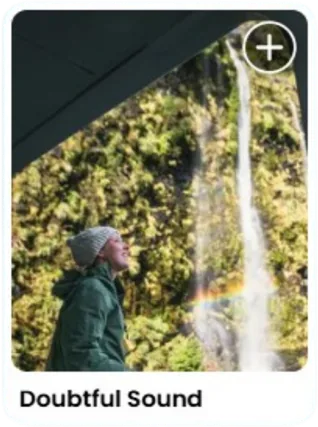
Doubtful Sound by helicopter
The helicopter was the highlight. They'd never been in one before, and they flew over to Doubtful Sound, seeing the country from just above it, with two landings on top of mountains. At one landing, a kea came by with no tag on its ankle, a proper wild one. They looked at each other and thought how lucky they are to live here.
They'd never been on a jet boat either, and it was really smooth, nothing like they expected. They say their driver was the youngest jet boat pilot in the country, and she was superb.
Kea and Great Walks
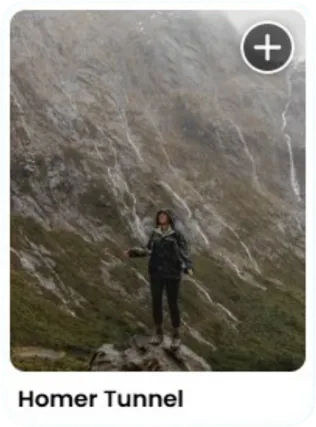
Kea weren't coming down to the campsites. On the Milford Sound side of the Homer Tunnel they're everywhere.
I've seen more kea in Fiordland in winter than in summer, so I wonder if they come down lower when it's colder. One morning at Sealy Tarns, in Aoraki, a bunch of kea joined us for sunrise, and a lot had no tags.
Jord and Tom don't like leaving their van overnight, so they do Great Walks as day walks. The Milford Track was sensational, and they walked the Routeburn in two halves, one side from Glenorchy and the other from Fiordland. Fiordland is up there as a favourite, and the West Coast is the comparable one, a region they still want to explore more.
Staying off-grid in Fiordland for weeks
Starlink
There's mostly no internet, and Tom works in IT remotely, so they need signal. They have Starlink, and Tom converted the dish to 12 volts so it uses less power (there's now a Starlink Mini that runs on 12 volts anyway). Their plan can be paused when they don't need it. Out in the bush with friends on Wireless Nation, they've had full signal when their friends had none.
Fuel, water and food
Te Anau is the last place to get fuel that doesn't cost an arm and a leg before a big stint in the national park.
- Fuel: the ute holds 74 litres, plus a 20-litre jerry can.
- Water: 200 litres of fresh water in the caravan, plus 40 litres in tubs. They use clean river water for washing up and boiling, which saves the drinking water.
- Food: tins, and a full fridge right before they go in. Fresh fruit and veg is usually what draws them out.
That way they can stay two or three weeks.
Sandflies
You get used to them. There's no getting around them, and it means most people don't stay long. When they left Fiordland, the inside of the van was covered in dead sandflies. They try to avoid chemicals, and use a natural repellent made in Ōkārito, on the West Coast, a nice-smelling syrupy lotion that works quite well.
My trick: sandflies don't fly very fast, so I walk laps while I eat dinner.
DOC campsites on the Milford Road
They stay at DOC campsites as much as possible, on the annual pass, which pays for itself so quickly and covers most DOC sites. Their setup is now 14 metres long, so some camps are off limits. On the Milford Road, Deer Flat and Cascade Creek are both ginormous campsites (you might get a few scratches going in). On their last visit, they bagged a spot right next to the river, surrounded by lupins.
Tips for a first van life trip in New Zealand
- Go off-grid capable. If you're renting, find a company that gives the van some solar and off-grid capability, or you'll spend all your money at holiday parks. If you're buying, get one that's off-grid capable or cheap to make so, even with a portable solar panel.
- Get the apps. They're NZMCA members and use its app. Otherwise, WikiCamps was their bible in Australia, and people add freedom camps you'd never know about.
- Check the council. Every council has different bylaws. When we recorded, they said you could legally camp on the side of the road pretty much anywhere in Christchurch, with no signs to tell you.
- Ask people. They get questions all the time. Whangārei used to be amazing for freedom camping, for example.
- Follow the rules. In their words:
"There are rules to follow, to keep freedom camps free, to respect the bush, respect nature, respect people."
- Carry your rubbish. There aren't enough recycling bins in New Zealand. They tie two cheap rucksacks that close properly to the back of the van, so rubbish can go outside and off the ground, away from possums and weka.
Every council having different rules is a pet peeve of mine. My husband spends hours checking whether we're in the right district. And it's been sad to see so many freedom camps close over the last five years. They don't usually reopen.
What's next for Tasman Travels
They've already toured the whole motu, so these days they don't plan much, concentrate on places they adore, and fit in more festivals and events. There may be something big on the cards, all hush-hush when we recorded, but still in New Zealand.
And if you see them on the road, say hello. Kiwis are cool people who love to chat and help, they say, and meeting people is one of the best things about life on the road.
Places from this episode
- Fiordland
- Te Anau
- Milford Sound
- Doubtful Sound
- Homer Tunnel
- Milford Road
- Deer Flat
- Cascade Creek
- Milford Track
- Routeburn Track
- Glenorchy
- Aoraki
- Sealy Tarns
- West Coast
- Ōkārito
- Northland
- Whangārei
- Christchurch
- Twizel
Follow Jord and Tom
- Instagram, Facebook and YouTube: Tasman Travels
- Website: tasmantravels.com, for the gear they use
Links from this episode
- Follow Jord and Tom on Instagram: instagram.com/tasmantravels/
- Subscribe on YouTube: youtube.com/@TasmanTravels
- tasmantravels.com
- Follow Abigail on Instagram: instagram.com/abigailhannnah
- Follow Aotearoa Adventures on Instagram: instagram.com/aotearoa_adventures_
More like this
- Vanlife and Revisiting Favourite New Zealand Hidden Gems with Daniel Mauden
- Planning an Adult Gap Year to Full-Time Van Life with Sagar and Ami
- Living and Travelling in a Caravan as a Family with Bronson and Chelsea
- Living on the Road for Three Years with Goose and Ellen
Until then, keep adventuring :)
The ultimate
NZ road trip adventure guide
Packed with insider tips and stunning photography, this is the only resource you need to plan your journey.