
Spotify Apple Podcasts Everywhere else Download
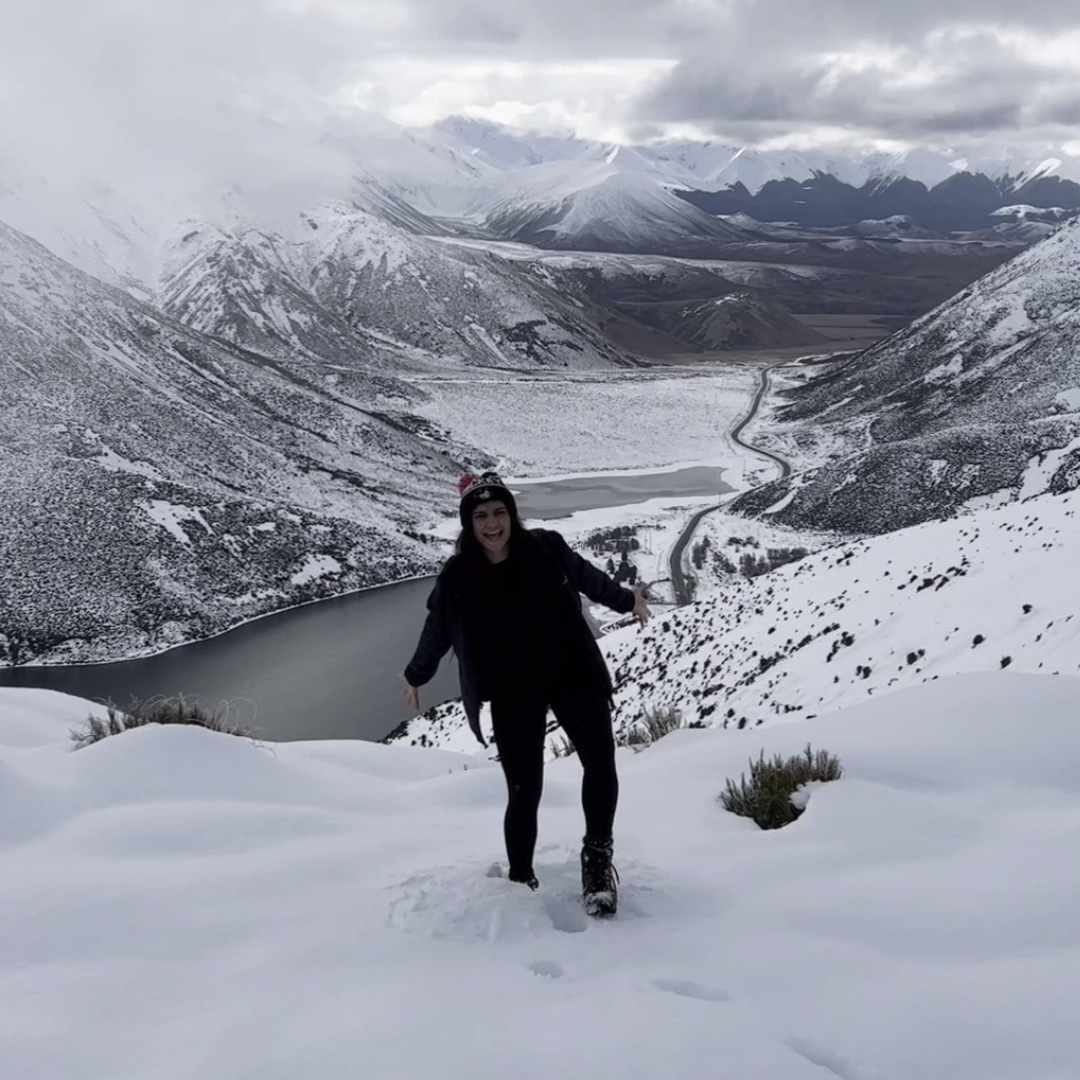
Kaelyn is the walker behind Miss Walk A Lot on Instagram, and her handle tells you most of what you need to know. She grew up in Rotorua, lives in Kirikiriroa, and after lockdowns left her so sick of being at home, she took herself on a solo day trip and fell in love with walking.
Kaelyn walks for all four corners of her health, and she shares how Te Whare Tapa Whā frames that, plus what kaitiakitanga looks like on a track. (I learnt a lot.)
So in this post: how Kaelyn found walking, getting up at stupid o'clock for sunrise on Taranaki, walking for wellbeing, two easy things we can all do to look after our tracks, and her favourite maunga, Mount Pirongia. Including the day she went looking for the tallest kahikatea and came out on a track she'd never heard of. Plus her advice for starting out, which is soooo relatable, and the Great Walks still on her list.
In this episode
- How Kaelyn found walking
- Fitting walks around work in Kirikiriroa
- Early starts and sunrise on Taranaki
- Te Whare Tapa Whā and walking for wellbeing
- Kaitiakitanga, kauri dieback and rubbish on tracks
- Mount Pirongia and the hunt for the tallest kahikatea
- Kaelyn's advice for new walkers
- Great Walks and national parks on her list
How Kaelyn found walking
Kaelyn walked a fair bit growing up. Her dad worked in the bush and took her with him while he planted a lot of trees, so she got familiar with the outdoors early. Later, her mum made walking part of her daily routine and dragged Kaelyn along every day after school. She had no choice.
As she got older, she went on adventures with friends to waterfalls, water holes and North Island beaches she hadn't heard of.
Her love for walking really took hold about two to three years before we recorded, after COVID. She was so sick of being at home and feeling like she couldn't go anywhere, and she hadn't realised how much she appreciated being outside her house. So she took herself on her first solo trip. It was only a day outing, and she fell in love. She decided she'd try to make walking part of her whole existence for the next year or so.
Fitting walks around work in Kirikiriroa
Kaelyn works in advertising. She craves time outside, so at work she builds up a kind of desperation for the next adventure.
So she's outdoors whenever she's free: before work, after work, weekends and holidays. She doesn't need to go far. Living in the CBD of Hamilton isn't exactly green, so she'll walk along the Waikato River and try to identify as many natives as she can, or go to a local park and read all the placards. It's her sanctuary, and she likes her solitude.
Early starts and sunrise on Taranaki
Getting outdoors doesn't come naturally to Kaelyn, and she'd love to say it does. She journals and self-reflects a lot, and ticking off a good day of mahi, exercise, food, water and sleep can feel mundane. A 4.30am alarm on a Saturday to climb a mountain for sunrise is hard after a week of early starts for work.
What gets her out is purpose. She's using her spare time purposefully, even when it's freezing and dark and she can't be bothered finding batteries for her head torch. Her reasoning:
"if you don't do it now, you're never gonna do it and you're gonna regret it. So just do it"
Then comes the reward, and a little ego trip: not many people will see what she's seeing that day, so joke's on you, she's having the time of her life (even though it's also miserable).
I've had to force myself out too. A couple of years ago I set out to walk up my local maunga a hundred times in a year. I started well, did nothing for months, then by August I was going up two or three times a day.
When I walked to the Tama Lakes in Tongariro National Park for sunrise, it was freezing, with frost and snow on the ground. Then the sun came up and touched the mountains, with all those phases of sunrise and that magical light, and I remembered why I do it.
Kaelyn's best example is Taranaki, which she climbed as part of her walking journey. She hated every second of it. They woke super early and reached the translator tower just in time for sunrise, which was so beautiful. Then she looked up at how far there was still to go. But they made the top just in time for it to be perfectly clear, with no cloud covering the summit, and it was so rewarding. Sometimes it's worth the struggle.
Te Whare Tapa Whā and walking for wellbeing
For Kaelyn, walking is a simple exercise that covers every dimension of your health.
Te Whare Tapa Whā frames that well. It's a Māori framework in the shape of a wharenui, where the four corners of the house are the four dimensions of your health: physical, mental, social and spiritual. A house isn't stable without all four, and it can't be built properly or comfortably unless they're balanced.
For her mental health, Kaelyn wanted something that felt brainless and mindful at the same time. After living in Australia for quite some time after her childhood, she'd almost disconnected from her spiritual and social wellbeing and lost touch with her heritage and lineage. Kaelyn is Māori, she's really proud of it, and she wanted to become familiar again with what that means to her.
Walking in places close to her roots, like going around the Blue Lake, meant she could connect with her tūpuna, her whānau and her roots on a spiritual and social level. Her physical health came along at the same time, so it turned into a win on all four corners.
There's so much more to walking than walking, too. You can eat food in really cool places, learn about the land and its custodians, find plants to forage, and learn about pest control and native wildlife. She reckons there's at least one thing in it for everyone.
Kaitiakitanga, kauri dieback and rubbish on tracks
As tangata whenua, Kaelyn values kaitiakitanga. Getting outdoors means treating the land as your home, with the respect it deserves, because it's a mutual relationship. She explains a philosophy in te ao Māori:
"We are the people of the land and we owe so much to it."
I asked her for ways Pākehā and manuhiri can practise that too, and she has two.
Clean your boots for kauri dieback. Kauri dieback is massive in the North Island. Kaelyn recently walked the Hakarimata Walkway at Ngāruawāhia, home of the Kīngitanga, and expected the area to be pristine and well looked after. There's a boot cleaning station at the start. She cleaned her shoes, then stood there untangling her earphones and watched a surprising number of people run through without bothering. She politely pointed out the cleaning gear. When we recorded, a track that veers off the main track had recently been closed because of kauri dieback. Cleaning your shoes takes only a few seconds, and it helps keep the rest of the track open.
There are plenty of these stations up in Auckland and Northland too, where I've done some hikes. It takes a minute, tops: a little spray, a little scrub.
Pack your rubbish out. Kaelyn has seen rubbish on most tracks she's walked, and she's picked up bag loads of it. Things fall out of pockets when you take your jacket off, so keep all your rubbish packed together in a bag. It's mostly a front country problem, and a friendly reminder doesn't hurt.
Mount Pirongia and the hunt for the tallest kahikatea
Kaelyn has a real spiritual attachment to Mount Pirongia, which she says a lot of people don't make the effort to visit. It was the first track she'd call difficult that she walked on her own.
Up there alone, she had a strange emotional moment where she wanted to break down and cry from utter joy. Later, her whānau told her about their big history on the maunga: it was a battleground, and some of her tūpuna are buried near it.
There's a lodge for school programmes, where Kaelyn went on camp as a kid (she'd forgotten until it looked familiar). There are lots of tracks, with walks up to peaks along the maunga that look out towards Raglan.
Getting lost on the Bell Track
One of her first tracks on Pirongia was a walk to the tallest kahikatea, estimated at three to four hours return. It was boggy and muddy, and she'd done no research, so she went through the cave without knowing what was coming: claustrophobic, tight, wet and full of bugs.
She couldn't see the sign for the tree at a swing bridge, so she crossed and kept going. By 4pm she realised she had no head torch, no food and nothing but water and an almost flat phone. Surely there'd be a clearing soon. Two hours later it was 6pm (summer, thank goodness, so still light), and she reached a sign for the Bell Track, a track she'd never heard of.
She walked all the way back to the car, with a lot of running. Checking her phone afterwards, she found she'd missed the tree because its sign was on the wrong side of the bridge. Looking back, she should have put a lot more effort into her safety. She has been back since, and found the tree.
I know that cave, and the Bell Track is the one I did, on an overnight hike in the middle of winter. It was super muddy, days planned as four hours ended up as nine or ten, and after fallen trees hid the orange triangles, it took about 25 minutes to find the way as it got dark. Kaelyn's story makes me want to give Pirongia a second chance on some of the better-travelled tracks.
Kaelyn's advice for new walkers
Kaelyn's list: do your research, keep safe, follow the orange arrows (she's made that mistake a number of times), and take extra food and warm clothes. Simple stuff that people still don't do.
Her learning curve came from starting.
"I'm a huge believer that no one's an expert overnight"
She didn't own the best gear, the best shoes or the lightest stuff. Small mistakes, like getting lost for a bit and finding your way back, are a terrifying but fun way to learn. Advice often contradicts itself, and buying her first pair of shoes with so many different recommendations was overwhelming, so she found her own feet (pun not intended).
I see two sides to that. Other people's mistakes can save you some hard bits, and you still have to find what works for you.
A few more of Kaelyn's tips:
- Read every sign and plaque. Some tracks are so educational.
- Camp if you like it. Her friends prefer huts, but she likes camping and saved up for quite a lightweight tent. It's worth carrying for a really cool spot to sleep.
- Plan the big ones, wing the rest. For longer overnight trips she plans thoroughly. If a track is closed, she'll jump on AllTrails and find another nearby to make the most of the weather, especially if she's flown down to the South Island.
- Just go. Friends who dread being dragged on a walk end up asking when the next one is.
She'll never forget the first time she lost reception on a track. She gasped out loud and almost gave herself a fright: she'd forgotten she was in the middle of nowhere.
Great Walks and national parks on her list
Kaelyn has hundreds of walks on her list, and she wants to explore more of Kahurangi National Park. She'd also like to finish every single Great Walk. She knows it's a touristy thing, and she's done three whole ones so far.
Her bigger goal is to walk at least one decent track in every national park, because they're all different and she wants to appreciate each of them.
Places from this episode
- Mount Pirongia
- Bell Track
- Raglan
- Hakarimata Walkway
- Ngāruawāhia
- Taranaki
- Tongariro National Park
- Tama Lakes
- Kahurangi National Park
- Waikato River
- Kirikiriroa (Hamilton)
- Rotorua
- Blue Lake
- Northland
Follow Kaelyn
Kaelyn shares her walks on Instagram as Miss Walk A Lot, and you can find her on Facebook under her own name.
Links from this episode
- Follow Kaelyn on Instagram: instagram.com/misswalkalot/
- Connect with Kaelyn on Facebook: facebook.com/misswalkalot
- Follow Abigail on Instagram: instagram.com/abigailhannnah
- Follow Aotearoa Adventures on Instagram: instagram.com/aotearoa_adventures_
More like this
- Slow Travel and Mental Wellbeing with Pamela Edmondson
- Getting the Most out of Local Weekend Trips with Ashley Elliott
- Solo Tramping the Mangamate Loop in Whirinaki Forest Park with Sharon Evans
- From Everest to NZ Expeditions to Local Microadventures with Tsewang Nuru Sherpa
Until then, keep adventuring :)
The ultimate
NZ road trip adventure guide
Packed with insider tips and stunning photography, this is the only resource you need to plan your journey.