Spotify Apple Podcasts Everywhere else Download
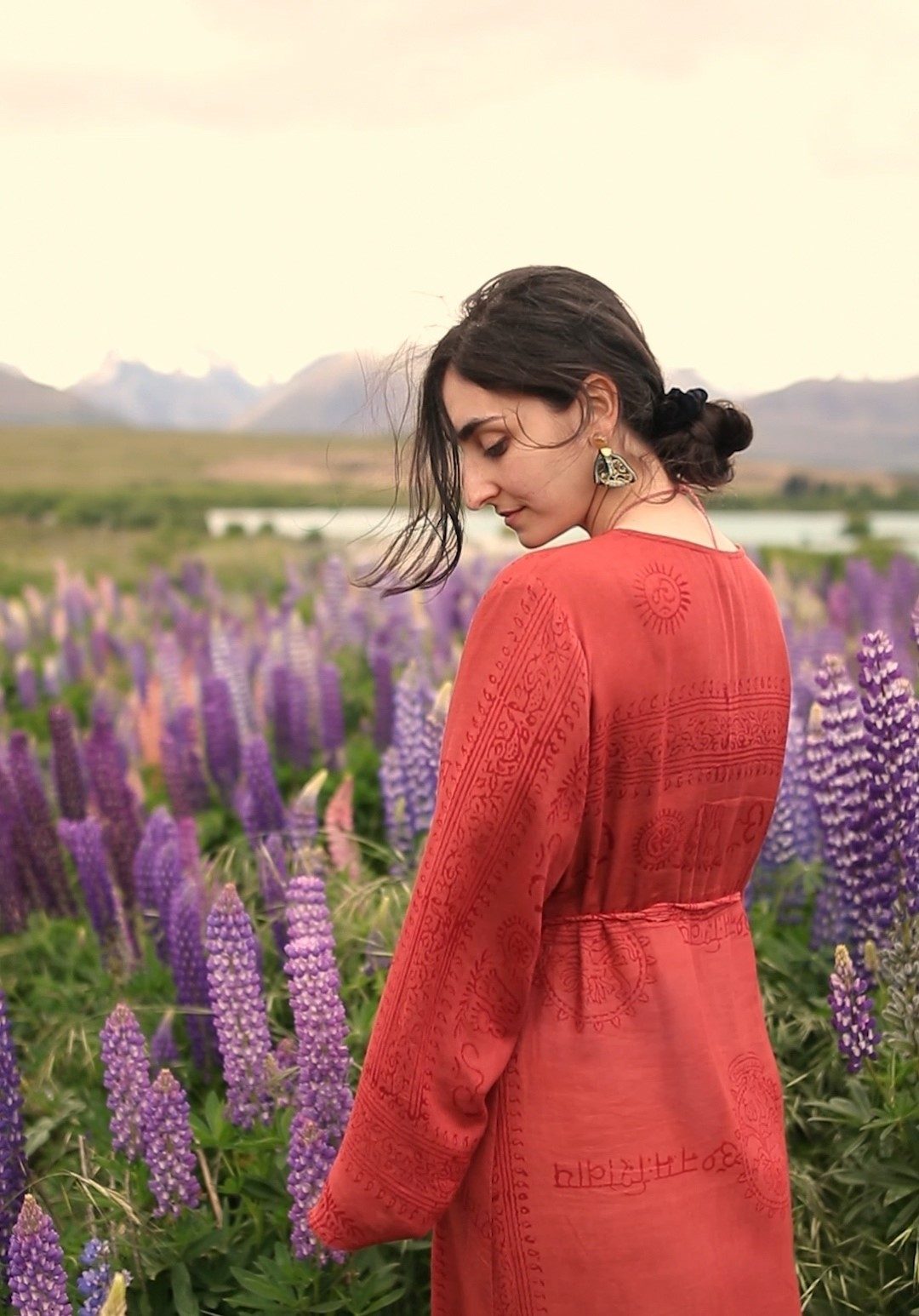
Pamela and I first met completely by accident. We'd been going back and forth in the DMs trying to meet up in Northland, kept missing each other, and then she spotted me sitting on the beach a couple of feet away. Small, small country.
And our stories are similar in a lot of ways. Pamela grew up in Lebanon and the United States, bought a one-way ticket to New Zealand about five years before we recorded, and calls herself an unintentional slow travel expert. She's a writer, photographer and videographer based in Wellington, always going off the beaten track to find solitude in nature (and some very good hidden spots).
So this one is a bit different. We talk about home and belonging, how slow road trips helped her through panic disorder, what a slow travel day looks like for her, and the tools she uses on hard days. Plus her tips if you want to start travelling slower. I loved this chat. It's soooo good for the soul.
In this episode
- From Lebanon to a one-way ticket to New Zealand
- Panic disorder and finding Wellington by car
- What slow travel means to Pamela
- A slow travel day on a New Zealand roadie
- Tools for the hard days
- Planning slowly and supporting local
- Pamela's tips for starting slow travel
From Lebanon to a one-way ticket to New Zealand
Pamela was born in Beirut, Lebanon, just as the war there was ending, and grew up with a sense of cautious newfound freedom. Her family travelled a bit around the Middle East, to Jordan and Syria, and visiting the Dead Sea was unforgettable. Mostly, though, they were in the mountains skiing, picking fruit and having picnics, or at the beach. In Lebanon the mountains are right on the coast, so you can ski and swim on the same day.
When she was 12, they moved to the United States. It was a really intense move: a different culture, different weather and different food. Travel stopped for a while, and she never quite settled into a sense of home. She didn't go back to Lebanon until right before the pandemic.
After university, Pamela got a job as a clinical research associate, travelling to clinics around the state to monitor clinical trials. The travel was the interesting part. Doing it on her own got her hooked on solo travel and gave her the confidence that she could do this by herself.
Something didn't feel right with her life at the time. When you move as a child, she says, you get a sense that you can't go home anymore, and you feel pulled between two places. She was deeply unhappy, and it took her a long time to learn that you have to cultivate a sense of home inside your own body. So one day she woke up and bought a one-way ticket to New Zealand. On her own, with no plan.
As she puts it:
"I always say it's graduating from feeling like you belong nowhere to feeling like you belong everywhere."
That one hit home for me. If you've listened to the pilot episode, you'll know I was in India until I was 18. It was very much home, but it was hard to belong there: I'm white, so everyone assumed I was a tourist. Then the opposite happened when I came to New Zealand, where I didn't have community, and it didn't feel like home either. I think anyone who's grown up across cultures and countries gets that feeling of having your feet in two places.
Panic disorder and finding Wellington by car
Arriving in New Zealand was amazing at first. Pamela travelled around for a while, met her partner in Wellington, and they hit the road for a few months. Then she ran out of money, came back to Wellington and got a regular nine to five.
That's when things took a turn. She'd always struggled with anxiety and depression, and she thinks she started processing everything she'd done. One day, on the bus home from work, she had a panic attack and had to get the driver to stop and let her off. After that, they kept coming, every day. She found her way to slow travel as one tool among others for getting out of a panic disorder, which is how she describes it: life revolving around preventing the next panic attack, with everything else taking a back seat.
It was brutal. She stopped seeing friends, could hardly go to the shop, and would sit on the couch, paralysed.
Her partner knows Wellington really well, so one day he suggested a drive. Then he took her out day after day, and that's how Pamela fell in love with Wellington: the rolling hills, sea cliffs and beaches, beautiful on a good day and still beautiful on a bad one.
Her insides felt like such a dangerous place that she latched on to her surroundings, which felt safe and peaceful. Over time it hit her more and more, and she started crying in the car all the time. She thinks that was a good thing, because a lot needed to come out.
So they bought an SUV big enough to fit a bed in the back and started doing roadies all around New Zealand. They'd park up in incredible places in nature with music, food and books. She watched the rain and a lot of sunrises and sunsets, learnt the different birds, and imagined the quiet seeping into her.
That's how all van life starts. We had a bed in the back of our station wagon for a couple of years.
They also got into geology, and how a mountain ended up where it is. New Zealand, for Pamela, is a geological wonderland, though her first earthquake left her feeling small, helpless and scared.
What slow travel means to Pamela
Pamela didn't know at the time that these deeply nature-immersive trips had a name. Slow travel can be many things, and for her it's about slowing down and reconnecting on every level: with nature, with others and within herself.
Sometimes she feels like life is passing her by, and slow travel slows it down. A peaceful experience can feel like hours, then you come out of it and realise it was 30 minutes, and you feel incredibly nourished. That nourishment adds up day by day, refilling an internal reservoir that ran on empty for a long time.
Her case for it:
"It's a very fast world and if you're living a fast life then life is going to go very fast"
The traditional definition of slow travel, Pamela says, is stepping out of the tourism infrastructure and making an intention to live the way locals do. Even the planning can be slow, because you're looking a little deeper for local operators and family-owned businesses doing unique things.
For me, slow travel is about how fast you're moving. Flying from Auckland to Wellington is fast. Driving it is slower, but a car is still quite quick, which is why I love hiking. I'm really keen to get into bikepacking, after talking to people who cycled the length of the country from Cape Reinga to Bluff, because it seems like the perfect middle ground between walking pace and a car. Kayaking in Abel Tasman last summer was one of my favourite experiences: you can only go as fast as you can paddle.
The day before we recorded, I'd talked to a guy who swam the length of the Clutha River from Wānaka to the Pacific, and he made it sound like he was going for a swim. Pamela reckons that's the key: releasing attachment to the outcome and distilling it down to a single point, today I'm going to do this.
A slow travel day on a New Zealand roadie
One of Pamela's favourite trips was a roadie of about ten days that her partner planned without telling her. Every day was a surprise, and it was special to be in that intense state of presence, taking a step back from the planning and enjoying the ride.
How they travel is to pick a very small town, off the beaten track but close enough to civilisation to pick up food, and not plan anything beyond that. Their day goes like this:
- Up early for coffee and food. Pamela researches a locally owned cafe beforehand, because they usually have the best food, fresh and seasonal, and she likes supporting the local economy. They stock up for the whole day, through to dinner, because they'll probably end up miles from civilisation and not come out until after sunset.
- A thermos of hot tea. This is a crucial detail. It lives in the centre console next to a tiny mug, and they sip on it all day.
- Random roads. No paid activities or popular tracks. They go down random roads and keep going until there's nothing and no one left.
- Home after dark. As long as they're back in a bed after dark, they're happy.
It's the same ritual around Wellington and all over New Zealand. Her favourite thing about this country is that wherever you go, you'll end up somewhere epic.
Travelling that way, they get present and observant. Her partner has been training her eye to read terrain and spot animals. He'll ask something random like how that hill got there, they'll look up the science, and she feels so small and so large at once, connected to everything.
Tools for the hard days
Pamela is clear that it isn't all meditation. She still has bad days when she's really anxious and can't tap into the peace of it as much. She reminds herself that's okay, part of the journey, even if it takes extra time or effort.
Recovery takes time. You can't take a holiday, be happy for seven days and come back to your life fixed. Going into nature this way gives you space to be whatever you are, and a lot of the time that's sad, grieving, anxious or stressed. That's why the crying mattered: you have to allow it to move through you.
I can relate. Our first South Island road trip was in mid 2020. I'd come out of the worst of my depression, but the hard days were still fairly regular, and I thought escaping day-to-day life would leave the depression behind too. It doesn't work that way, and I felt guilty: you're in this beautiful place, Abigail, you should be having a good time. On our second South Island trip, at the end of 2021, I'd been going to regular therapy and was further along in my recovery, and presence, gratitude and letting go of the shoulds came much more easily.
Pamela's tools come from therapy and a lot of journaling. They're there to help you be wherever you're at:
- Journaling. It helps her access presence, and reminds her over and over that there's more to life than goals and shoulds, that it's okay to slow down and that she's safe.
- Music. It alters your state of consciousness. If you can't access the feeling you want, try a favourite song, and set the mood. One of her favourite sayings is that music is what emotions sound like.
- A book, stretching, yoga or a little dance. Anything that slows down the mind. You're making an intention to close a few tabs in the brain.
It doesn't always click, especially after years of running on stress and anxiety. You might cry for a while, and then there's a glimmer of peace, and that's what she's chasing.
I've found a playlist of all my favourite high school songs, and it brings me so much joy on the worst days. I've also been painting whatever's in front of us, like the beach we're on. I'm not good at it, it's only for me, and Isaac is very kind about everything I paint.
Pamela's advice there: don't get too attached to whether it's good. What matters is moving from a state of constant consumption to a state of production.
Planning slowly and supporting local
Pamela did a lot of solo travel when she first arrived, but now she mostly travels with her partner, and rarely takes anyone else on the road, because everybody travels a bit differently.
She's a good balance of planning and spontaneity. She doesn't like any kind of schedule when she travels, so the calendar gets cleared. Where she does plan is where to eat, finding small local businesses so she can hang out with more locals than tourists. When they can't find anyone to ask, they pick a random direction and drive.
Making sure her money goes to the right places is really important to her, and she values businesses that are actively working to minimise their footprint.
You vote with your money: you choose who and what you support.
Pamela has a master's in pharmaceutical sciences and most of her career has been in health. She now works on large-scale social media campaigns, and her team's flexible working means she can work remotely when she needs to.
Asked whether she's a beaches or mountains person, Pamela has an answer: mountains if she wants to create content, beaches if she wants to blob out and go off grid.
Pamela's tips for starting slow travel
Pamela would love it if we collectively started unlearning the behaviours that make for a fast life. She sees slow travel and slow living as tools for dismantling self-limiting beliefs about the hustle, and for waking up to the abundance in the world:
"there's too many things to see and to do and to consume. It's impossible to do it all and we shouldn't be trying."
For her it's about gratitude, and the small things that bring joy and make life worth living. Her practical tips:
- Stay just outside the popular places. Pick a central location a lot of people go to, then find a small town on its outskirts and stay there. You'll get a feel for what the locals and life are like, and you might find yourself somewhere beautiful with nobody else around.
- Let go of the shoulds. You don't have to feel peaceful or joyful. You're feeling what you're feeling, and giving yourself that space is why you're there.
Places from this episode
- Wellington
- Northland
- Abel Tasman
- Cape Reinga
- Bluff
- Clutha River
Follow Pamela
Pamela shares the hidden places she finds on their trips on Instagram as Nutbrown Rose, with some prose to ponder, and on her blog, which is becoming a directory of hidden gems and unique accommodation around New Zealand, along with what slow travel means to her.
More like this
- Slow Travel in an EV and Catlins, Dunedin and Oamaru with Mature Flâneur Tim Ward
- Finding Freedom in Slow Travel and Bikepacking with Nicole Koch
- Pushed to her Limits on the Hump Ridge Track and Slow, Mindful Travel with Helen Griffiths
- Getting the Most out of Local Weekend Trips with Ashley Elliott
Until then, keep adventuring :)
The ultimate
NZ road trip adventure guide
Packed with insider tips and stunning photography, this is the only resource you need to plan your journey.